
Jack Crevalle: Complete Fishing Guide (2026)
Jack crevalle: species ID, giant trevally comparison, where to catch them, gear setup, and the honest answer to whether you can eat them.
By Charlie Gonzalez10 min read
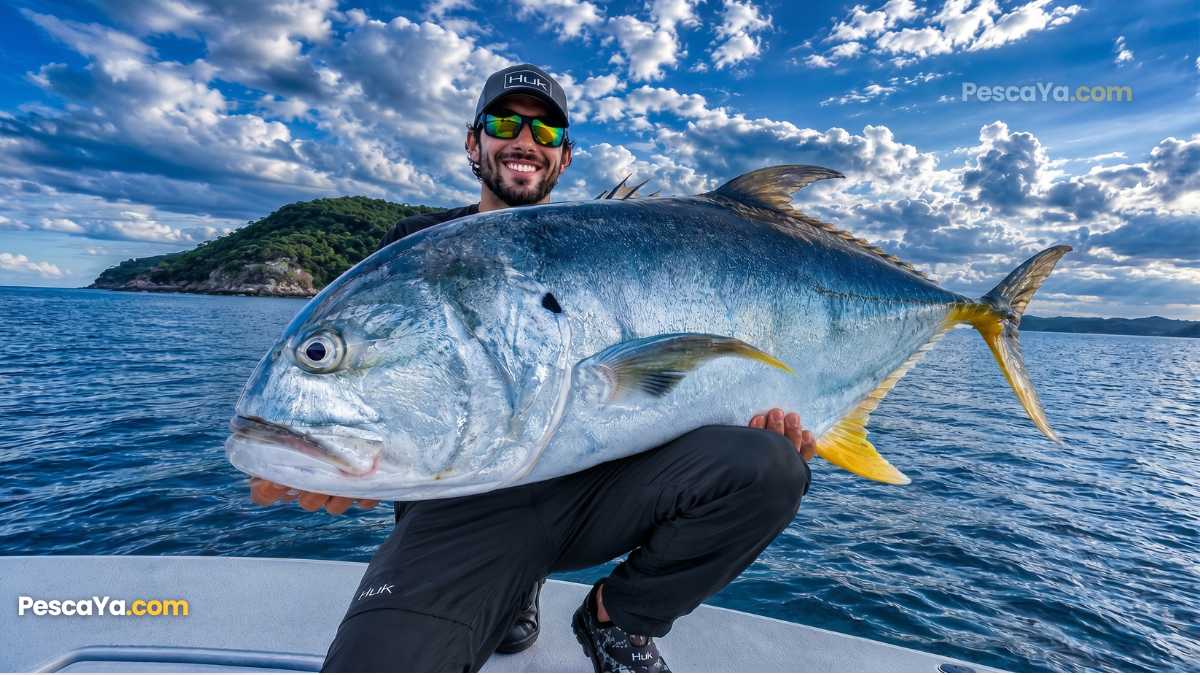
In Mexico, Panama, and Costa Rica, anglers don't call them jack crevalle. They call them toro. Spanish for bull.
It's not a casual nickname. It's a field report. Anyone who has hooked one on light tackle — watched the rod load up, heard the drag scream, and spent the next 20 minutes being towed around the bay by a fish that apparently does not get tired — understands exactly why local guides landed on that name. These fish fight like bulls. Full stop.
Officially, they're Caranx hippos, a member of the jack family found in warm coastal waters from West Africa to the Gulf of Mexico to the Pacific coast of Central America. Unofficially, they're one of the most divisive fish in the ocean: beloved by light-tackle anglers for their aggression and endurance, dismissed by others as "trash fish" with no table value. Both camps have a point.
This guide covers everything — how to identify them, how they compare to giant trevally, where to find them, how to catch them, and what actually happens when you try to eat one.
Jack crevalle chartersBook your jack crevalle tripInshore action in Panama & Costa Rica · catch and releaseBrowse charters →What Is a Jack Crevalle?
How to Identify One
Jack crevalle belong to the family Carangidae — one of the most athletic fish families in the ocean. Their cousins include giant trevally, horse-eye jack, blue runner, and amberjack. The body plan is purpose-built for speed and power: laterally compressed, torpedo-shaped, with a deeply forked tail and a thick, muscular caudal peduncle that drives those long, blistering runs.
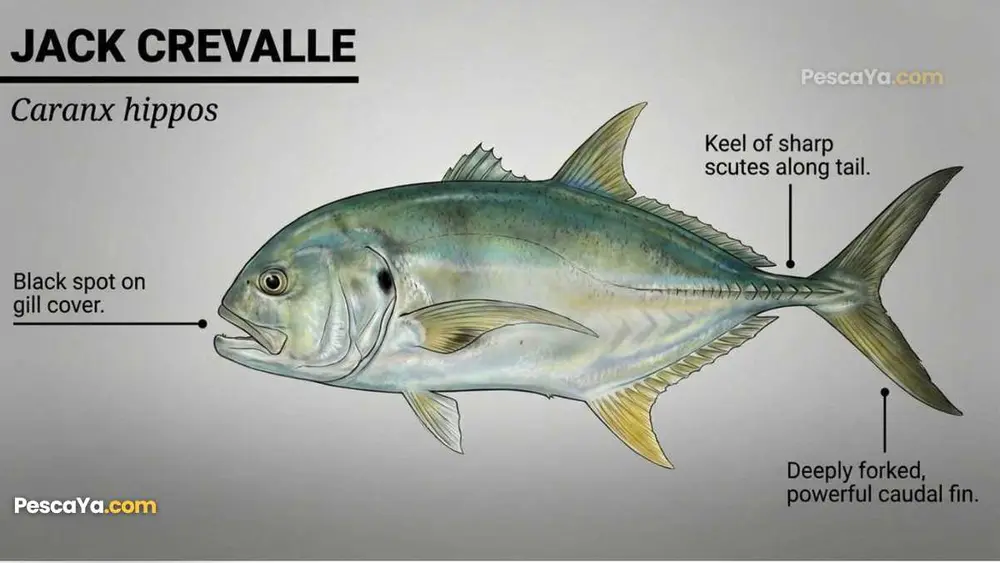
The key identification markers:
- The black spot — Every jack crevalle has a single dark spot at the base of the pectoral fin and on the lower edge of the gill cover. It's the most reliable field mark on the fish. No other common inshore species carries it.
- Body shape — Elongated with a blunt, rounded snout. More streamlined than pompano or permit.
- Pectoral fins — Long and sickle-shaped, extending well past the start of the anal fin.
- Coloring — Silvery flanks, yellowish belly, darker greenish-blue on the back. Juveniles often show faint vertical bars.
A typical adult runs 1-3 feet and weighs 5-20 lbs. The IGFA all-tackle world record is 66 lbs, 2 oz — proof that exceptional specimens exist, though you're unlikely to meet one on a random inshore trip.
Jack Crevalle vs. Giant Trevally — Are They the Same Fish?
No — but the confusion is completely understandable, and it comes up constantly among anglers who've fished both the Atlantic and Indo-Pacific.
Jack crevalle (Caranx hippos) and giant trevally (Caranx ignobilis) are cousins in the same genus. They look similar, fight similarly, and share the same aggressive pack-hunting behavior. But they're distinct species with different ranges, different maximum sizes, and a few reliable visual differences.
| Feature | Jack Crevalle | Giant Trevally |
|---|---|---|
| Scientific name | Caranx hippos | Caranx ignobilis |
| Range | Atlantic + Pacific Americas | Indo-Pacific |
| Max size | ~50 lbs (exceptional) | 170+ lbs |
| Black spot | On gill cover + pectoral base | On pectoral base only |
| Lower jaw | Even with upper | Slightly protruding |
| Edibility | Poor | Poor to fair |
The simplest rule: if you're fishing in Florida, the Gulf of Mexico, or the Pacific/Atlantic coast of Central America and you hook something that fights like a freight train, it's almost certainly a jack crevalle. Giant trevally live in the Indo-Pacific — Hawaii, Australia, the Maldives, East Africa. The two species don't share habitat.
The fight comparison is a perennial forum debate. The general consensus among anglers who've caught both: GT win on raw power at equivalent sizes, but jack crevalle are accessible, abundant, and deliver the same adrenaline at a fraction of the travel cost.
Jack Crevalle vs. Pompano vs. Permit
These three overlap in tropical coastal waters and the confusion is real. All three are silver with forked tails. Here's the quick reference:
| Feature | Jack Crevalle | Pompano | Permit |
|---|---|---|---|
| Body shape | Elongated | Short and stout | Short and stout |
| Pectoral fins | Long and sickle-shaped | Short and triangular | Short and triangular |
| Black spot | Yes (gill cover) | No | No |
| Snout | Blunt | Rounded | Rounded |
The black spot is always the fastest call.
Where to Catch Jack Crevalle
Florida
Florida is the most consistent jack crevalle fishery in North America. Both coasts produce well, year-round. Per Florida FWC regulations, there's no closed season, no size limit, and a daily bag limit of two fish or 100 pounds per angler — though most fish get released.
On the Atlantic side, the Space Coast, Palm Beach, and the Treasure Coast see large schools blitzing bait along the beaches in spring and fall. On the Gulf side, Tampa Bay, Charlotte Harbor, and the Panhandle host huge migrations of jacks chasing mullet and menhaden from late spring through early fall. There's no closed season, no size limit, and a daily bag limit of two fish or 100 pounds per angler — though most fish get released.
Gulf Coast
Louisiana's marshes and the Mississippi River Delta create exceptional conditions for jack crevalle. The nutrient-rich outflow draws massive bait concentrations, which in turn draws jacks in numbers. Thirty and forty-pound fish are not unusual here, and they show up smashing topwater lures that were set for redfish. Texas produces well along Galveston Bay, Port Aransas, and South Padre Island during summer, with surf anglers regularly intercepting schools pushing bait to the beach.
Caribbean and Mexico
From the Bahamas through Puerto Rico and down through the Caribbean islands, jack crevalle are a reliable inshore species on reefs, flats, and coastal drop-offs. Mexico offers strong fisheries on both coasts — the Gulf side near Veracruz and Campeche, and the Pacific side near Mazatlán, Puerto Vallarta, and Cabo San Lucas. Mexican fishing guides also call them toro, and the fish live up to it.
Central America — Panama and Costa Rica
This is where the fishing gets seriously underrated. Every major jack crevalle guide online covers Florida and the Gulf and stops there. The Pacific and Caribbean coasts of Panama and Costa Rica rarely get mentioned — which is a significant oversight, because these waters produce some of the largest and most aggressive jack crevalle on earth, and they're accessible year-round.
Panama — Pacific Coast: The Gulf of Chiriqui (Boca Chica area) holds massive schools that routinely ambush bait on the surface. The Tuna Coast (Veraguas/Mariato) produces jacks alongside yellowfin tuna in the same surface feeds.
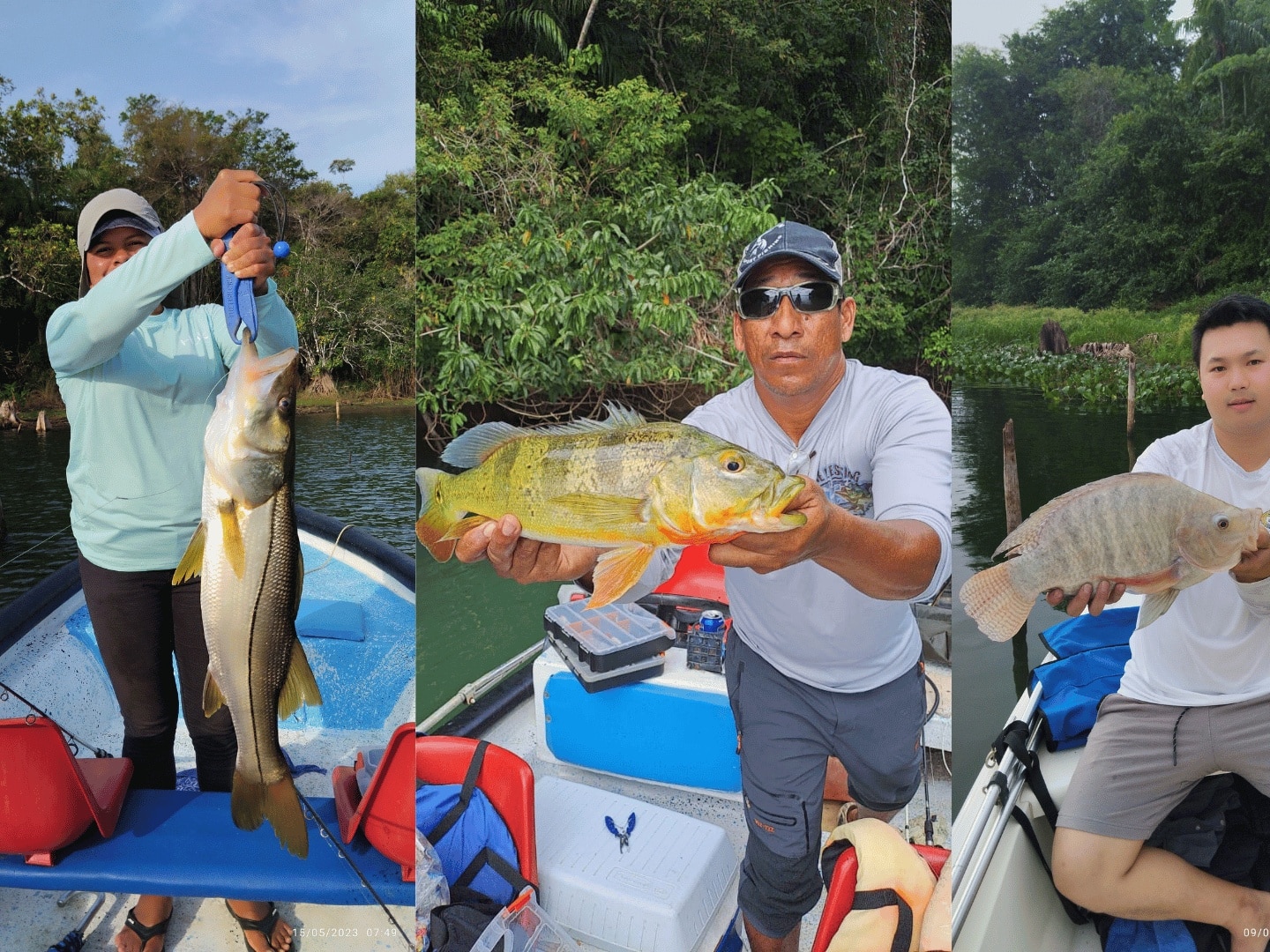
Panama — Caribbean and Inland: Bocas del Toro mixes ocean and estuary fishing with jacks, tarpon, snook, and barracuda. Gatun Lake offers one of the world's only chances to catch jack crevalle in fresh water — alongside peacock bass on the same trip.
Costa Rica: The Pacific coast from Guanacaste south to the Osa Peninsula produces consistent jack crevalle inshore action. A typical day here might include roosterfish, jacks, corvina, and snapper — all on lures or live bait in shallow water. Rocky headlands and river mouths during the dry season are the go-to spots.
Explore inshore fishing tours in Panama or fishing in Costa Rica — jack crevalle will almost certainly be on the menu.
Best Time of Year
In the United States, jack crevalle fishing peaks spring through early fall, when fish follow bait migrations inshore. In Central America, they're present year-round — the water stays warm enough that fish never go offshore seasonally. The dry season (December through April) offers the clearest water and easiest conditions for spotting surface feeds, but wet-season jacks are just as aggressive.
How to Catch Jack Crevalle
Topwater Poppers — Start Here
Topwater is the defining jack crevalle technique. When you find a school pushing bait up, a large popper retrieved fast and erratically is almost unfairly effective.
The retrieve: pop-pop-pause, with the emphasis on speed. Jacks don't respond to slow, subtle presentations. They want a panicked baitfish — frantic, unpredictable, trying to escape. The visual signals to look for: birds diving, bait showering the surface, that characteristic "boil" as the school pushes prey upward. When you see it, cast into the middle of it and hold on.
Lures and Jigs
When fish aren't on the surface, metal spoons (1–2 oz), stickbaits, and surface walkers all produce. The same speed principle applies — slow retrieves almost never work on jacks. Jigs worked vertically near rocky points, reefs, and submerged structure will find fish that aren't showing on top.
Live Bait
A free-lined live sardine or mullet near structure is close to a guaranteed strike. Use circle hooks in 3/0–4/0 for easier catch-and-release. In Panama and Costa Rica, sardines are the standard choice and guides will usually have them ready.
Fly Fishing
A 9-10 weight rod, a reel with serious drag, and large baitfish patterns — 3/0 or 4/0 deceiver-style flies in white or chartreuse. Sight casting to feeding jacks is one of the more spectacular experiences in light-tackle fishing. For more on combining species, our fly fishing in Panama guide covers sessions where jacks show up alongside tarpon and snook.
Gear and Tackle Setup
Jack crevalle run hard and don't quit. Going too light is the most common mistake.
| Component | Recommendation |
|---|---|
| Rod | 7-8 ft medium-heavy spinning or baitcasting |
| Reel | Smooth drag with 20-40 lb capacity |
| Main line | 30-50 lb braided |
| Leader | 40-60 lb fluorocarbon - 2-3 ft |
| Hooks (live bait) | Circle or J-hooks - 3/0-6/0 |
| Hooks (lures) | Single inline hooks - same sizes |
Prioritize large poppers (3–5 inches), metal spoons, stickbaits, and surface walkers in blue/white, chartreuse, or silver. Bring spare leaders — jacks will occasionally fray them. And don't underestimate the drag: a 20-pound fish in open water makes multiple long, powerful runs before it considers giving up.
Can You Eat Jack Crevalle?
Here's the full answer, because this is easily the most searched question about this species — and the most misunderstood.
The reputation is bad. Florida anglers coined the nickname "tourist tuna" for a reason: jack crevalle are what inexperienced visitors get excited about before locals explain the situation. Multiple fishing forums agree that raw, unprepared jack crevalle is — in the words of one longtime Gulf angler — "nothing but shark bait." That reputation isn't entirely wrong.
Jack crevalle have unusually high levels of myoglobin in their flesh — the same protein that makes their muscles so powerful and their fight so relentless. The result is dark, deeply red meat that oxidizes fast after the catch and develops a strong, metallic, oily flavor quickly. Most experienced sport anglers practice catch-and-release with jacks, not as a conservation gesture but because they genuinely don't want to eat them.
That said — preparation matters enormously. Coastal communities throughout the Caribbean and Central America have eaten jack crevalle for generations. The difference is in how the fish is handled from the moment it's landed.
The method that consistently produces edible results:
- Bleed immediately — cut the gills or the tail before the fish hits the ice. This is the single most important step. Unbled jack crevalle is almost always unpleasant; properly bled fish is a different product entirely.
- Ice immediately — don't leave it in a livewell or on a stringer. Get it cold fast.
- Remove the bloodline — when filleting, cut out the dark strip of meat running along each side of the spine. It's the most intensely flavored portion and removing it improves the rest significantly.
- Cook with strong flavors — a 12-hour soy sauce marinade before grilling is a widely used method in Central America. One tested approach: season with Old Bay, top with panko and parmesan, bake at 350°F for 25–30 minutes, then broil until the crust is golden. The verdict: the flesh is a little oily, like mackerel, and the texture is similar to a freshwater rainbow trout — soft but not mushy.
The honest summary: jack crevalle will never be a great table fish. But a fish that's been bled, iced, de-bloodlined, and prepared with the right technique isn't the garbage its reputation suggests. Most anglers still release them. But if you want to try — now you know how to do it right.
Charters · Panama
Book a Jack Crevalle Fishing Charter
.jpg)

5-Hour Fishing Adventure in Panama Bay

.png)
.jpeg)
.png)
.png)
Jack Crevalle FAQ
Are jack crevalle and crevalle jack the same fish?
Yes — same species (Caranx hippos), two common names. "Jack crevalle" is dominant in US fishing culture; "crevalle jack" appears more in scientific writing and some regional guides. In Mexico and Central America, guides usually just say toro. IGFA records list it as "Jack, crevalle."
What is the IGFA world record for jack crevalle?
66 lbs, 2 oz, caught off West Africa. See the IGFA world records database for current standings.
What do jack crevalle eat?
Jack crevalle are pack hunters that herd baitfish — sardines, mullet, anchovies, smaller jacks — into tight surface schools and attack from below. The feeding frenzies are visible from distance. They'll also eat crabs and shrimp near structure, especially at night.
How does a jack crevalle compare to a giant trevally in a fight?
Both are members of the family Carangidae and both are brutal fighters. The general angler consensus: GT are more powerful at equivalent sizes — they're a larger fish with a bigger range — but jack crevalle are more accessible and deliver comparable adrenaline on lighter gear. The fight isn't identical, but the experience is in the same neighborhood.
Last Cast
The toro nickname is the most honest review this fish ever got. It doesn't promise a great meal. It doesn't promise a world record. It just tells you exactly what you're going to get: a bull of a fight from a fish that doesn't know how to quit.
Jack crevalle are available every month of the year in Panama and Costa Rica, showing up on inshore fishing charters alongside roosterfish, snook, and peacock bass. Whether you're a first-timer out of Panama City or a fly angler working the flats in Guanacaste, they'll make themselves known.
Browse fishing tours in Panama and fishing tours in Costa Rica to find the right charter. And check out PescaYa's jack crevalle species page for more on where to target them and what to expect on the water.