
PanamaFish Species
Snook Fishing in Panama: The Ultimate Guide
Learn how and where to catch snook in Panama with tips on top spots, seasons and tackle around mangroves and estuaries.
By Charlie Gonzalez10 min read
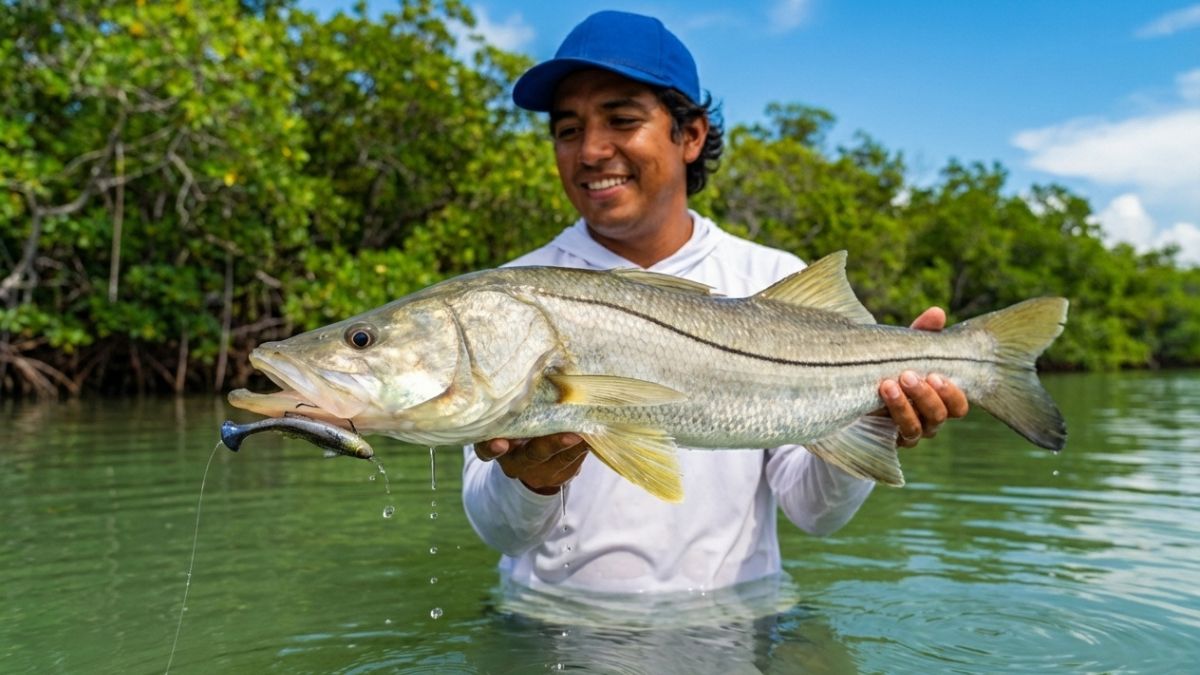
When I first arrived in Panama in search of the elusive snook, I expected a challenge. This fish has a reputation for breaking lines and hearts, and after more than a decade of guiding and fishing all over the isthmus, I can say it’s well earned. Whether you’re stalking robalo (as locals call them) in the mangroves or pitching swimbaits along the rocky Pacific coast, snook fishing in Panama is both intensely rewarding and full of surprises. In this guide I’ll share my hard‑earned experience and local insights so you can plan the perfect snook adventure and out‑fish your buddies.
What species of snook are there in Panama?
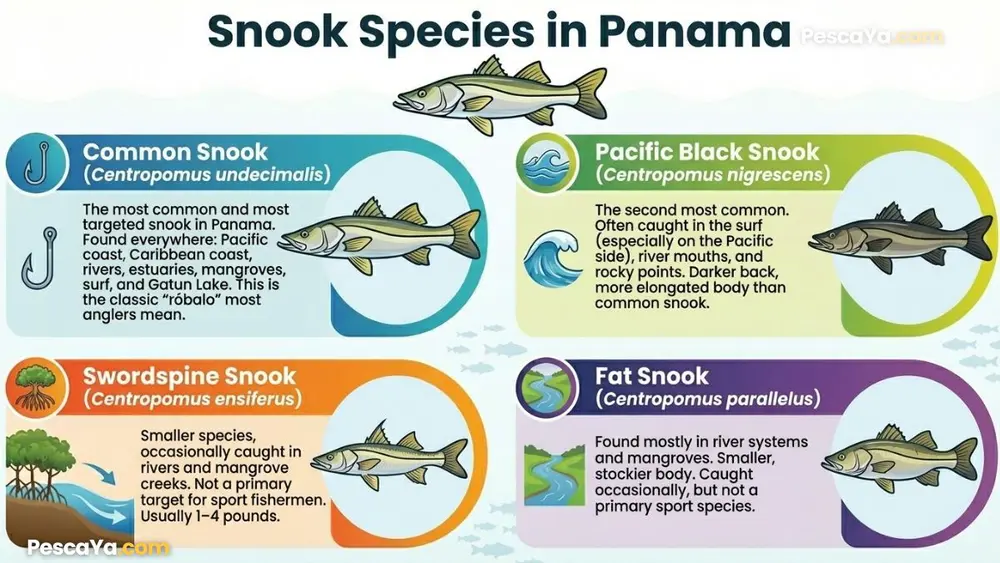
Snook are sleek, torpedo-bodied predators known for explosive strikes and acrobatic fights. Panama has several species, but two account for most of what anglers catch: the Pacific black snook (Centropomus nigrescens), which lives along the Pacific coast, and the common snook (Centropomus undecimalis), found on the Caribbean side and in Gatun Lake. They thrive in brackish estuaries and river mouths, where they hunt sardines, anchovies and small mullet. Their ability to move between fresh and salt water makes them fascinating: the same fish might be in a mangrove, on a breaking wave or under a canal bridge.
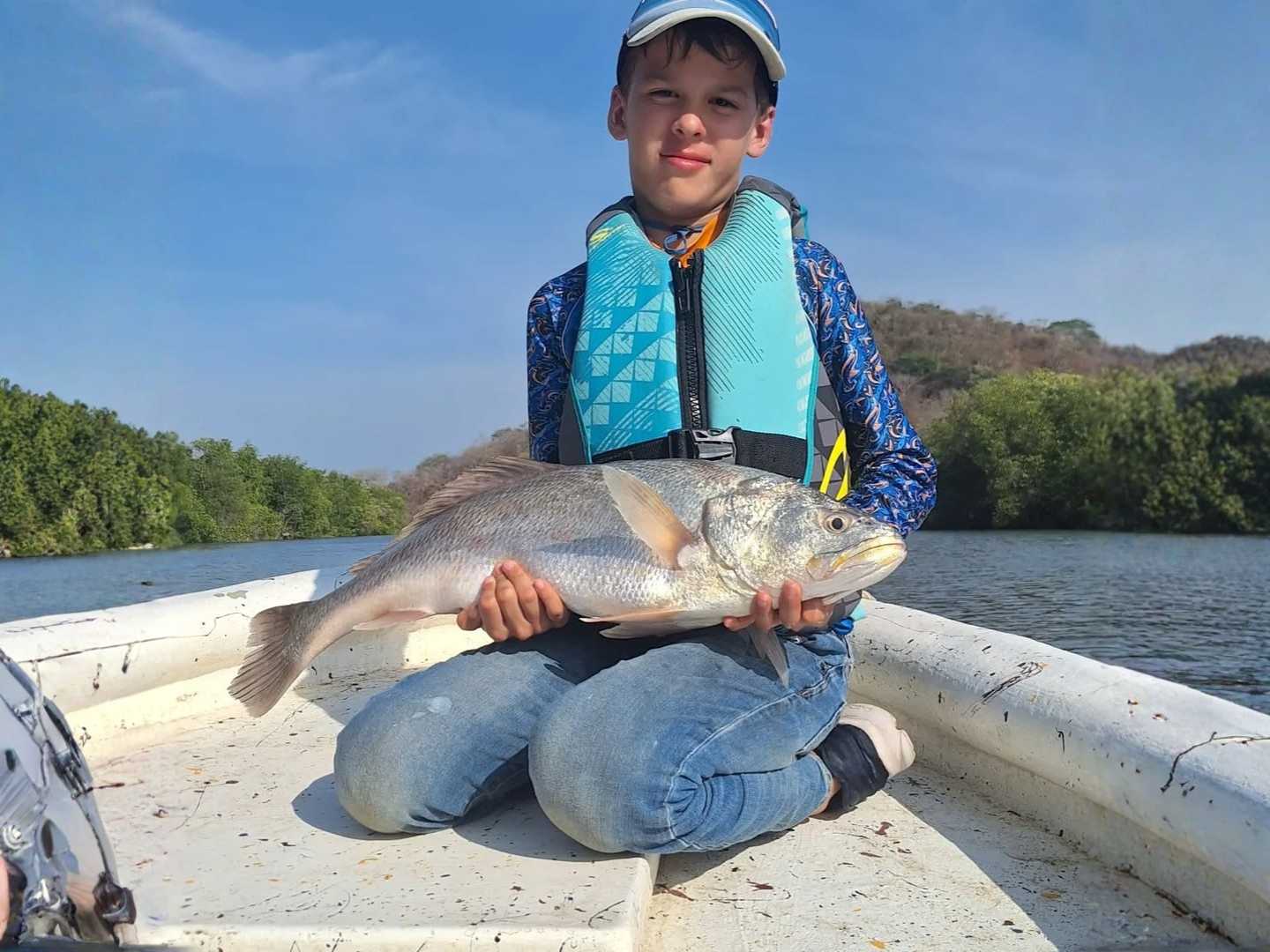
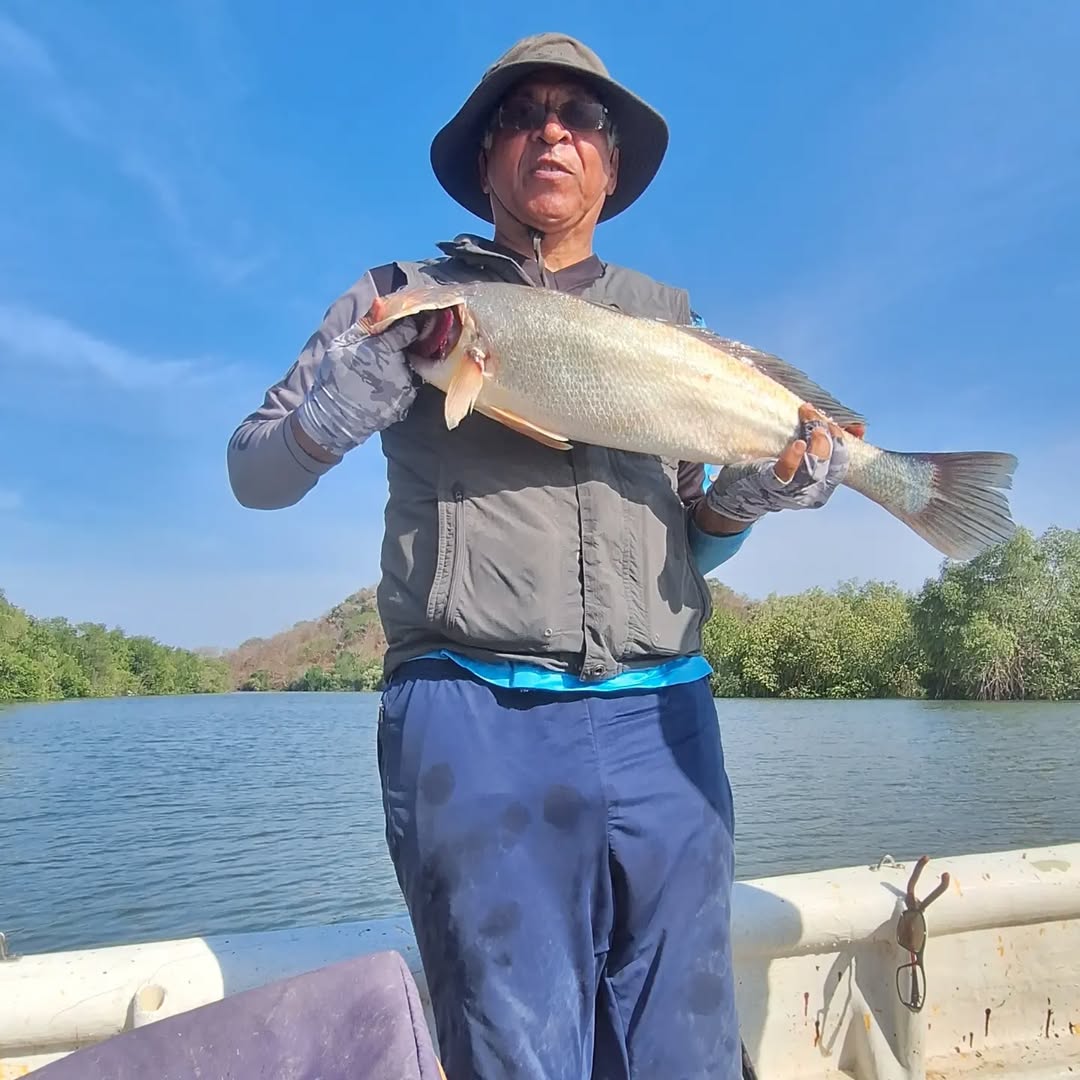
Most of the snook we catch weigh between 11 and 22 pounds (5 to 10 kg), but every season a few fish of 33 pounds (15 kg) or more are recorded, and the Panamanian record tops 48 pounds (22 kg). They grow big because they feed aggressively and few anglers target them systematically. That often means you're fishing water that sees no pressure.
Snook fishing charters in Panama
BOOK A PANAMA CHARTER
Panama Fishing Charters
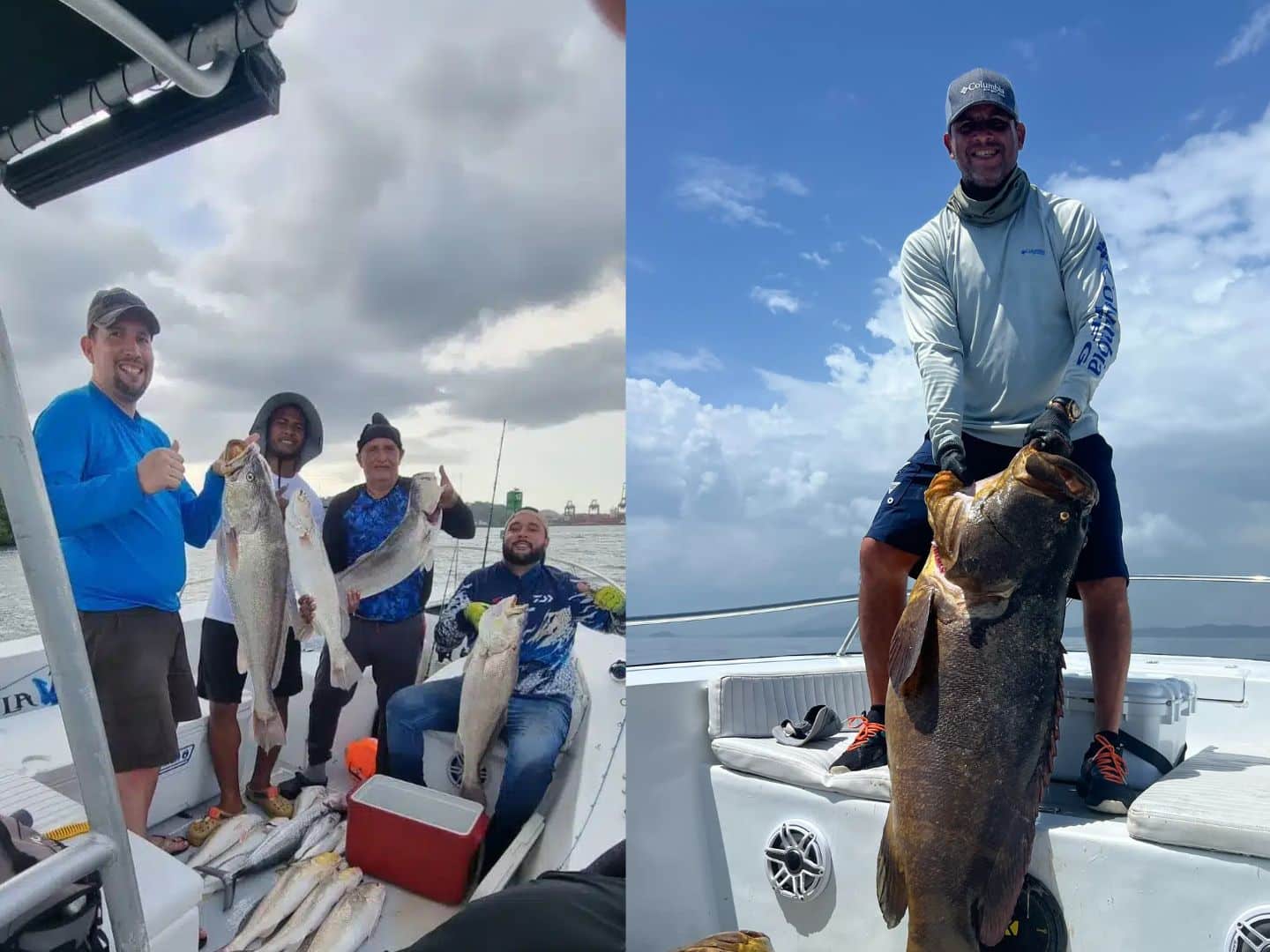
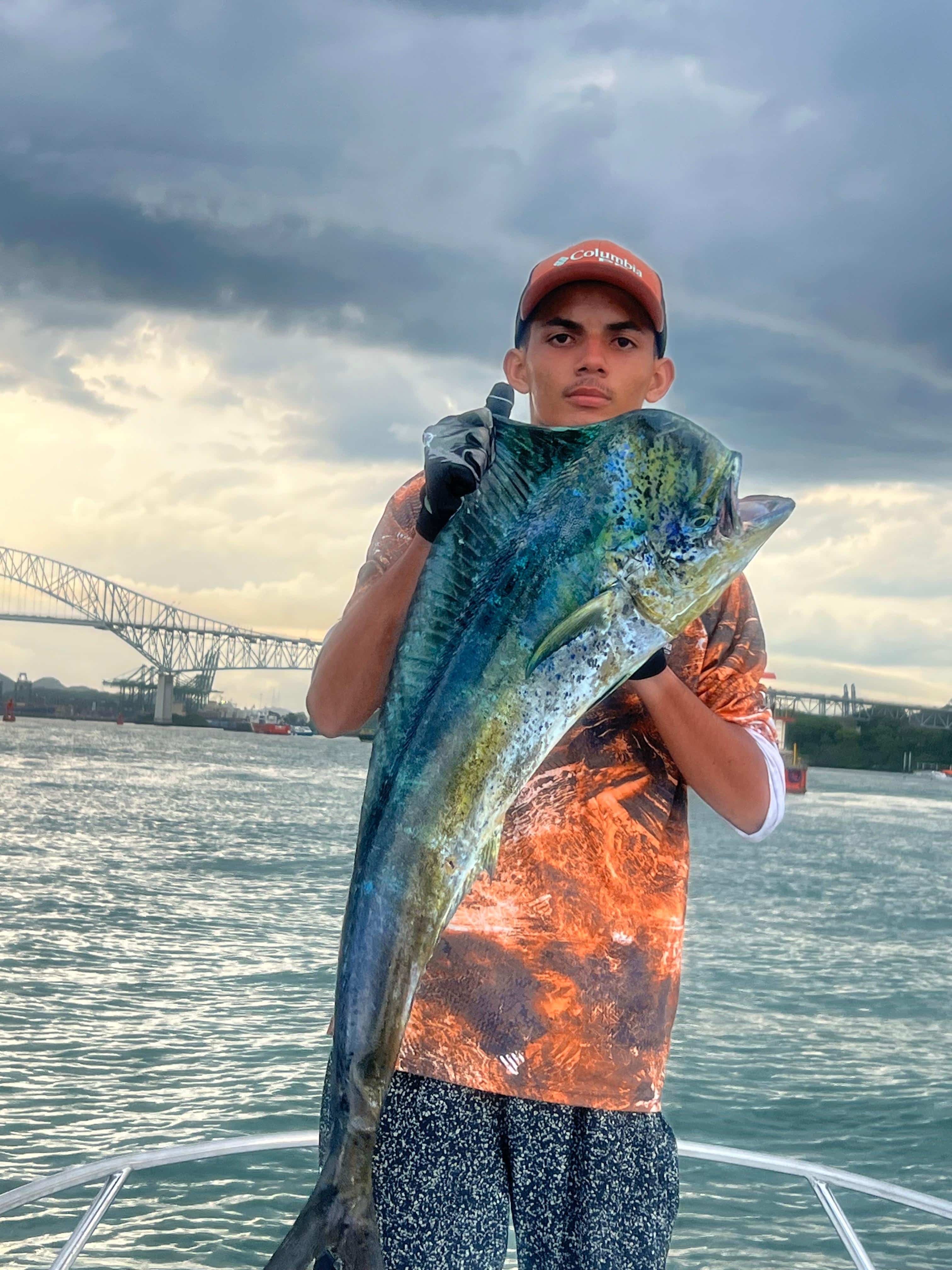
Fishing in Isla Las Perlas, Panama

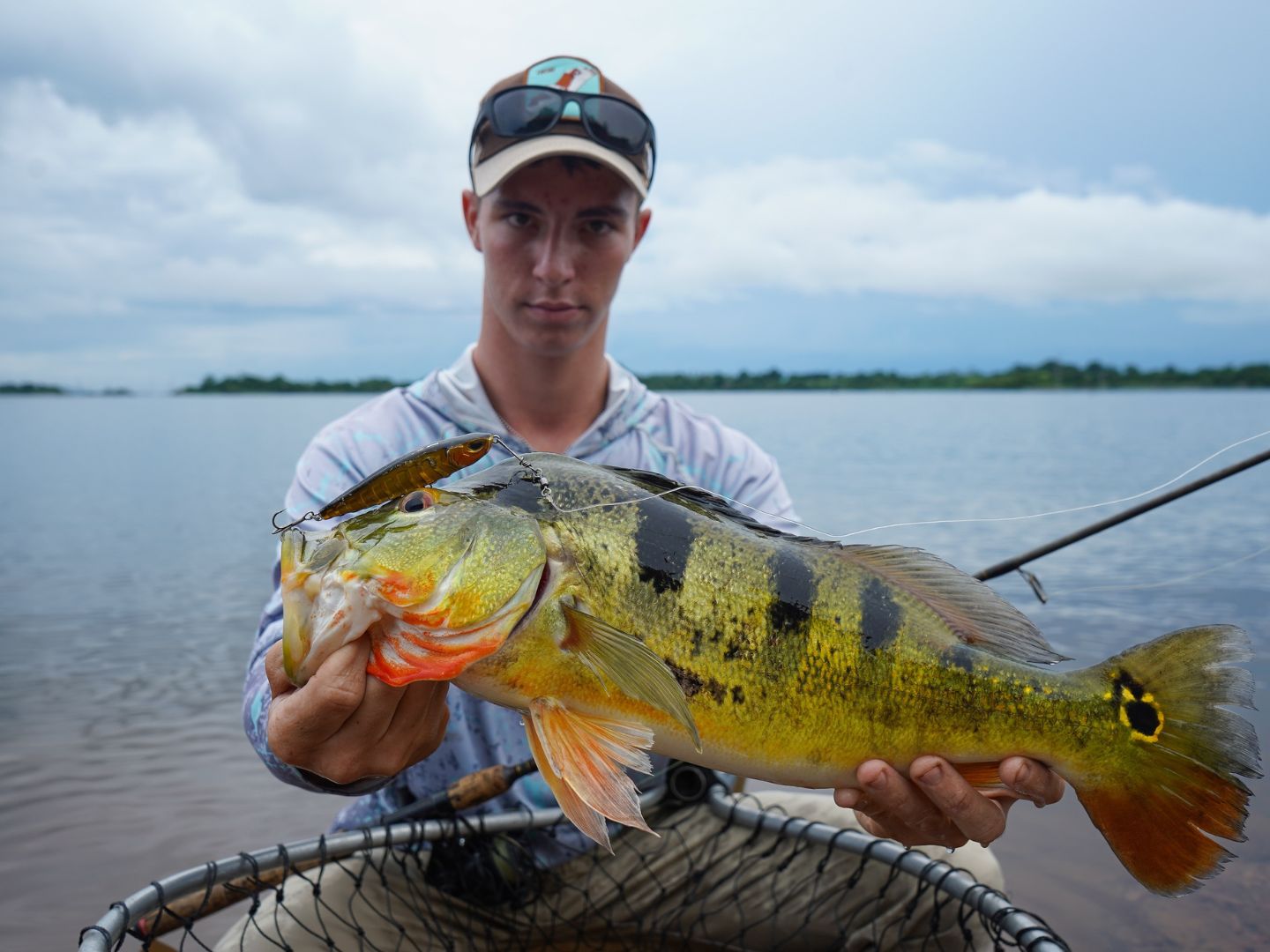
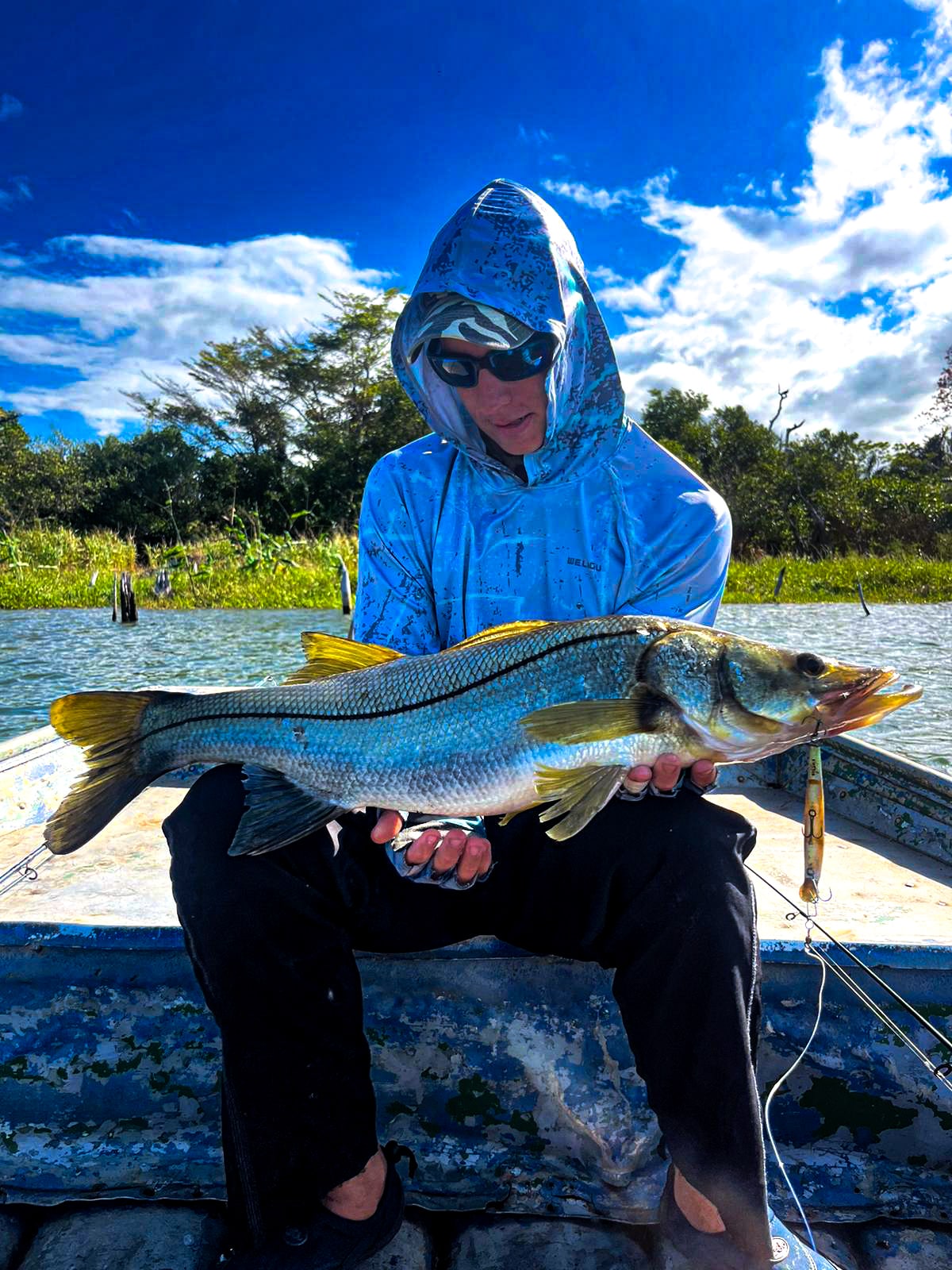
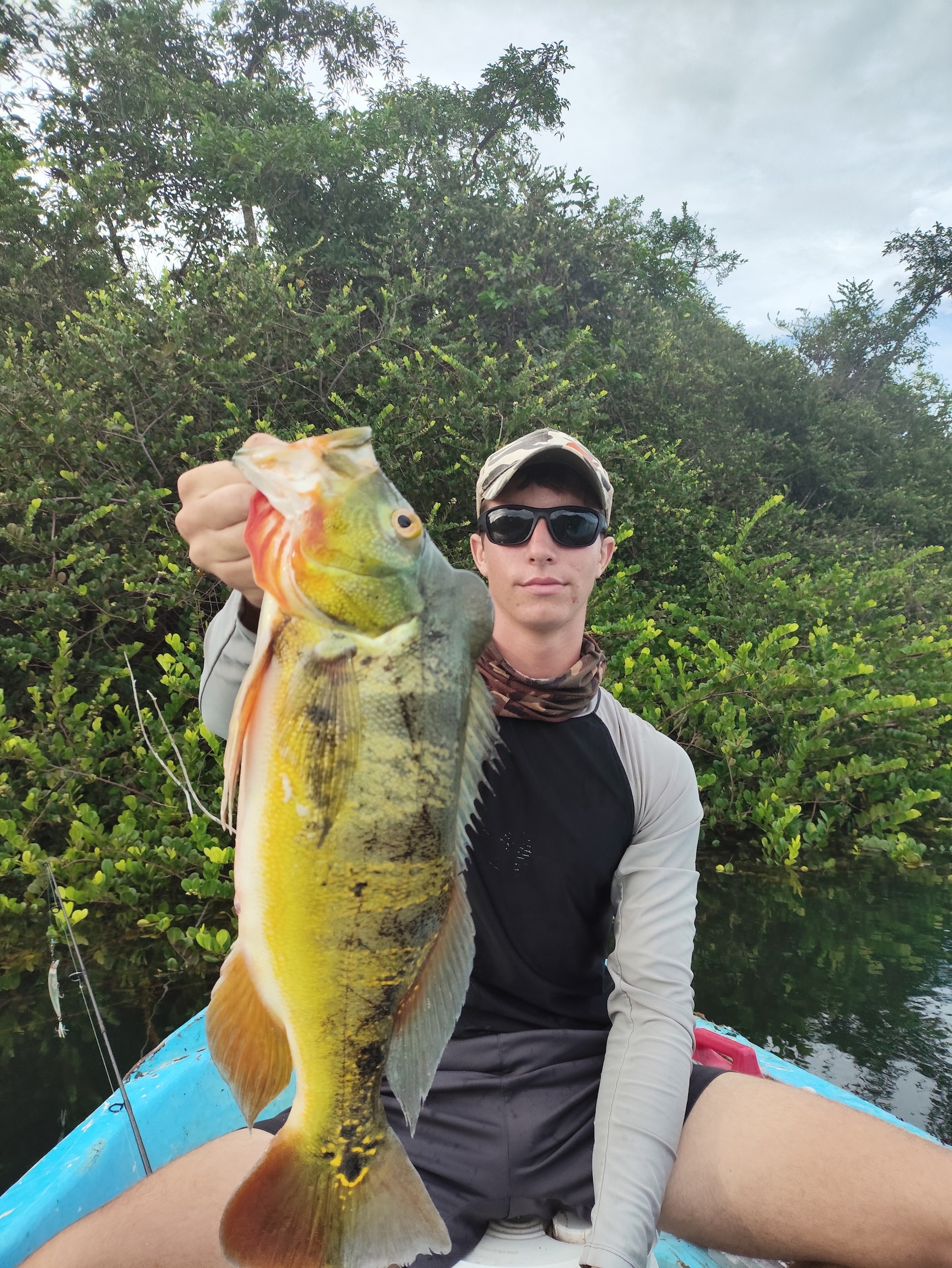
12-Hour Full-Day Fishing Charter – Lake Gatun, Panama

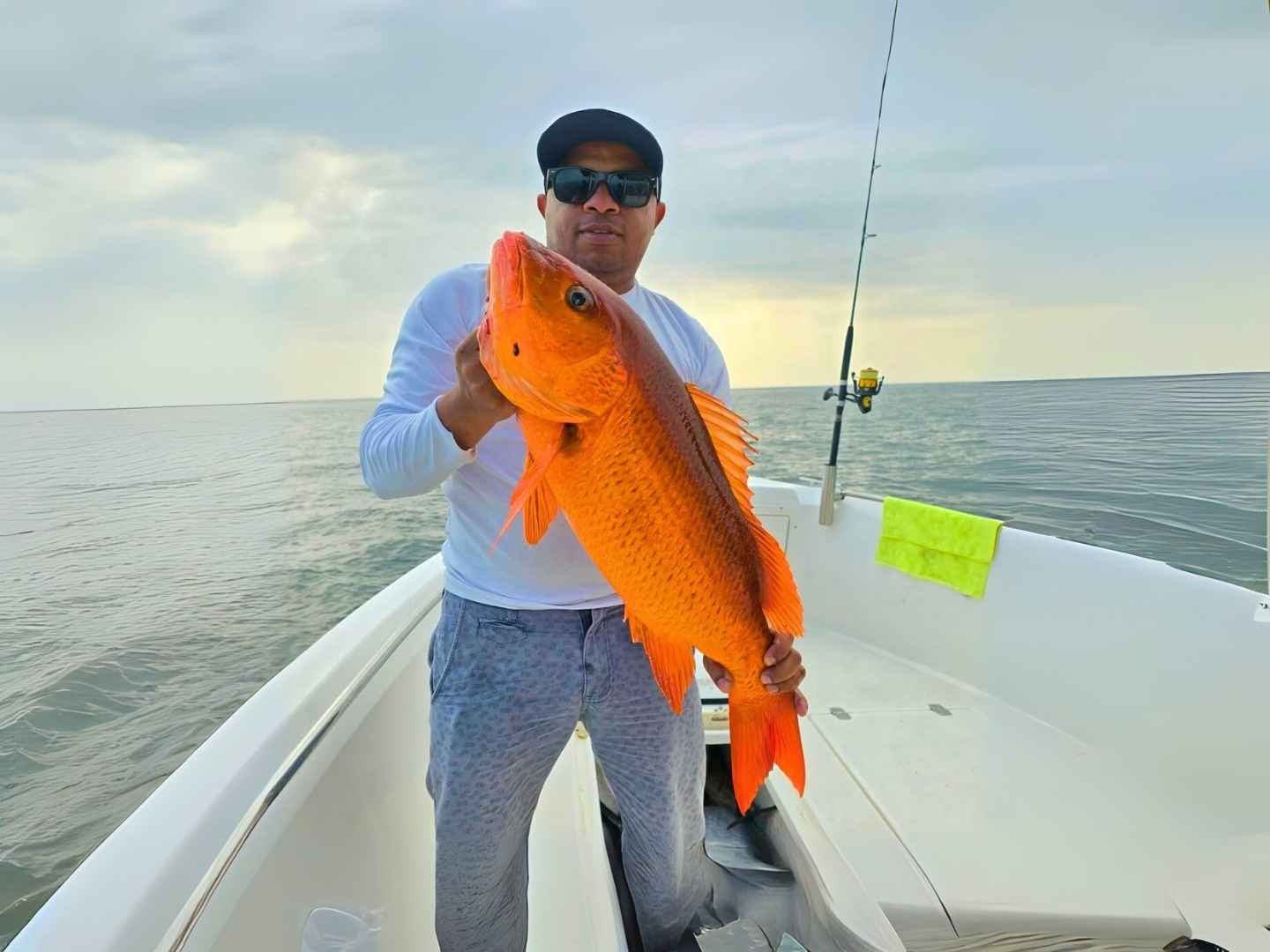
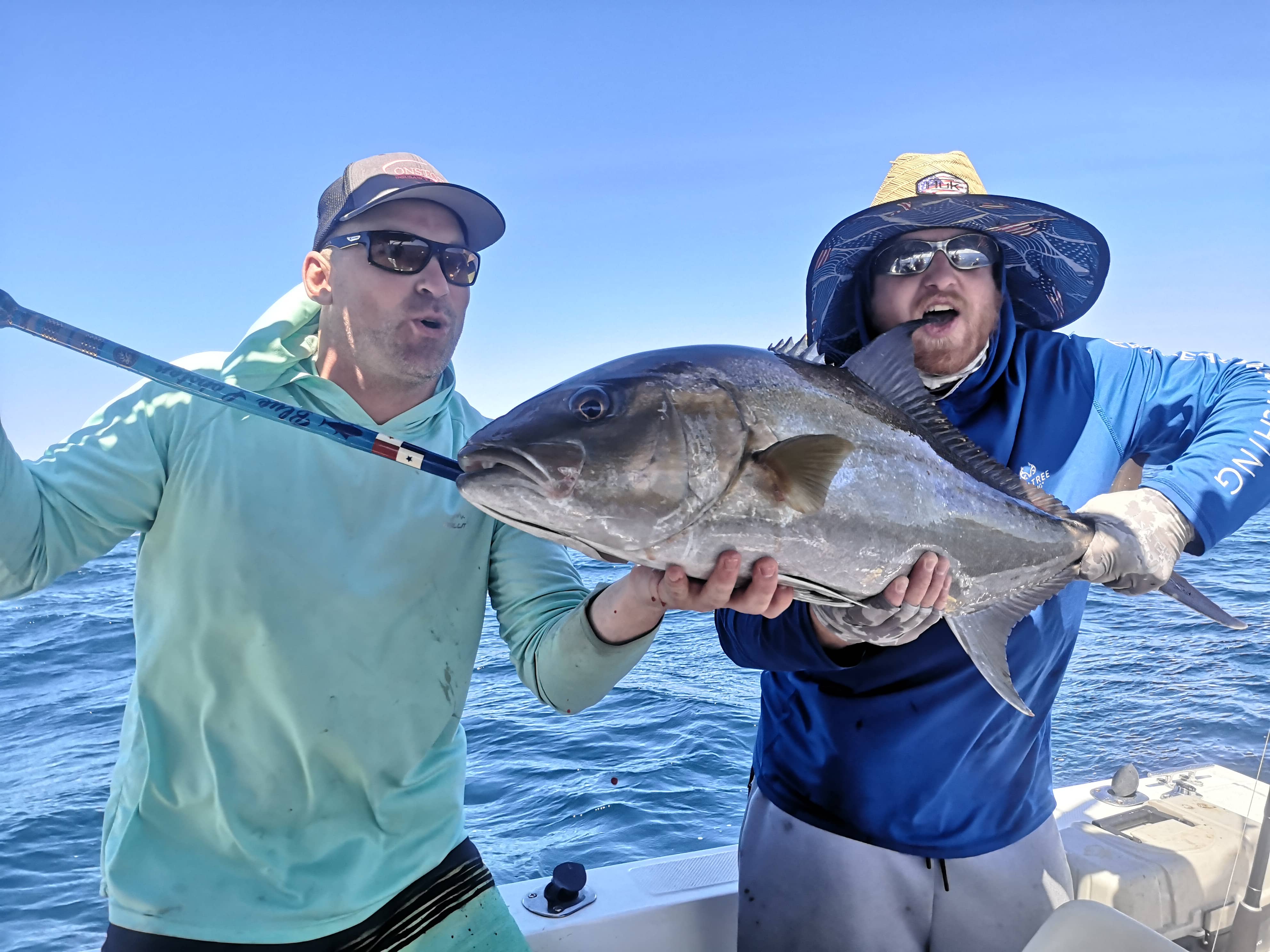
 - Blue Lobster Fishing PTY.jpg)
Pearl Islands - (San Jose, Pedro Gonzalez)
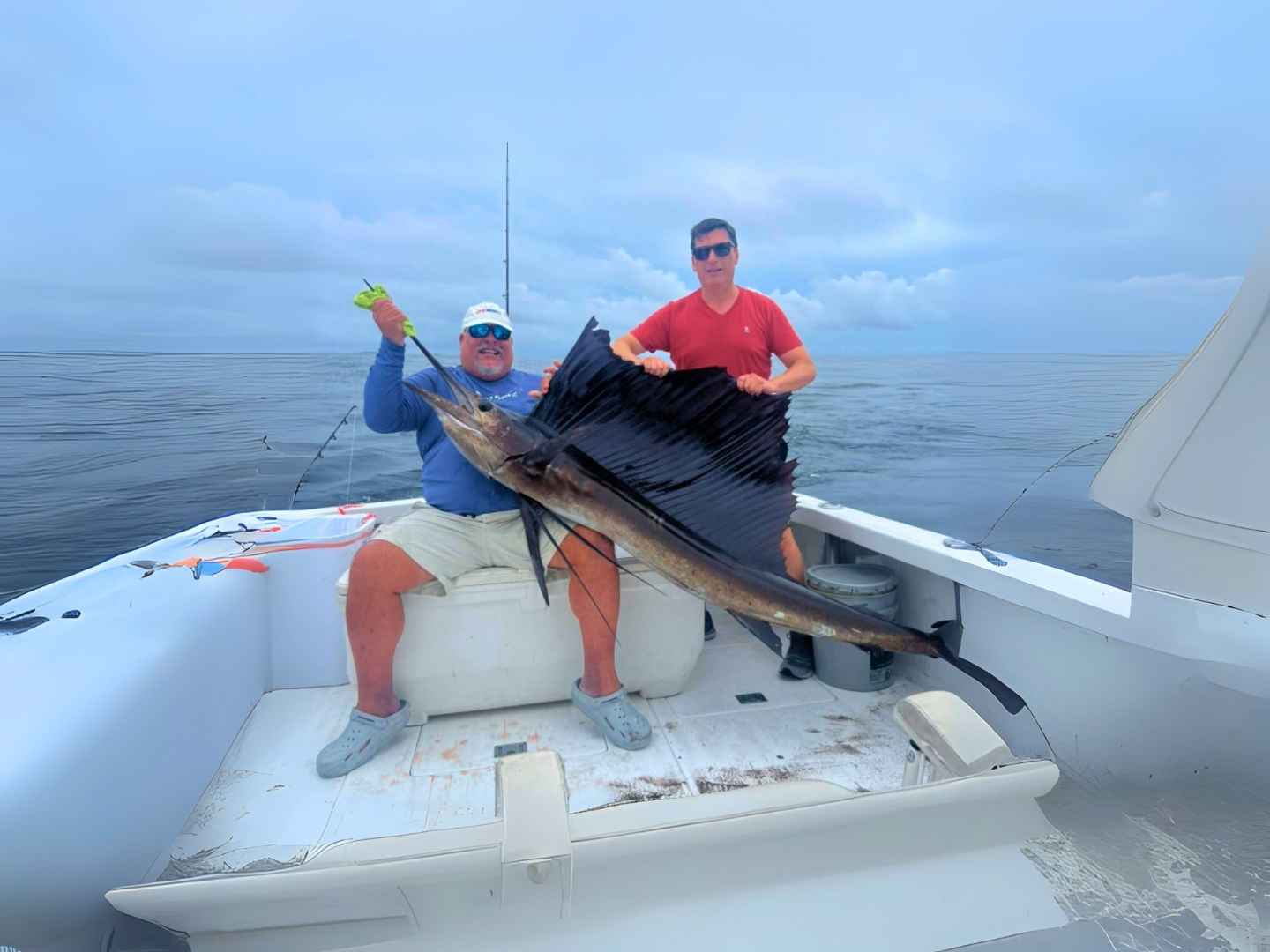
.jpg)
North Pearl Islands – Contadora Fishing
Top Places to Catch Snook in Panama
Panama’s varied geography gives snook plenty of habitat, but there are a few areas that consistently produce big fish. When planning your trip, think about what kind of fishing you enjoy (freshwater, saltwater or a mix of both) and choose a location that suits your style.
Gulf of Chiriquí & Boca Chica (Pacific)
The Gulf of Chiriquí on the Pacific side is famous for offshore species like marlin and yellowfin tuna, yet its inshore reefs and estuaries harbor good snook populations. Around Boca Chica you’ll find river mouths and mangrove channels that empty into the gulf. Fish these areas on a falling tide when baitfish flush out of the creeks. Small swimbaits, bucktail jigs and live sardines are deadly here. When the water is calm, try walking the dog with a top‑water plug at dawn: the visual strikes are unforgettable.
On the outside edges of Chiriquí, the volcanic islands of Coiba and Isla Parida also hold snook around rocky points. These fish tend to be larger and are often caught while targeting roosterfish or cubera snapper. Because these islands are remote, booking a multi‑day trip with a local captain is the best way to explore them.
Azuero Peninsula (Tuna Coast)
South of the Panamanian mainland lies the Azuero Peninsula, nicknamed the Tuna Coast. Don’t let the moniker fool you: its rugged shoreline and nearshore reefs are prime snook habitat. River mouths like those near Cambutal and Playa Venao produce excellent action after rains when silty water pushes bait into the surf. Cast shallow‑diving crankbaits or slow‑rolled soft plastics along the mixing line between clear and stained water. Early morning and late afternoon are magic hours here.
Bocas del Toro Archipelago (Caribbean)
On Panama’s Caribbean side, the Bocas del Toro archipelago feels like another world. This cluster of jungle‑covered islands hides miles of mangrove mazes, lagoons and creeks. Snook share these waters with tarpon and jack crevalle, so expect a mixed bag. Because the archipelago has little development, the fish are not spooky but still demand accurate casts. My go‑to lure here is a white bucktail jig tipped with a curly‑tail grub. Let it sink to the bottom, give it a snap, then let it flutter back down: strikes often come on the fall.
The rainy season (May–November) stimulates feeding in Bocas as freshwater floods flush nutrients into the lagoons. During the dry season (December–April) the water is crystal clear and sight‑fishing along mangrove edges can be incredible. If you’re new to the region, consider booking a trip with a local guide to safely navigate the channels and locate productive creeks.
Panama Canal & Gatun Lake
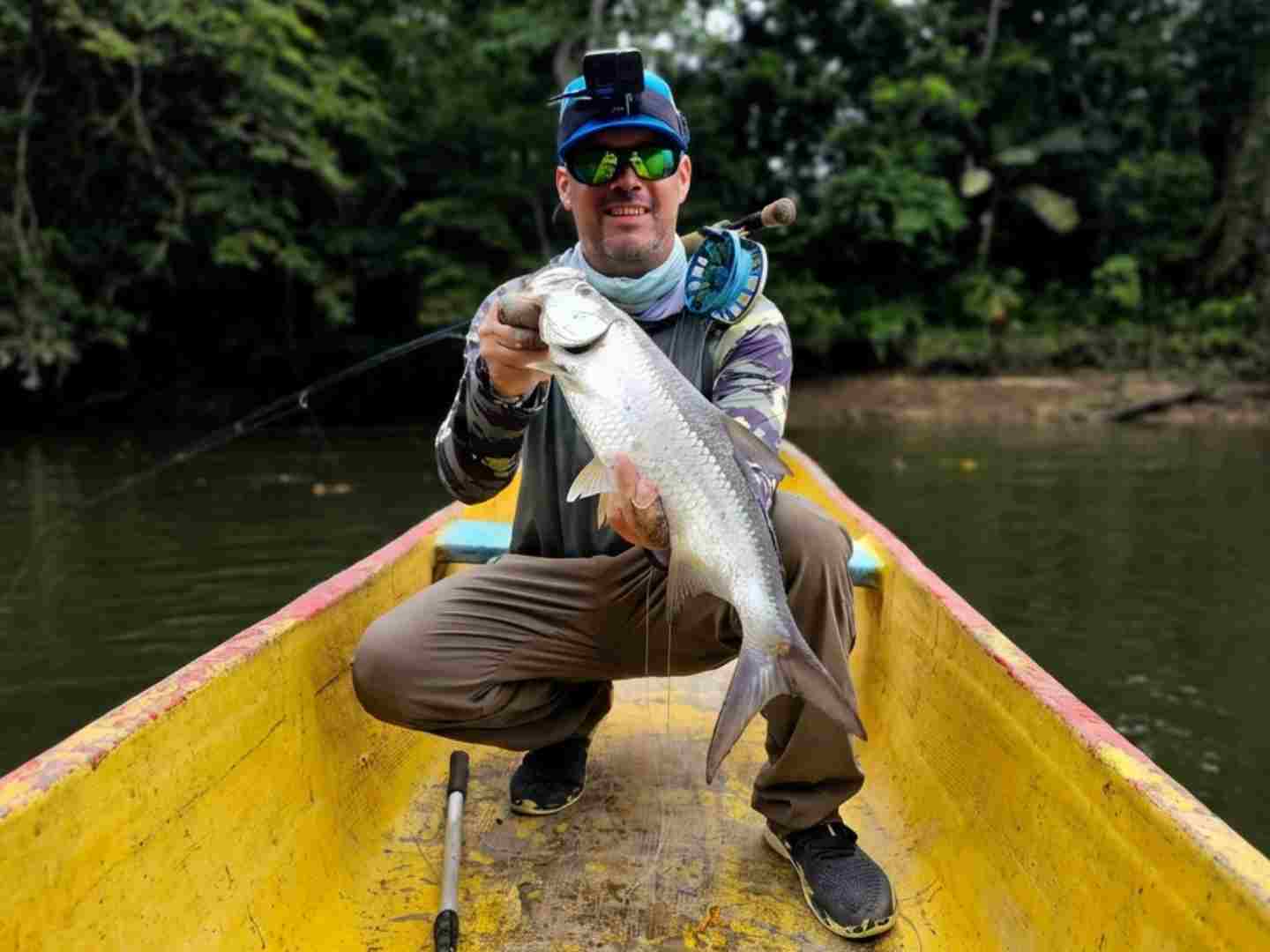
Perhaps the most unique snook fishery in the world is the Panama Canal. Gatun Lake is a 164‑square‑mile reservoir created when the Chagres River was dammed to build the canal, and its brackish waters support both freshwater species like peacock bass and saltwater predators like snook and tarpon. Fishing here is a surreal experience: you’ll cast toward submerged trees while giant container ships glide by.
Snook patrol the backwaters of Gatun, especially around river mouths and grassy banks. Locals target them with medium‑action spinning gear and 15‑ to 30‑pound braided line, pitching lures tight to cover. When the sun is high, fish deeper with jigs or live bait; at dawn and dusk they’ll crush top‑water plugs. Because the lake is close to Panama City, it’s ideal for travelers who want a quick day trip. For details on guided trips and how to arrange transportation, check out Snook fishing in Gatun Lake.
Bayano River & Darien Coast
East of Panama City, the Bayano River and the wild Darien coast offer some of the best snook fishing I’ve ever experienced. These areas are remote and undeveloped; access typically requires traveling by panga with a local captain. The Bayano’s mangrove estuary system teems with baitfish and the snook here are big, many over 30 pounds. Plan on fishing during a dropping tide and bring a variety of lures; what works in one creek may not work in the next. Because the terrain is rugged, travel with an experienced guide who knows the tides and can navigate the labyrinth of channels safely.
Seasons and Conditions: When to Target Snook
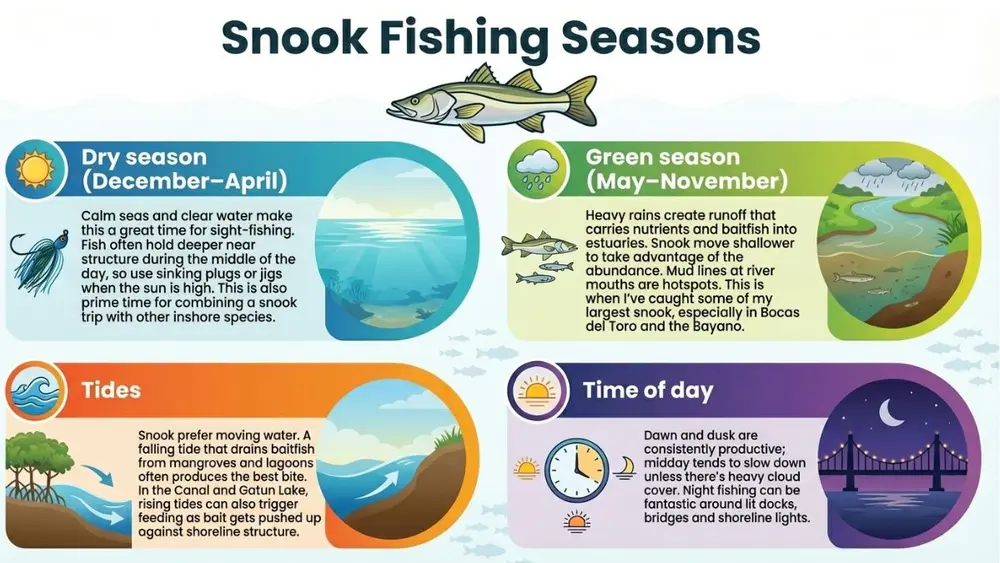
One of the most common questions I get from visiting anglers is, “When’s the best time for snook fishing in Panama?” Luckily, snook are year‑round residents, but there are seasonal nuances to keep in mind:
- Dry season (December–April): Calm seas and clear water make this a great time for sight‑fishing. Fish often hold deeper near structure during the middle of the day, so use sinking plugs or jigs when the sun is high. This is also prime time for combining a snook trip with other inshore species.
- Green season (May–November): Heavy rains create runoff that carries nutrients and baitfish into estuaries. Snook move shallower to take advantage of the abundance. Mud lines at river mouths are hotspots. This is when I’ve caught some of my largest snook, especially in Bocas del Toro and the Bayano.
- Tides: Snook prefer moving water. A falling tide that drains baitfish from mangroves and lagoons often produces the best bite. In the Canal and Gatun Lake, rising tides can also trigger feeding as bait gets pushed up against shoreline structure.
- Time of day: Dawn and dusk are consistently productive; midday tends to slow down unless there’s heavy cloud cover. Night fishing can be fantastic around lit docks, bridges and shoreline lights.
Techniques & Tackle That Work
Live Bait
Live bait is unbeatable when the goal is simply to hook a trophy. In Panama we often use small mullet, sardines, blue runners or threadfin herring. Rig them on 4/0–6/0 circle hooks with a 30–40 lb fluorocarbon leader. Freelined baits work well in calm backwaters; add a split shot or small egg sinker if you need to get deeper. When trolling baits along river channels in Bayano, I sometimes use a three‑way swivel with a short dropper to keep the bait near the bottom without snagging.
Lures and Artificial Tactics
- Swimbaits & soft plastics: Paddle‑tail swimbaits in the 3″–5″ range are deadly around estuaries and mangrove points. Choose baitfish colors like white, silver or green and rig them on a jig head or weighted hook. Cast toward structure, let the bait sink, then retrieve with a steady swim or a hop‑and‑drop cadence. The key is to imitate nervous baitfish.
- Bucktail jigs: A bucktail jig tipped with a curly‑tail grub is my confidence lure in Panama’s Caribbean. The pulsating action triggers strikes even on a slow retrieve. Use white in clear water; switch to chartreuse or root‑beer when the water is stained.
- Top‑water plugs: During low‑light periods and on calm mornings, snook will explode on surface plugs. Walking‑the‑dog styles like Zara Spooks or pencil poppers work well along sandy beaches and reef edges on the Azuero coast. Pause occasionally and be ready when a snook smashes the lure.
- Stickbaits & crankbaits: For deeper water or choppy conditions, suspending stickbaits and shallow‑diving crankbaits come into play. They track 1–3 feet below the surface and draw strikes from fish holding slightly deeper. In the Panama Canal and Gatun Lake, hard‑plastic jerkbaits worked with sharp twitches can be deadly.
- Jigging: Vertical jigging around rock piles in the Gulf of Chiriquí or off Coiba can produce surprise snook in addition to snapper and grouper. Use metal jigs or soft‑plastic darts on 60–80 lb braid if you’re fishing deeper than 50 feet.
Fly Fishing
Panama is often associated with big game, but it’s an emerging destination for fly anglers too. Snook readily smash streamers, baitfish imitations and deceivers. An 8‑ or 9‑weight rod with a floating or intermediate line, a 9‑foot leader tapered down to a 25‑ to 40‑lb bite tippet, and flies like the EP Minnow, Schminnow or Lefty’s Deceiver cover most situations. Cast along mangrove edges or current seams and strip the fly with erratic twitches. If you love precision casting and visual eats, consider exploring more of this style in Fly fishing in Panama.
Tips for a Successful Snook Trip
- Book a local charter: Hiring experienced guides saves time and increases your chances of connecting with big fish. Companies like PescaYa offer expert captains who know the tides, channels and seasonal patterns intimately: browse Fishing Charters in Panama to find the right trip.
- Use stealth: Snook have excellent eyesight and are easily spooked in clear water. Approach quietly, keep your casts low and avoid heavy splashdowns. In mangroves, turn off your engine and pole or drift into position.
- Respect the fish: Many of the large female snook you’ll catch are breeders. Practise catch and release by using circle hooks, minimizing fight time, and handling fish gently with wet hands. Never use a Boga grip to hang a snook vertically; support its belly with your other hand to avoid injuring its jaw and spine.
- Licensing: Visitors don’t need a personal fishing licence when fishing from a charter boat in Panama, as the vessel’s licence covers everyone on board. From 10 December 2026, anyone fishing from shore or on their own needs a personal ARAP sport-fishing card.
- Weather & safety: During the rainy season, afternoon thunderstorms are common. Bring rain gear, plenty of water and sunscreen. Always heed your captain’s advice regarding sea conditions and safety protocols.
Combining Snook with Other Species
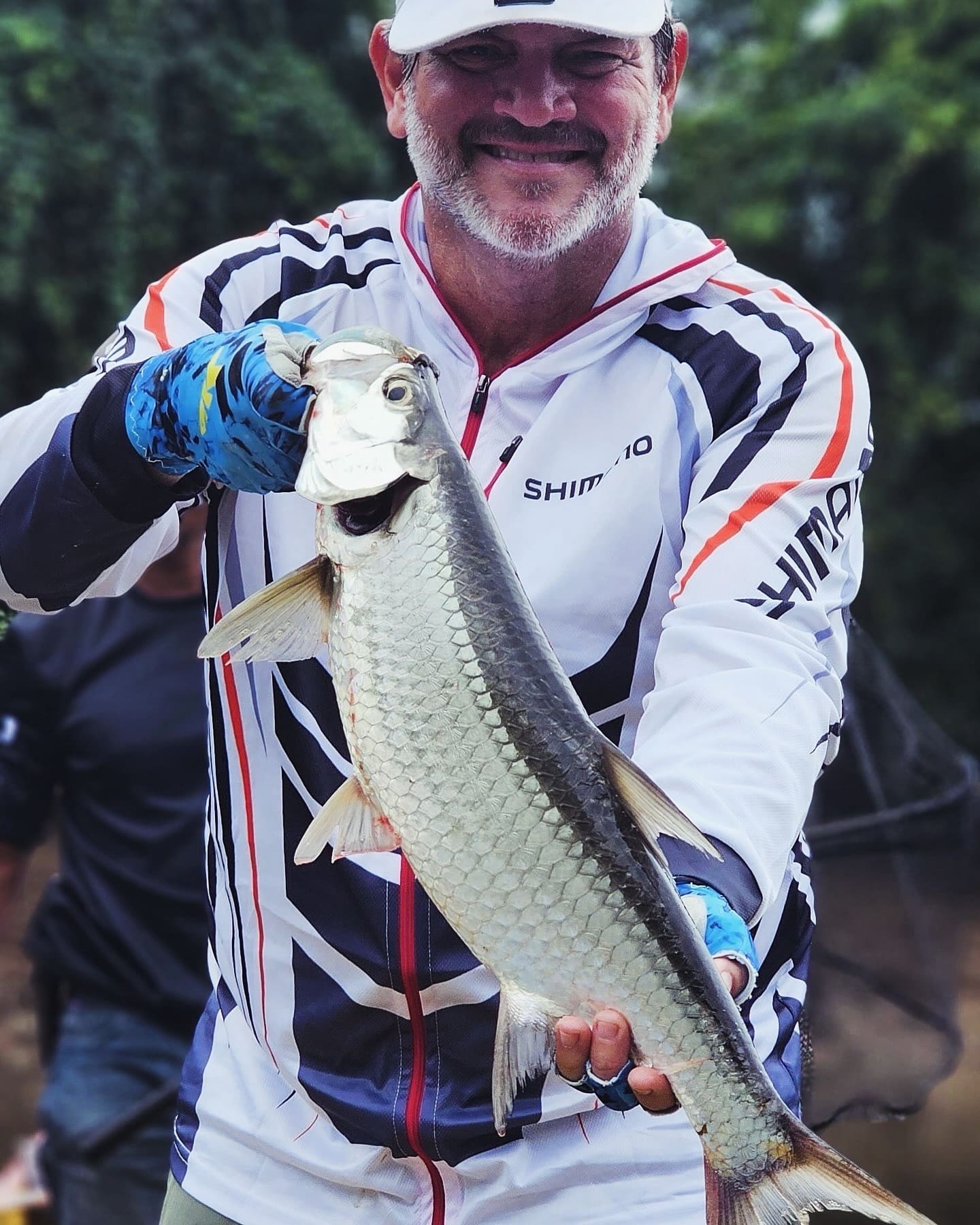
One of the joys of fishing in Panama is the sheer diversity. While targeting snook you’ll often encounter roosterfish, cubera snapper, jack crevalle, tarpon, and peacock bass. On the Pacific side you might even get an impromptu shot at a yellowfin tuna busting bait nearshore. In Gatun Lake, don’t be surprised if a peacock bass intercepts your snook lure. Embrace the variety and be flexible with your tackle: a medium‑heavy spinning or baitcasting outfit loaded with 30 lb braid is a good compromise for most inshore species.
Snook Fishing Charters & Packages
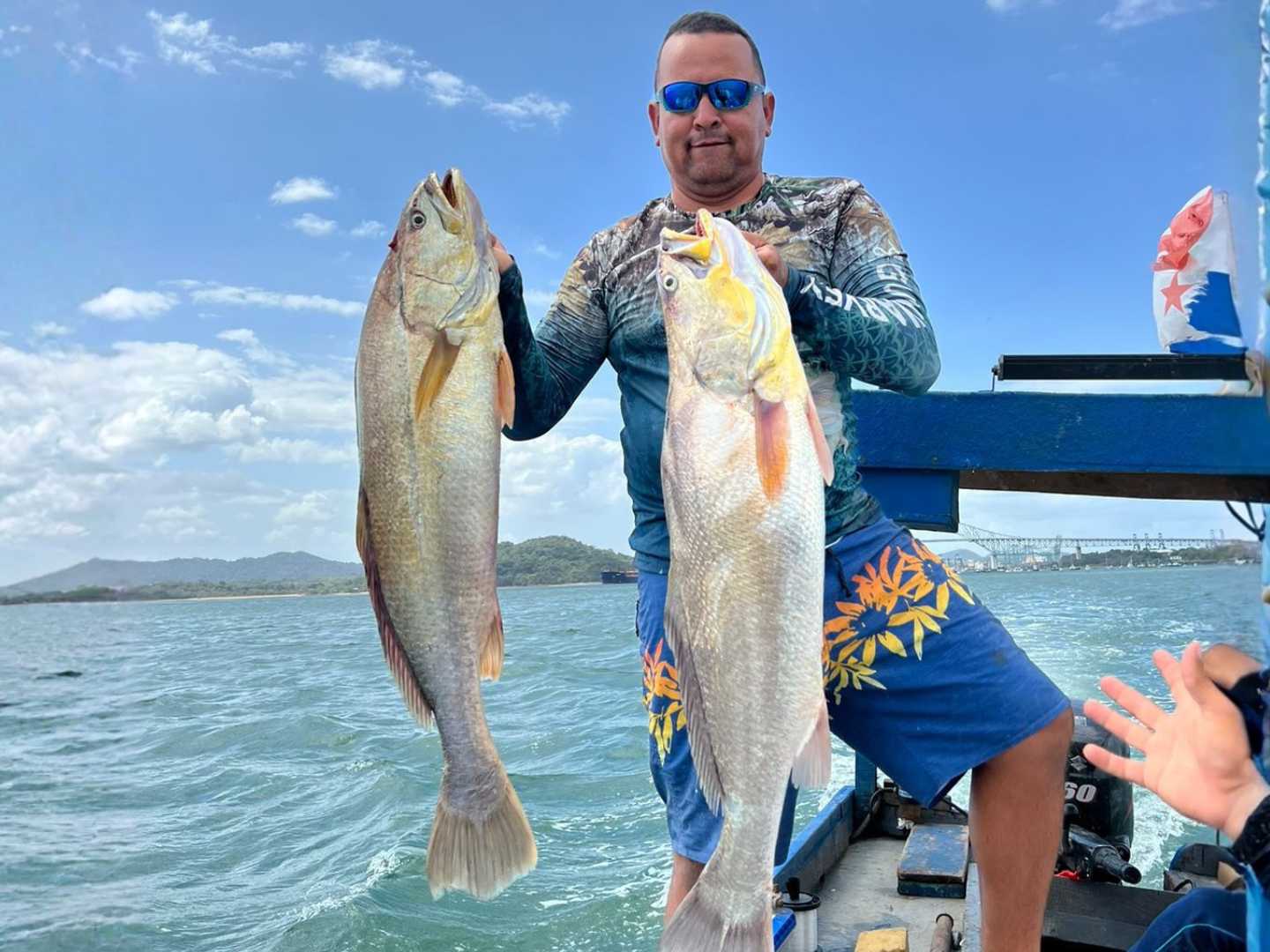
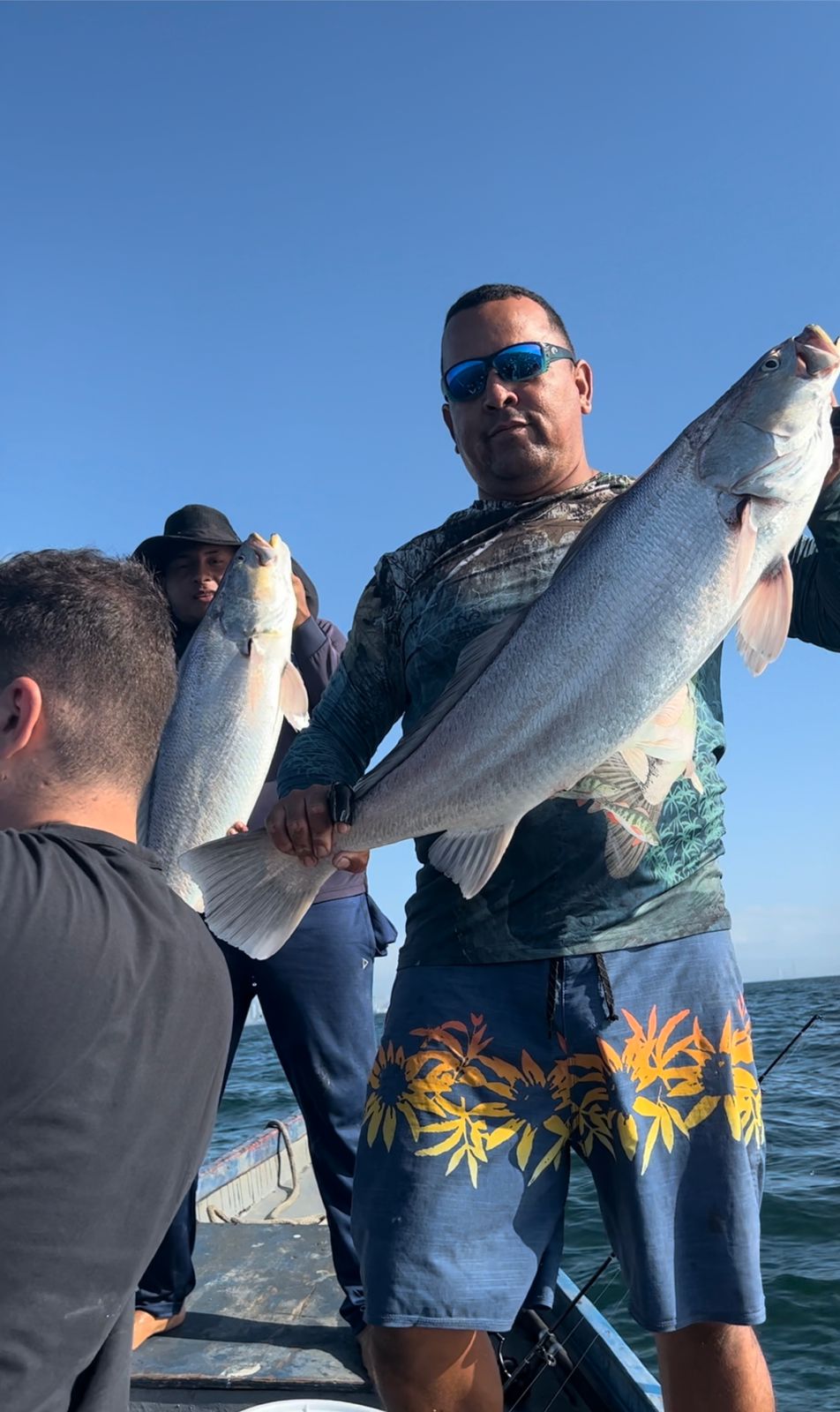
If you’re serious about targeting snook, consider a dedicated inshore charter. Snook fishing charters in Panama focus on the best habitats at the right times, whether that’s casting swimbaits around Pacific mangroves or pitching live bait into the backwaters of the Canal. Many operators offer half‑day trips near Panama City, full‑day excursions to Boca Chica, or multi‑day packages combining snook with roosterfish and snapper. Accommodations range from rustic lodges in the Darien to luxury resorts in the Gulf of Chiriquí. Ask about boat size, included tackle, and whether you can bring your own gear.
Charters · Panama
Book a Panama Snook Fishing Charter
.jpg)

.png)

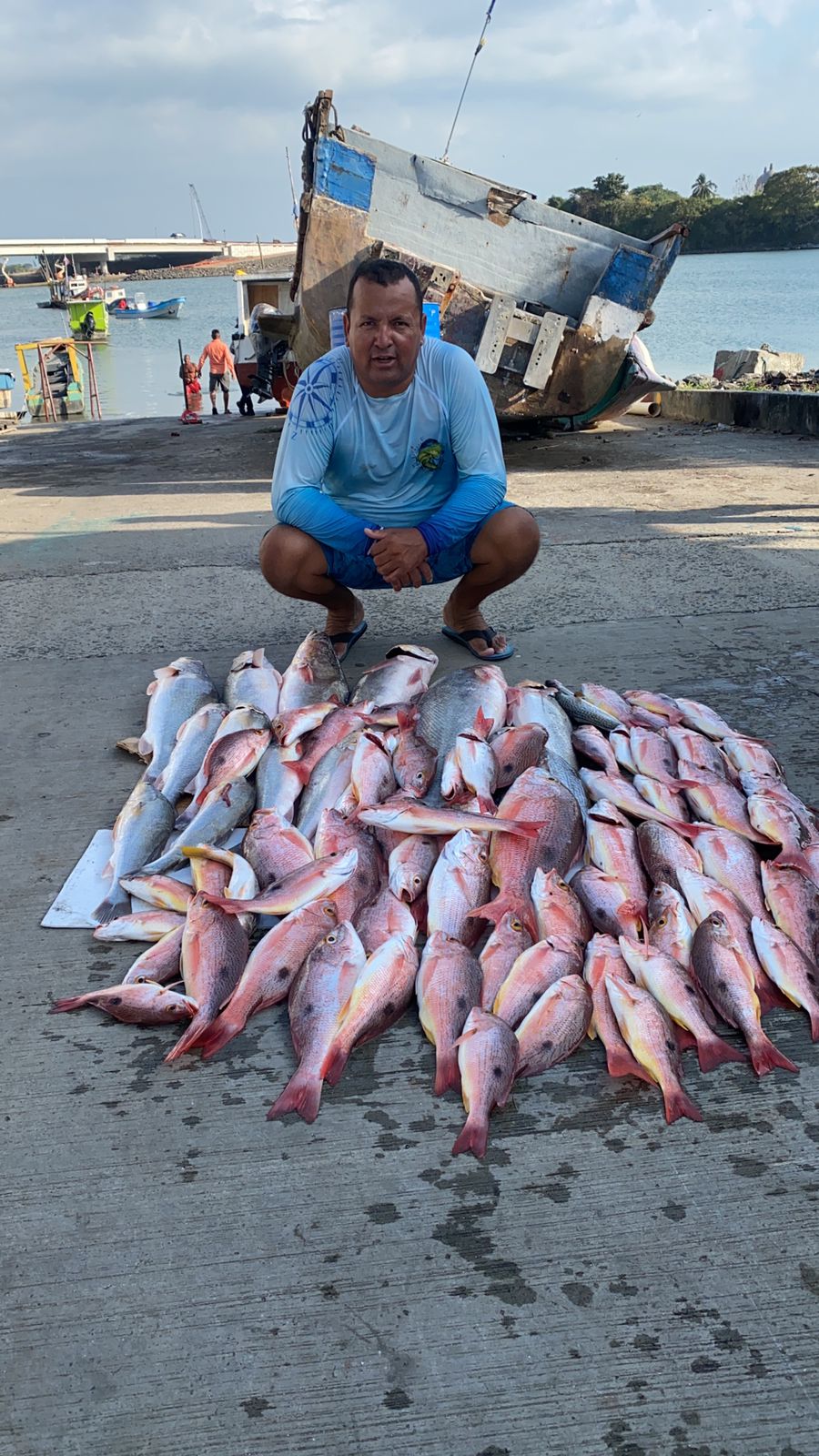
5-Hour Fishing Adventure in Panama Bay
 (1).png)
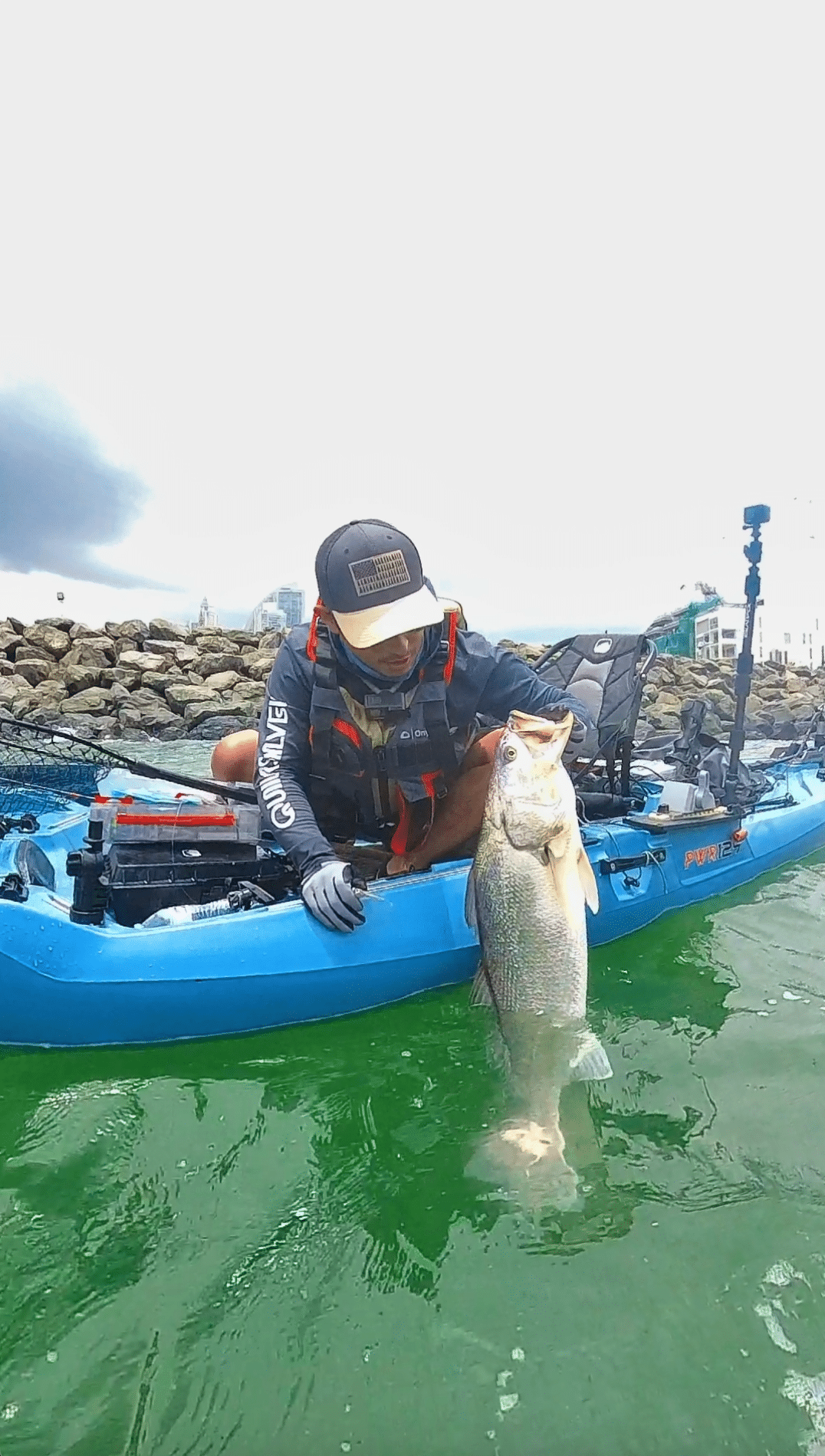
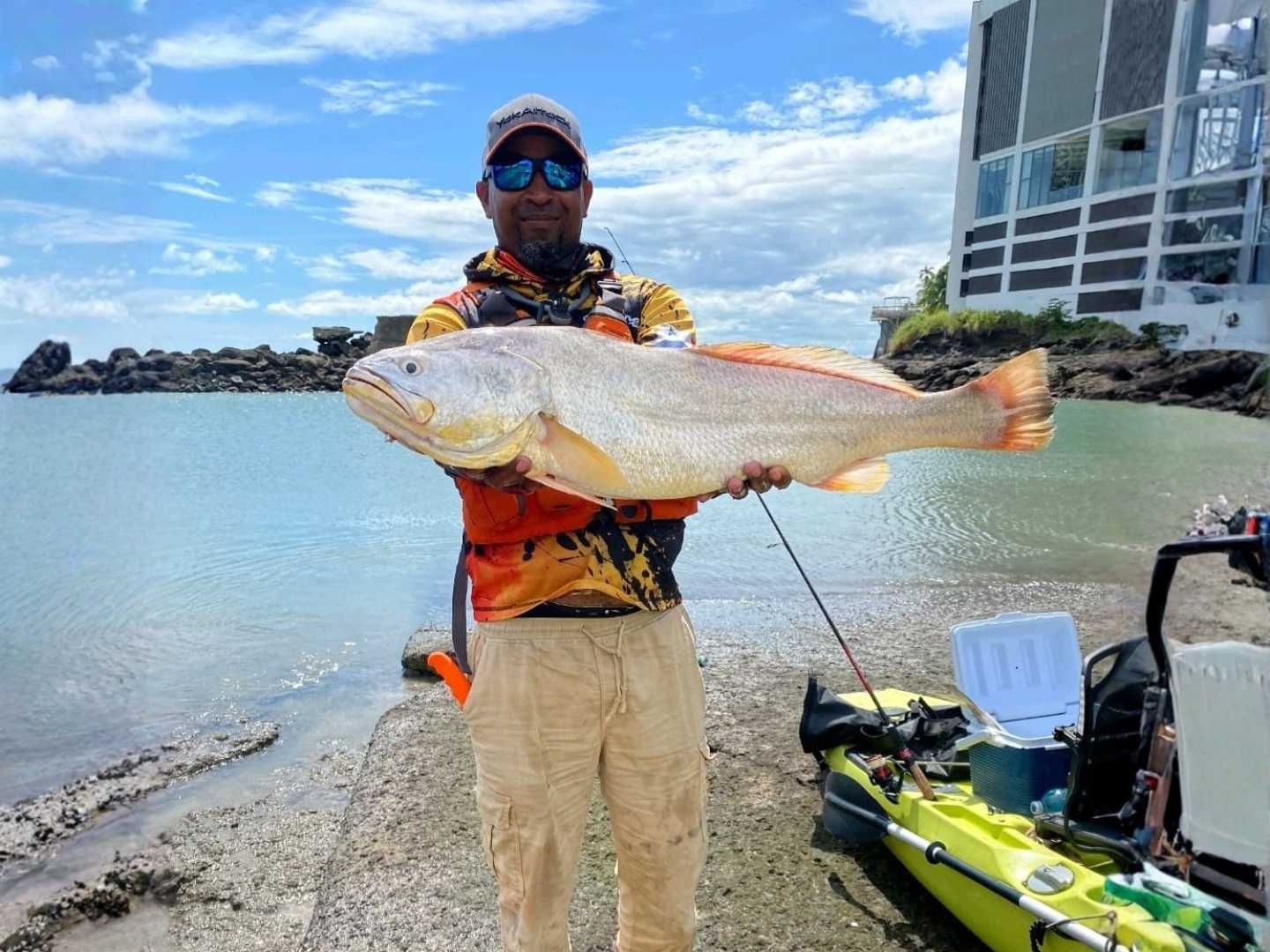
Kayak Fishing Tour - Veracruz
.png)
Frequently Asked Questions
Are there snook in the Panama Canal?
Yes. Gatun Lake and the Panama Canal harbor both snook and tarpon thanks to a mix of fresh and salt water. River mouths, grassy banks and submerged trees provide ideal habitat. Boat charters out of Gamboa and Colon target these fish year‑round.
What time of year is best for snook in Panama?
Snook can be caught year‑round, but the rainy season (May–November) often produces bigger fish and more bites as baitfish flush out of the mangroves. The dry season (December–April) offers clear water and ideal sight‑fishing conditions.
What is the best bait for snook in Panama?
Live mullet, sardines and blue runners are top choices. Artificial lures like swimbaits, bucktail jigs and top‑water plugs also catch plenty of fish when presented near structure.
Do I need a fishing licence to catch snook in Panama?
If you fish on a charter, no: the boat's license and the captain's card cover you. From 10 December 2026, anyone fishing independently or from shore needs a personal ARAP sport-fishing card. Billfish must always be released.
Where is the best place to fish for snook in Panama?
Prime locations include the Gulf of Chiriquí around Boca Chica, the Azuero Peninsula, the Bocas del Toro archipelago, the Bayano River and Gatun Lake in the Panama Canal. Each has unique conditions and seasons.
Can I combine snook fishing with other species?
Absolutely. Inshore trips often yield roosterfish, snapper and jack crevalle on the Pacific side, while the Caribbean and canal waters offer tarpon, peacock bass and barracuda. Many charters can tailor a multi‑species itinerary.