Fly Fishing in Punta Cana: Species & Spots Guide (2026)
An angler on r/flyfishing spent weeks planning a December trip to Punta Cana, then left his fly rod at home because a saltwater setup felt like one expense too many. He got there and watched permit cruising the surf off his resort beach. Permit. In the wash. With no rod.
That story says almost everything about fly fishing in Punta Cana. The fish are here. The information is not. Search the destination and you’ll find a wall of booking pages promising crystal-clear flats and year-round bonefish, and almost nothing about what the water really looks like, when the wind lets you cast, or which lagoons you can legally walk up to.
So let’s fix that. Here’s what swims here, where you can reach it, what it costs, and the one seasonal detail that quietly ruins more fly trips than any other.
Top Fly Fishing charters in Punta Cana


Half-Day Offshore Fishing (4 hrs)

.png)
.png)
6-Hour Fishing in Puerto Plata
What Is Fly Fishing in Punta Cana Really Like?
Fly fishing in Punta Cana is lagoon, beach and offshore fishing, not classic flats wading. Most guided fly trips run $500 to $650 for a half day, though a private inshore and fly skiff starts at $415 for four hours with gear included. Tarpon, snook, jacks and barracuda are the realistic targets. Bonefish exist but are scarce, because the shoreline drops into deep water almost immediately.
That last point is the key to the whole destination.
Most booking sites sell Punta Cana on the fact that you can reach deep water in just three miles. True, and it’s why the offshore fleet here is world-class. But the fly-fishing blog Bonefish on the Brain describes the Dominican Republic’s problem in almost the same words: the shore drops away fast, and the shallow bays aren’t protected or shallow enough to build real bonefish flats.
Same geography, two opposite verdicts. The steep shelf that makes Punta Cana a great marlin port is the reason it will never be Los Roques or Andros. Once you accept that, the place gets much easier to fish well. You stop hunting flats that aren’t there and start fishing water that actually holds fish.
What Can You Catch on the Fly in Punta Cana?
Tarpon
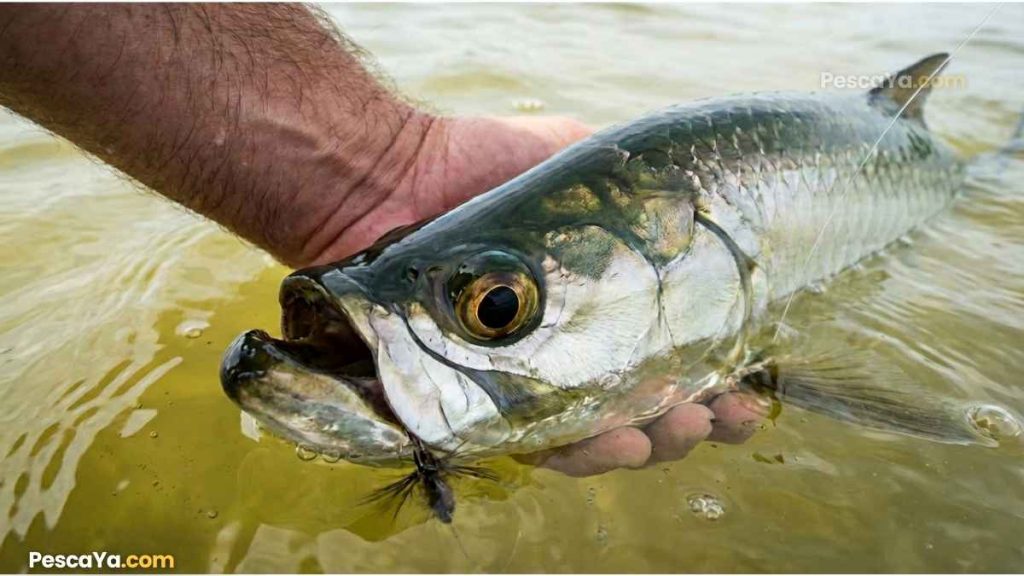
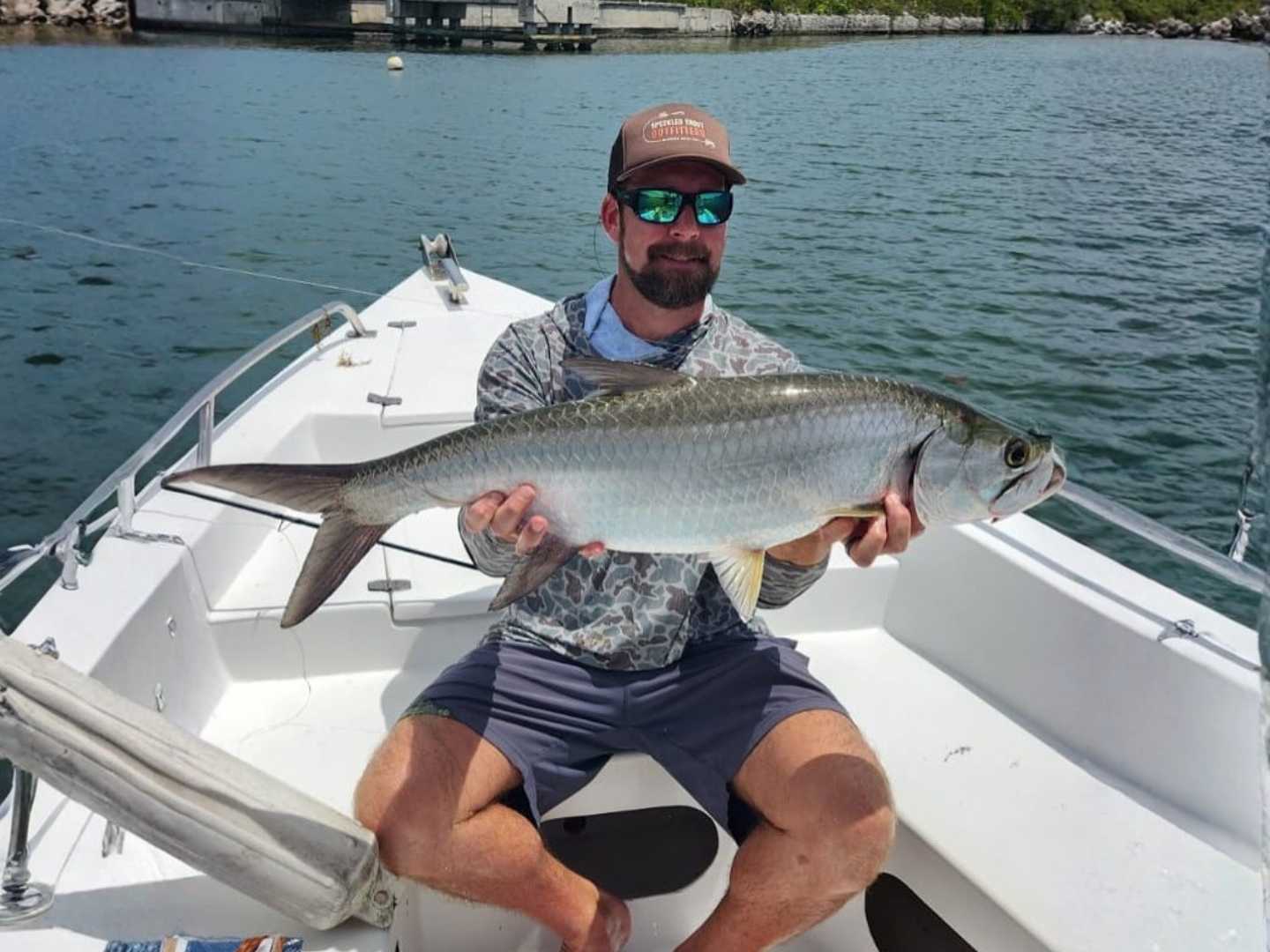
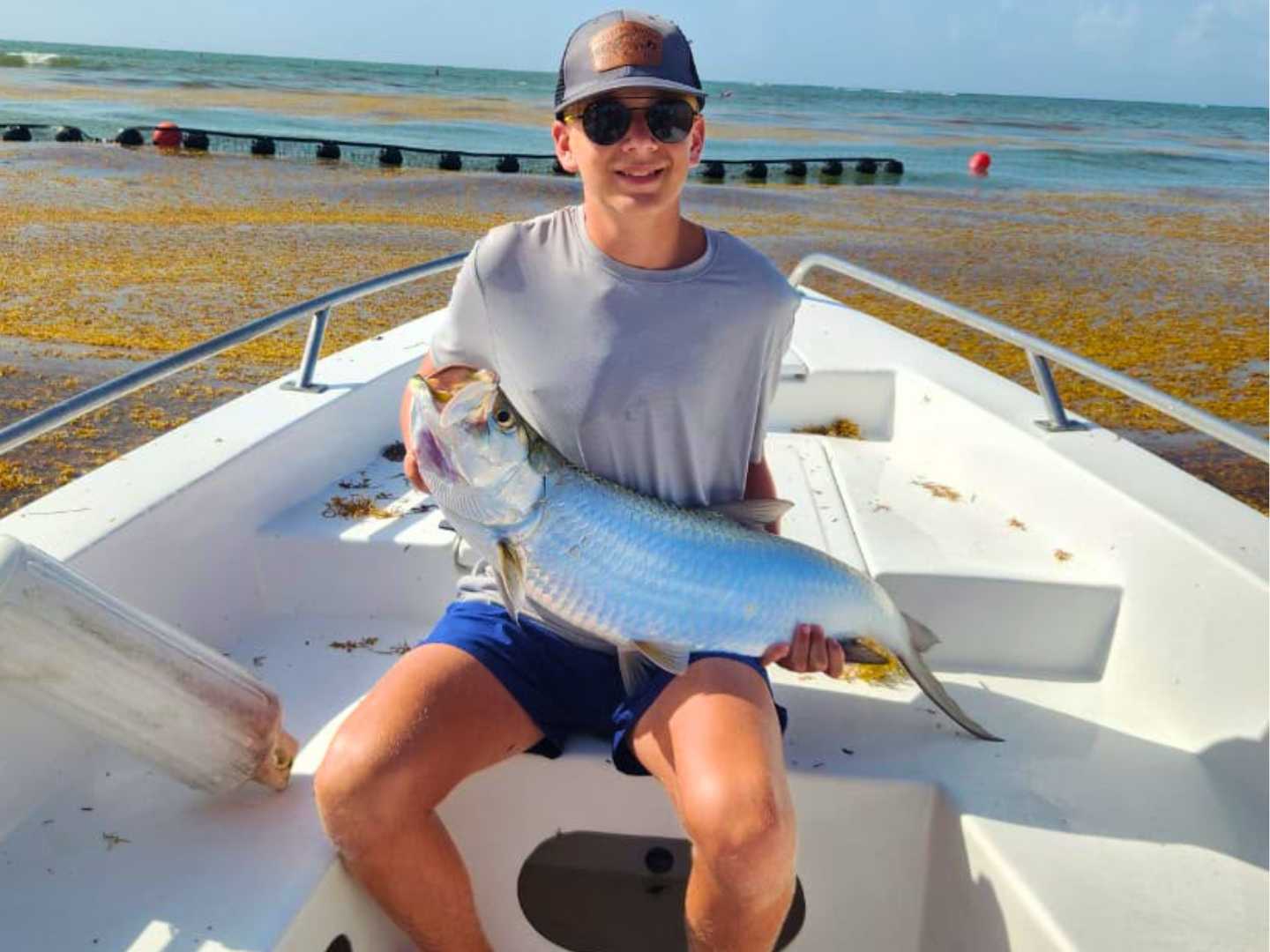
Tarpon are the headline act, and they’re not offshore. They live in the brackish lagoons, salt ponds and coastal creeks behind the beach, which is precisely where the tourist infrastructure sits. Fish in the 10 to 40 pound range are common, with genuinely big ones in the larger lagoon systems.
A veteran poster on The Hull Truth summed up the Caribbean-wide pattern better than any brochure: these fish get caught in lagoons, salt ponds and little tributaries, plus around docks where seafood gets cleaned or lights burn at night. That’s your search image. A lit dock at 9pm can beat a whole morning of blind casting. Our tarpon fishing guide covers tackle and tactics in depth.
Snook
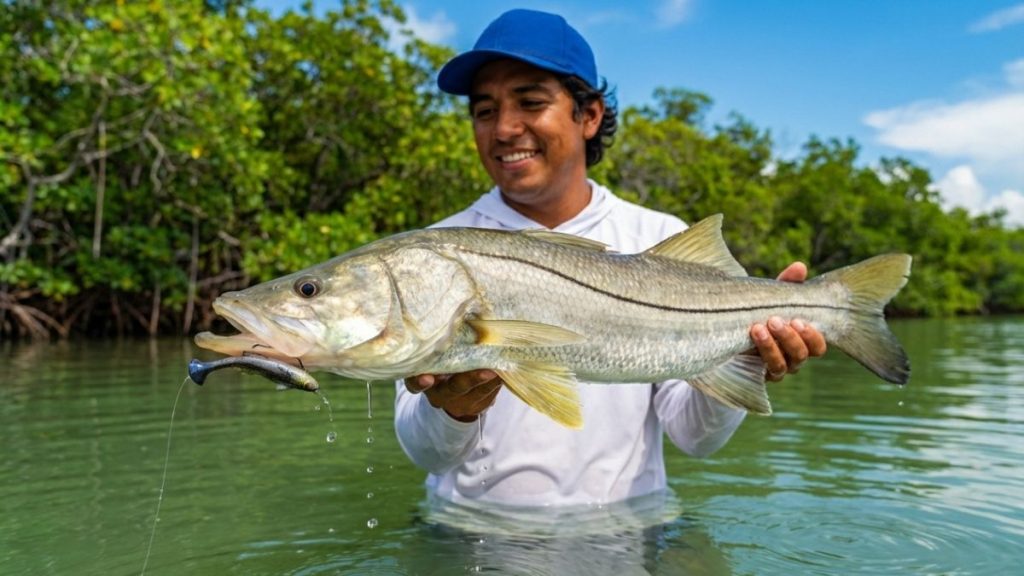
Snook share the same water as the tarpon and often the same fly. They hold tight to mangrove edges, culverts, bridge shadows and anything that breaks current. Punta Cana snook run smaller than the Central American giants, but they’re aggressive and they’ll eat a white baitfish pattern stripped fast along a shadow line.
Permit and Bonefish
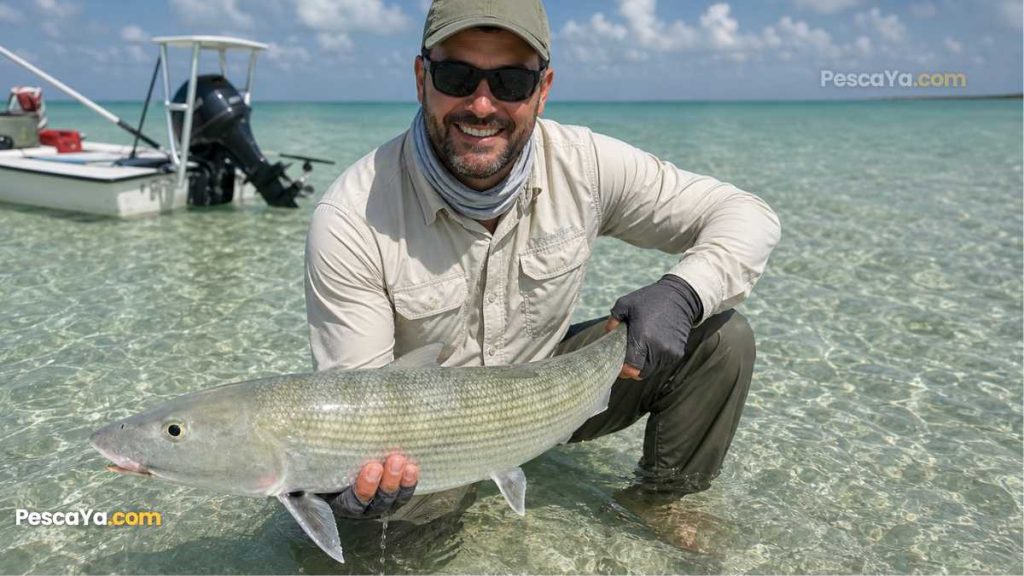
Here’s where I’ll be straight with you. Punta Cana is not a bonefish destination, and any page telling you otherwise is selling something. There’s no real network of wadeable sand flats, and anglers who go looking mostly come back empty.
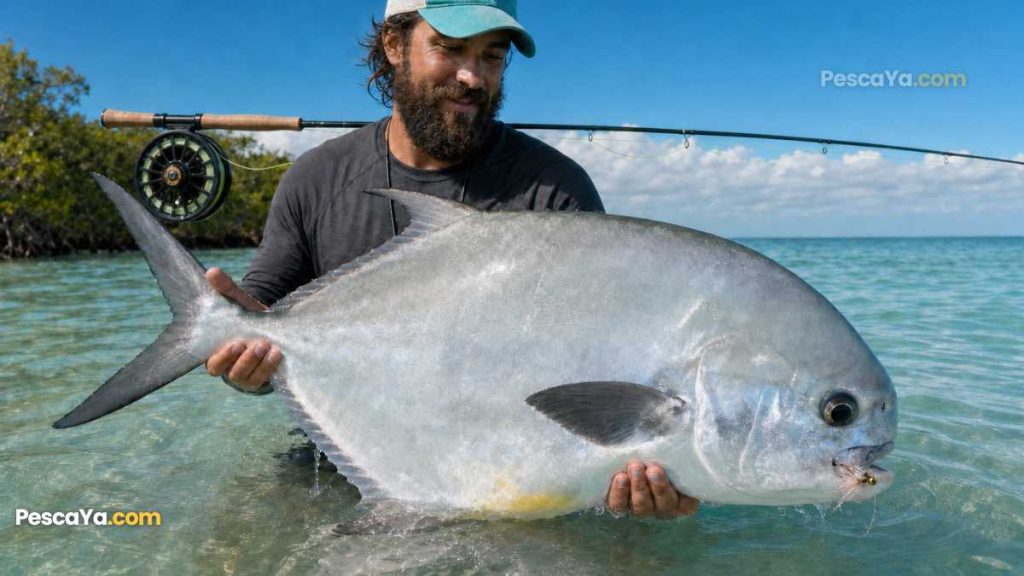
Permit are a different story. They show up in the surf line along the resort beaches with real regularity, and that December angler saw a school without even looking for them. A permit in the wash is a hard, low-percentage shot. It’s also free. Bring an 8-weight and walk the beach at first light.
Both species do sit on local guides’ target lists, and a shallow-draft skiff with someone who knows the tides will improve your odds a long way over blind-casting from the sand. Just book it as a bonus, not the reason for the trip.
Jacks, Barracuda and Needlefish
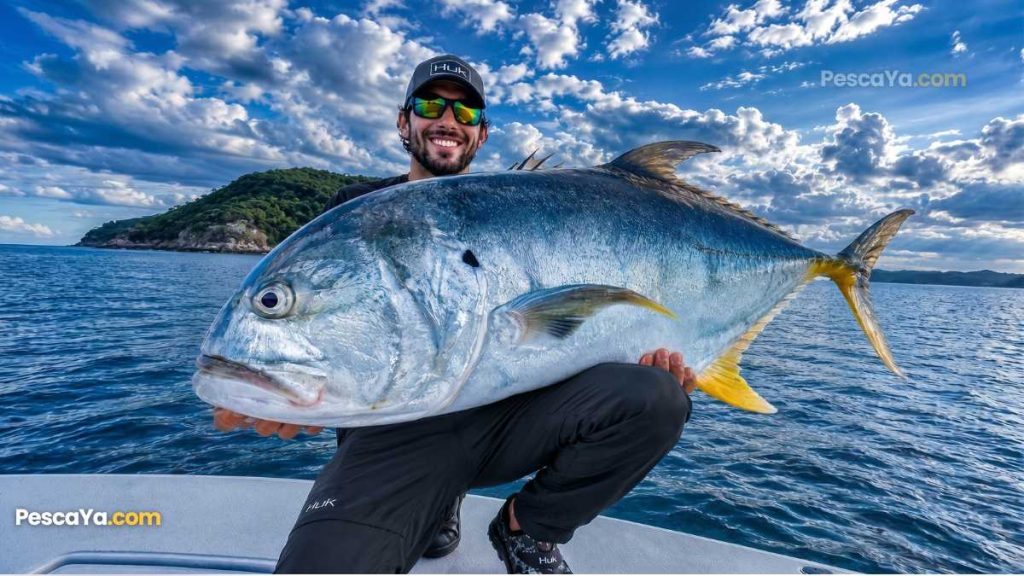
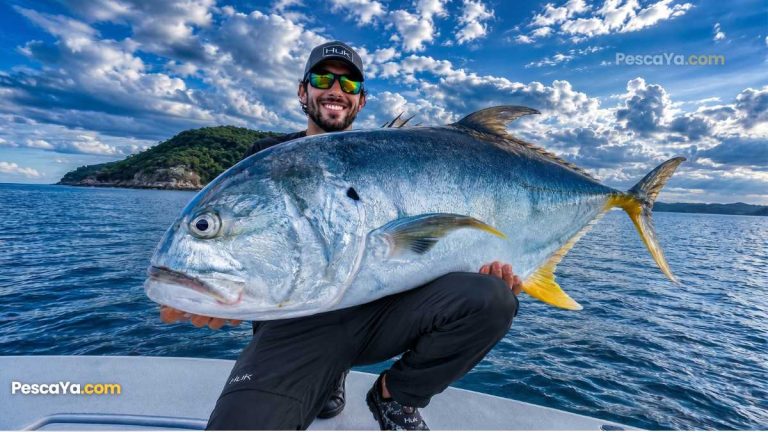
These are your bread and butter. Horse-eye and crevalle jacks patrol the beaches and lagoon mouths, barracuda sit over any hard bottom or channel and will destroy a fast-stripped fly, and needlefish are everywhere along the sand.
No glamour, but they’ll all bend an 8-weight into the cork, and they don’t require a guide, a boat or a reservation.
Mahi-Mahi, Sailfish and Marlin
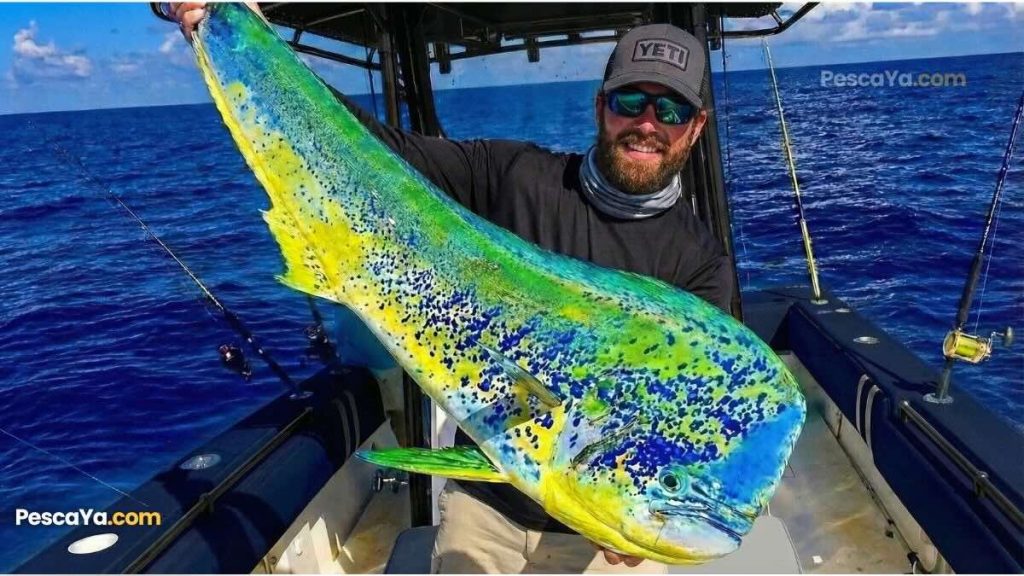
Offshore on the fly is a real option here, given how quickly the bottom falls away. Teasing sailfish into casting range is a legitimate winter program, and mahi-mahi around floating debris are one of the easiest big-fish targets in the ocean on a 10-weight.
Marlin on a fly gets pitched hard in Punta Cana marketing. It’s possible, but it’s a specialist pursuit needing a dedicated crew, a 14-weight and usually several days. Treat it as a bonus, not a plan.
Where to Actually Fish
The Resort Lagoons and Golf-Course Lakes
This is the local secret hiding in plain sight, and it comes with a catch worth knowing before you book your hotel.
The lakes inside the big resort complexes and threaded through the golf courses hold serious numbers of tarpon and snook. A Romanian angler planning a Punta Cana trip found what he called tarpon paradise in the lakes at the Barceló Bávaro complex, then had to switch hotels and discovered access to those lakes was restricted to guests of that specific property. His fishery evaporated with his room booking.
In Punta Cana, your hotel choice is a fishing decision. If lagoon tarpon are the reason you’re packing a rod, confirm water access with the property in writing before you pay. Policies vary by resort and change season to season, and the front desk is a more reliable source than any forum post, including this one.
Laguna de Nisibón and the Coastal Ponds
North of Bávaro, up the coast toward Miches, the shoreline opens into a string of brackish lagoons and salt ponds. Laguna de Nisibón is the best known, roughly an hour’s drive from the resort strip, and it holds the area’s larger tarpon.
This is genuinely wild water: no dock, no rental fleet, no signage. Arrange a local guide who knows the access points in advance rather than turning up hopeful.
Beaches, Points and the Cap Cana Shoreline
The public beaches are free, legal and better than their reputation. Early morning before the loungers fill is your window. Walk the sand with polarized glasses, look for bait getting pushed against the beach, and cast to anything that moves.
One angler who fished these beaches among the tourists reported catching on nearly any streamer he put in the water. Access is easy, solitude is not. Be off the water by nine and you’ll have both. Around Marina Cap Cana the water is cleaner and the structure better, and it’s where most guided inshore and fly trips launch.
Offshore on the Fly
Half-day and full-day boats out of Cap Cana and Bávaro will run fly programs if you ask specifically. Deep water starts about three miles out, so you’re fishing quickly instead of burning half the charter on the run.
If teasing billfish onto a fly is the whole point of the trip, the north coast is worth a look too. Boats out of Ocean World Marina in Puerto Plata run offshore from $500 to $590, and the run to blue water is shorter than from the east coast.
Top Fly Fishing charters in Punta Cana


.jpeg)
Half-Day Inshore Fishing in Punta Cana - 6 Hours


Half-Day Offshore Fishing (4 hrs)

.png)
.png)
6-Hour Fishing in Puerto Plata
When Should You Go? Wind Beats Water Temperature
Here’s the detail almost nobody publishes, and it’s the biggest single factor in whether your trip works.
Every travel site tells you to visit Punta Cana between December and March. For a fly angler that’s close to the worst advice available, because those are the windiest months of the year. Kite schools, who get paid to be right about wind, rate November through April as the windy season, with November and December averaging around 20 knots and the rest of the year settling to a friendlier 8 to 10.
The forum record backs this up with painful consistency. One angler who went in December reported it was so windy that even getting out in a boat wasn’t an option. Another left his fly rods home and packed spinning gear purely because of the wind. A third called it brutal. Every one of those trips was booked inside the high-season window.
| Months | Typical wind | Fly-rod outlook | Best targets |
|---|---|---|---|
| Nov–Dec | ~20 kt, the annual peak | Hardest. Expect lost days | Lagoons and sheltered ponds only |
| Jan–Apr | 12–18 kt, still strong | Workable if you fish dawn and stay inside | Tarpon, snook, sailfish offshore |
| May–Jun | 8–10 kt | Best of the year for casting | Tarpon, snook, permit, jacks |
| Jul–Aug | Moderate to fresh | Mixed. Big beach tarpon show up | Tarpon, jacks, blue marlin offshore |
| Sep–Oct | 8–10 kt, calmest water | Excellent, with hurricane risk priced in | Tarpon, snook, mahi-mahi |
The pattern is clear enough to plan around: May, June, September and October are the best fly-fishing months in Punta Cana, and they’re the four months the tourism industry tells you to skip. Rates are lower too. September and October carry genuine hurricane exposure, so buy the flexible fare.
Whatever month you land in, fish early. The wind here is thermal as well as trade-driven, so it builds through the middle of the day. A 6am start is worth more than any fly in your box, and it’s no accident that the serious inshore guides here push off at 7am rather than mid-morning.
What Gear Do You Need?
An 8-weight is the honest one-rod answer, and experienced saltwater anglers on the forums back it: it handles beach permit, lagoon snook, jacks and average tarpon. Some argue for a 9-weight minimum on the logic that you never know what eats your fly in salt, and if you’re bringing one rod in a windy month, they have a point. Save the 10 to 12-weight for a dedicated summer tarpon trip.
Bring a sealed-drag reel, because salt destroys anything else. Floating line covers most situations, with an intermediate as a useful second spool for cutting wind and chop.
Flies are refreshingly simple. Clousers in chartreuse-and-white and all-white cover most of it, plus EP-style baitfish and a few dark patterns for dirty lagoon water. Fluorocarbon leaders sink better than mono and matter more than you’d think in the surf.
One warning that catches travelers out: an angler flying home from Mexico was allowed to carry his rod tube on the way out, then made to check it on the return. Airline rules on rod tubes are enforced unevenly, so plan for checking your gear in both directions.
How to Book a Fly Trip Without Getting Burned
This is the part the booking sites won’t tell you, because the booking sites are the operators.
The recurring complaint in Punta Cana fly-fishing threads isn’t bad fishing. It’s booking a trip as a fly trip and finding the boat has no fly gear on board. One angler went looking for a guide after reading multiple reviews describing exactly that and couldn’t confirm one, while another in the same thread said flatly he couldn’t find anything for actual guides. Even booking websites quietly advise checking whether your captain provides fly equipment, because some assume you’re bringing your own.
Ask four questions before you pay. Will we fly fish exclusively, or is a spinning rod the backup plan? What rod weights and flies are on board, and are they included or rented? Are we fishing lagoons, beach or offshore, and what’s the plan if it blows 20 knots? Has the captain personally guided fly anglers, or is fly fishing just listed on the website?
A guide who answers all four cleanly is worth the money. One who deflects is telling you something.
For what it’s worth, the operation that clears all four is Atlántida’s inshore and fly trip out of Punta Cana. It’s a husband-and-wife outfit running a 23-foot flat-floor center console, private only, capped at three anglers. Rods, reels, tackle and flies are included rather than assumed, the boat pushes off at 7am while the water is still flat, and the captain matches the spot to that morning’s tide and wind instead of running a fixed itinerary. Four hours is $415 and six hours is $590, with free cancellation up to three days out. A Redditor in r/PuntaCana looking for fly options called them a reputable company, which in this market counts for something.
The paperwork is simple and in your favor. Sport fishing is regulated under Law 307-04 and CODOPESCA, tourists don’t need an individual licence to fish from a commercial charter, and billfish must be released.
Worth knowing, too: the fishery isn’t nearly as dead as its loudest critics claim. Punta Cana’s most visible fly guide is Georges Grün, a former Belgian international who played three World Cups and faced Maradona in the 1986 semi-final before trading football for a flats skiff. He’s been posting bonefish and tarpon footage from this water for years. The fish are here. Finding someone who’ll put you on them is the work.
How to Get There
Punta Cana International Airport (PUJ) is the entry point, with direct flights from most major North American and European hubs. It’s small, efficient and about 15 minutes from the Bávaro hotel strip and 20 from Marina Cap Cana, where most inshore and fly charters launch.
Laguna de Nisibón is roughly an hour north by road. Most guides include ground transfer, but confirm it, because taxi fares to the northern lagoons add up fast.
Worth knowing that Punta Cana isn’t the country’s only option. Puerto Plata on the north coast, La Romana and Casa de Campo to the west, and the calmer reef water around Bayahíbe all fish differently, and our Dominican Republic fishing charters page lays out the regions side by side.
If you’re comparing Caribbean and Latin American fly destinations before committing, our complete guide to fly fishing in Panama covers a fishery with far more classic flats and jungle-river water.
Frequently Asked Questions
It's good for lagoon and beach fly fishing and very good offshore, but poor for classic flats work, because the shoreline drops into deep water almost immediately. Set your expectations around tarpon, snook, jacks and barracuda and you'll have an excellent time.
Rarely. The Dominican Republic lacks the protected sand flats that hold bonefish elsewhere in the Caribbean. A few get caught, but no honest guide builds a trip around them. Permit in the beach surf are the better long-shot target.
Most half-day private inshore or fly charters run $500 to $650, and a full day on a larger offshore boat runs $700 to $1,250. Verified private fly trips start lower: $415 for four hours and $590 for six, gear included. Budget separately for fuel surcharges on offshore runs and a 15–20% crew tip, which are almost never in the advertised price.
Yes, and it's free. Public beaches are open to fishing, and the early morning hours before the beach fills are genuinely productive for jacks, needlefish and the occasional permit. Resort lagoons and golf-course lakes are the better water, but access is usually limited to guests of that property.
No. Under Law 307-04 and CODOPESCA regulation, tourists don't need an individual fishing licence to fish from a commercial charter in the Dominican Republic. Billfish must be released.
Featured Posts
Last Cast
Punta Cana rewards anglers who arrive with the right picture in their head. Skip the bonefish fantasy, fish the lagoons and the beaches at dawn, and pick a month when the wind actually lets you cast: May, June, September and October, whatever the travel brochures say.
And pack the rod. The single most common regret in every Punta Cana fly-fishing thread comes from anglers who left theirs at home and then spent a week watching fish they couldn’t reach.
Ready to fish it properly? Book a private inshore and fly trip in Punta Cana from $415 with gear included, browse every Punta Cana fishing charter we’ve verified, or explore our fly fishing trips across the Caribbean and Latin America.
Quiere seguir leyendo?
Grouper Fishing: Species, Tactics & Top Spots (2026)
Grouper Fishing: Species, Tactics & Top Spots (2026) Hook a good grouper and you’ll feel it instantly: a...
Read More
->
Roosterfish Fishing Guide: Tactics, Gear & Best Spots
There’s a moment every roosterfish angler talks about — the one where a 40-pound fish comes rocketing out of the...
Read More
->
Jack Crevalle: Complete Fishing Guide (2026)
Jack Crevalle: Complete Fishing Guide (2026) In Mexico, Panama, and Costa Rica, anglers don’t call them jack...
Read More
->