Spanish Mackerel · Snapper
.png)
.jpeg)
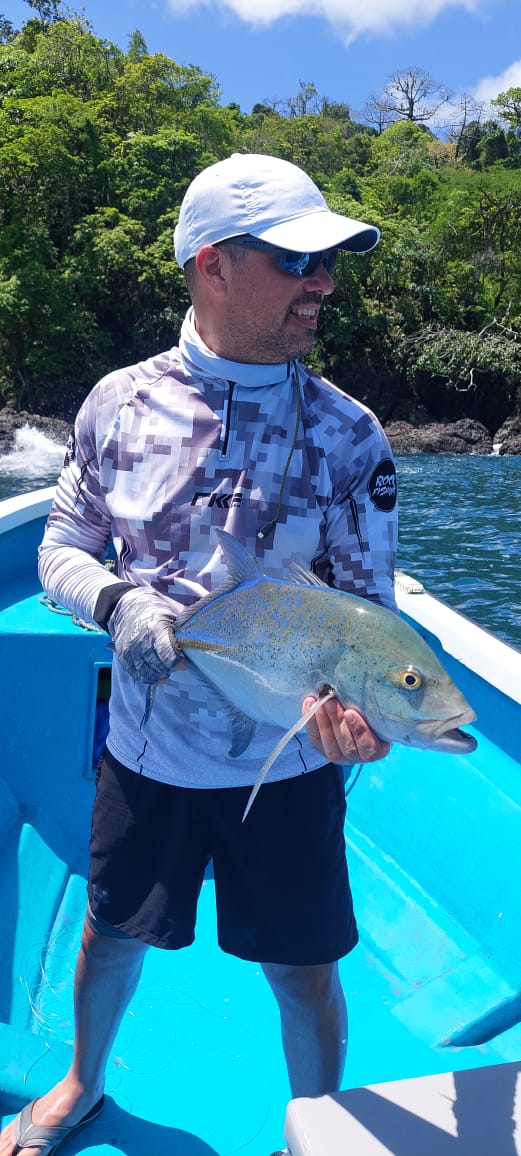



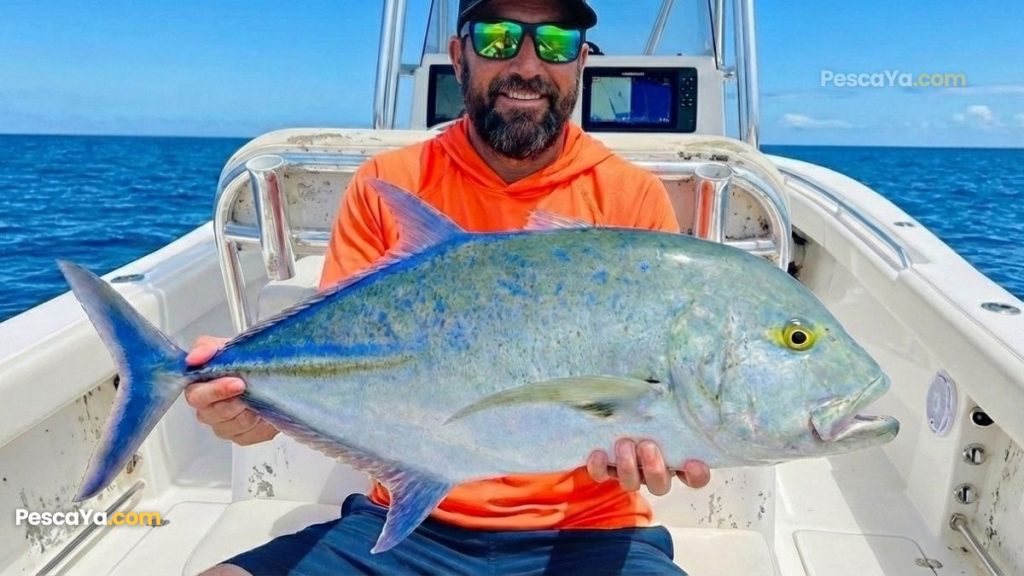
The Eastern Pacific is one of the great bluefin trevally fisheries on the planet — and among the most underrated. While Indo-Pacific destinations like Hawaii and Australia get most of the attention, the stretch of Pacific coastline running from Mexico south through Central America offers year-round access to aggressive, hard-fighting fish on some of the most dramatic inshore structure in the world.
Panama, Costa Rica, and Mexico each offer a distinct version of the Eastern Pacific trevally experience. Panama delivers consistency: year-round fish across two distinct oceanic zones. Costa Rica offers the sheltered depths of Golfo Dulce alongside exposed Pacific points and northern reef systems. Mexico presents the Sea of Cortez — one of the richest inshore seas on Earth — with bluefin trevally as a seasonal highlight in crystal-clear water over volcanic rock.
This guide covers all three destinations: what each offers, when to go, how to choose, and how to fish them. For deeper dives into individual countries, each section links to a dedicated country guide.
The bluefin trevally (Caranx melampygus) is the most visually striking jack in the Eastern Pacific. Electric blue finnage over a silver-white body spotted with small dark markings makes it unmistakable. But the identification is almost beside the point — you’ll know it by the strike. These fish hit surface lures with full-body violence, often launching clear of the water in the process.
They’re built for cooperative ambush. Bluefin trevally hunt in coordinated groups, corralling baitfish against rocky structure, reef edges, and current lines before attacking simultaneously. That behavioral pattern is why certain spots — specific points, channel edges, underwater ledges — produce fish on every visit: the structure itself creates the conditions trevally exploit.
In the Eastern Pacific, they range from Mexico’s Baja California Sur south to Panama and beyond. The southern end of that range (Panama, Costa Rica’s Golfo Dulce) holds fish year-round in warm, stable water. The northern end (Baja, Sea of Cortez) sees them peak during the warm season from June through November before retreating south as temperatures drop. Size varies by destination: Panama and Costa Rica average 5–15 lb with genuine 20+ lb fish in both countries; Mexico’s nutrient-rich Cortez also produces fish above 20 lb at peak season.
| Destination | Best Season | Top Zones | Charter Type |
|---|---|---|---|
| Panama | Year-round | Gulf of Chiriquí, Las Perlas Islands | Inshore half-day |
| Costa Rica | Year-round (Golfo Dulce); Dec–Apr (Pacific coast) | Golfo Dulce, Osa Peninsula, Quepos | Inshore half-day |
| Mexico | Jun–Nov (Baja/Cortez); May–Nov (Puerto Vallarta) | East Cape, La Paz, Los Cabos, Puerto Vallarta | Inshore half-day |
Panama is the most consistent bluefin trevally destination in the Eastern Pacific. Two distinct fishing zones — the Gulf of Chiriquí in the southwest and the Las Perlas Islands in the Bay of Panama — give anglers year-round access to structure-rich water and well-established inshore charter operations. Water temperatures remain stable throughout the year, and trevally are resident in both zones regardless of season.
The Gulf of Chiriquí is the standout zone. Volcanic rock formations, submarine ridges, and the influence of the Humboldt Current create exceptional bait concentrations that support large resident trevally populations. Las Perlas offers a different geography — a scatter of islands in open Pacific water — with exposed rocky points and strong currents that hold fish on every tide cycle.
Panama also stands out for logistics: no fishing license is required, a wide range of charter operators run dedicated inshore trips, and the country’s compact Pacific coastline puts multiple productive zones within range of a single base. For a full breakdown of spots, seasons, and tactics, see our bluefin trevally fishing guide for Panama.
Costa Rica’s Pacific coast stretches from the Nicaraguan border in the north to the Panamanian border in the south, and bluefin trevally are present along virtually the entire length. Golfo Dulce — a rare tropical fjord at the southern end — is the most consistent zone, holding fish year-round in sheltered, warm water. Its deep interior structure, rocky margins, and strong tidal currents create near-ideal trevally habitat.
The Osa Peninsula’s exposed outer coast, particularly the rocky points at Matapalo, adds a high-energy alternative for dry-season visits (December–April) when sea conditions allow. Further north, Quepos offers inshore trevally alongside roosterfish on the rocky reef structures flanking Manuel Antonio, and the Gulf of Papagayo provides exceptional visibility and surface-lure conditions during the northern dry season.
The main practical difference from Panama: Costa Rica requires a fishing license through INCOPESCA, and most reputable charters include or facilitate it. For destination-by-destination detail, see our bluefin trevally fishing guide for Costa Rica.
Mexico represents the northern edge of the bluefin trevally’s Eastern Pacific range — which makes it a seasonal fishery rather than a year-round one, but no less compelling. The Sea of Cortez is the primary theater: its volcanic rock structure, nutrient-rich upwellings, and summer-through-fall warm water create excellent trevally habitat along the Baja Peninsula from East Cape up through La Paz and Los Cabos.
East Cape and Los Barriles offer the most targeted trevally fishing in Baja, with guides who specifically work the rocky inshore structure for jacks and trevally. La Paz adds the bonus of Espíritu Santo island’s channel edges and sheltered bay fishing, which holds fish even during rougher conditions. Puerto Vallarta on the mainland coast extends the range south with confirmed resident trevally in Banderas Bay through a slightly longer season.
The Cortez’s clear water demands lighter leaders than you’d use in Panama or Costa Rica — a detail that makes a meaningful difference in strike rate. Fishing licenses from CONAPESCA are required and usually handled by the charter. For full regional detail, see our bluefin trevally fishing guide for Mexico.
You want the most reliable year-round access with the least logistical friction. No fishing license requirement, a well-developed inshore charter market, and two distinct productive zones make Panama the default choice for a dedicated trevally trip at any time of year. It’s also the best option if you’re new to targeting trevally — the consistent action on resident fish means more opportunities to learn the species.
You want to combine trevally with a broader fishing or travel itinerary. Golfo Dulce’s year-round access is Panama-level reliable, and the dry-season Pacific coast adds roosterfish, snook, and offshore species to the same trip. Costa Rica’s developed ecotourism infrastructure also makes it the most versatile destination for non-fishing companions.
You’re targeting the Sea of Cortez as a destination in its own right, or combining trevally with Mexico’s world-class offshore fishing for dorado and yellowfin. The June–November window aligns perfectly with peak Cortez conditions. La Paz is the most flexible option for year-round visits. Browse Panama fishing charters, Costa Rica fishing charters, or Mexico fishing charters to compare operators across all three destinations.
Topwater is the signature method for Eastern Pacific trevally. Poppers and stickbaits worked aggressively over rocky structure — points, channel edges, reef crests — produce the most spectacular strikes. Cast tight to structure, work the lure hard, and don’t stop the retrieve when you see fish tracking it. Trevally often follow for several feet before committing; killing the action at that moment is the most common mistake.
Lure size: 3–5 inches across all three destinations. In Mexico’s clear Cortez water, go lighter on the leader (20–25 lb fluorocarbon). In Panama’s slightly darker water and Costa Rica’s Golfo Dulce, 30–40 lb is standard. Color: sardine pattern, chrome, and pearl work well everywhere.
When trevally push off the surface into deeper water — common at midday or when topwater action stalls — butterfly jigs in the 60–120g range bring them up. Work an erratic cadence: fast retrieves with sudden pauses. The rocky channel edges in La Paz, the volcanic reef structure in Panama’s Gulf of Chiriquí, and the island channels in Costa Rica’s Golfo Dulce are all productive jigging zones.
Live sardines, mullet, or locally caught baitfish fished near structure are a reliable fallback when artificial presentations slow. Charter captains across all three destinations typically source live bait before departure. A live bait on a light leader freelined near a rocky point will produce trevally when nothing else will.
A medium-heavy spinning outfit covers all three countries: 7–8 ft rod, 20–40 lb braid, 4000–5000 series reel. Fluorocarbon leader weight: 30–40 lb in Panama and Costa Rica, 20–25 lb in Mexico’s clearer Cortez water. Check hook points constantly — trevally are hard strikers and live near rock, which dulls points quickly.
Featured tours · Eastern Pacific
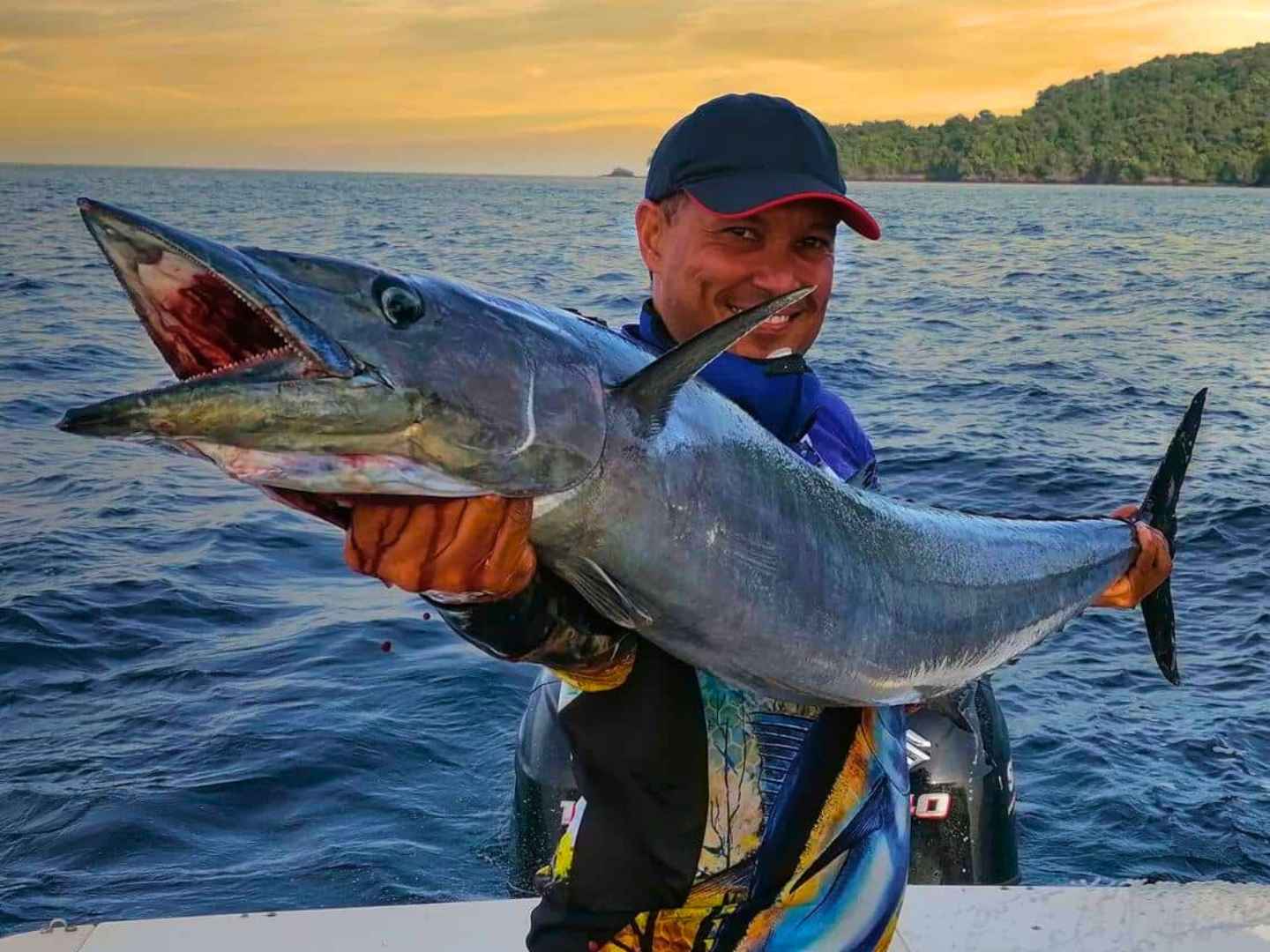
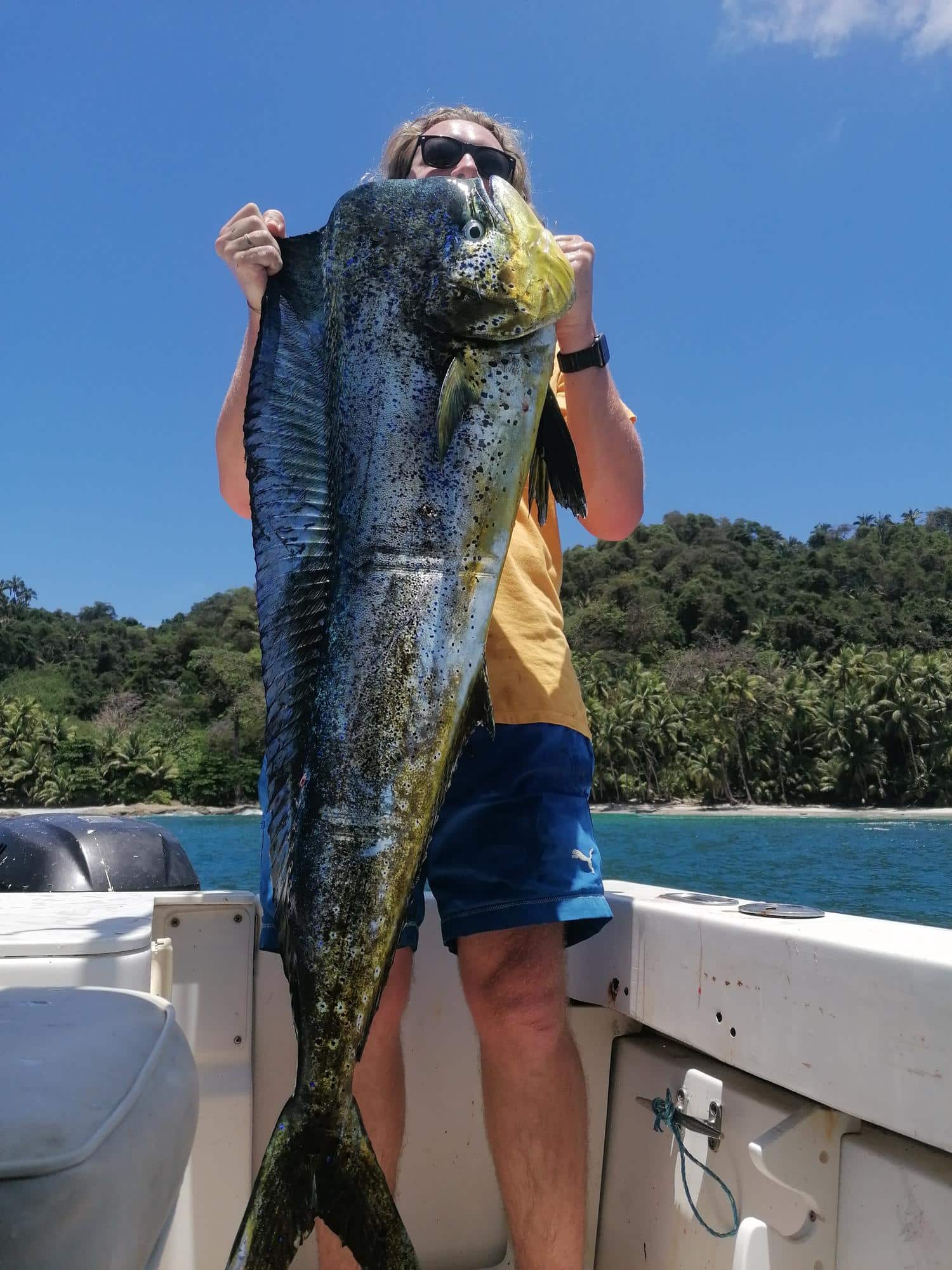
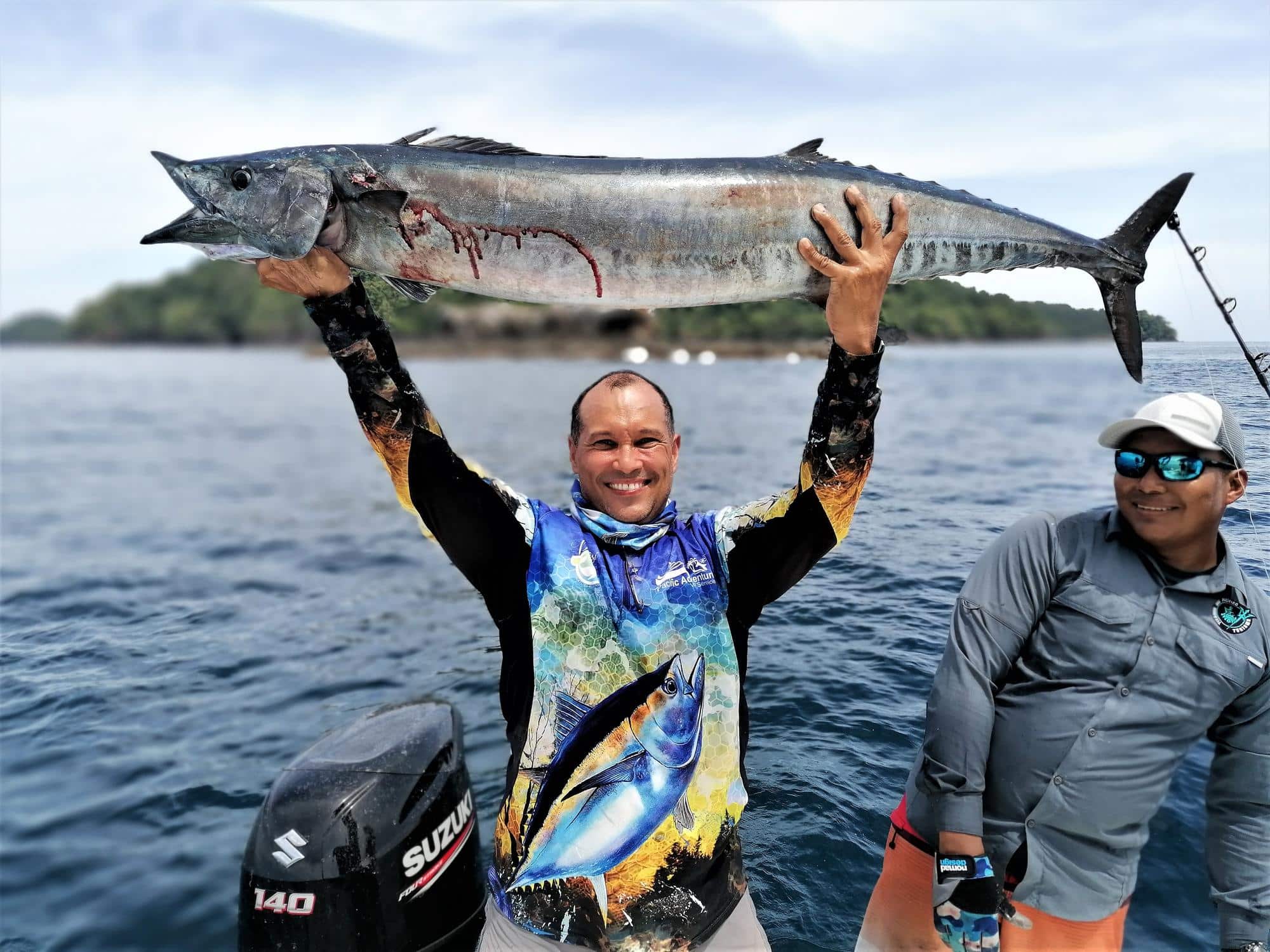
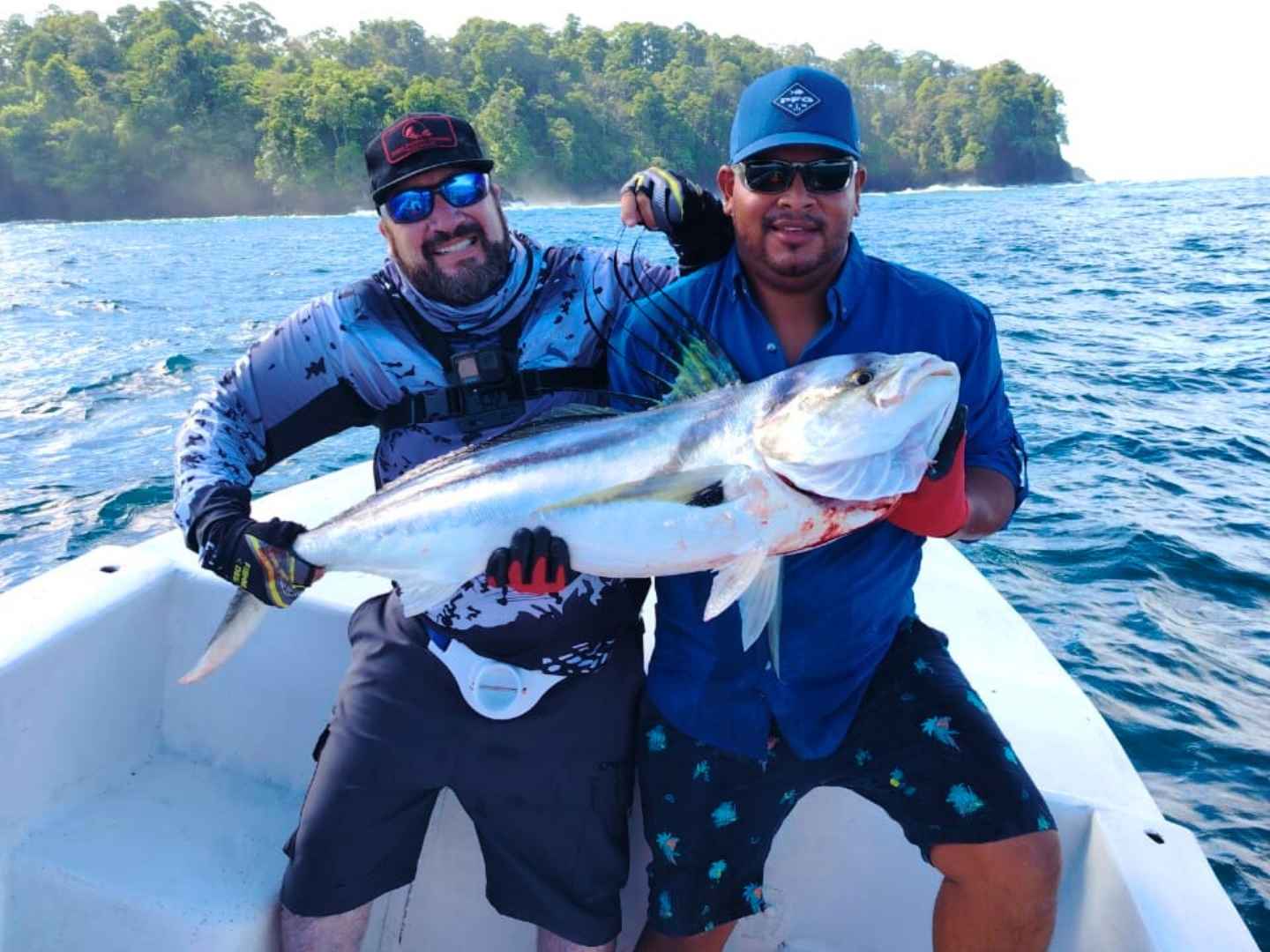
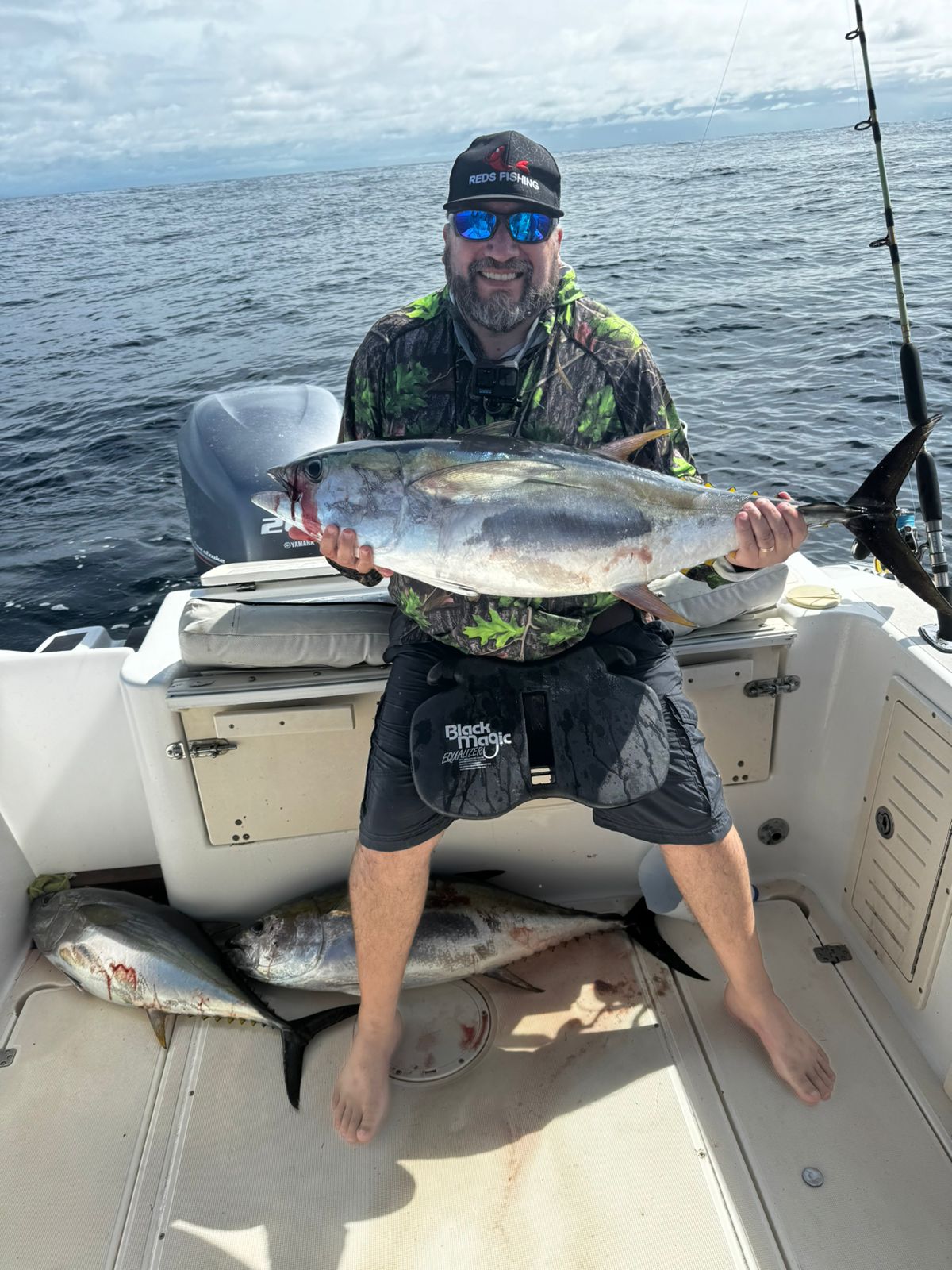
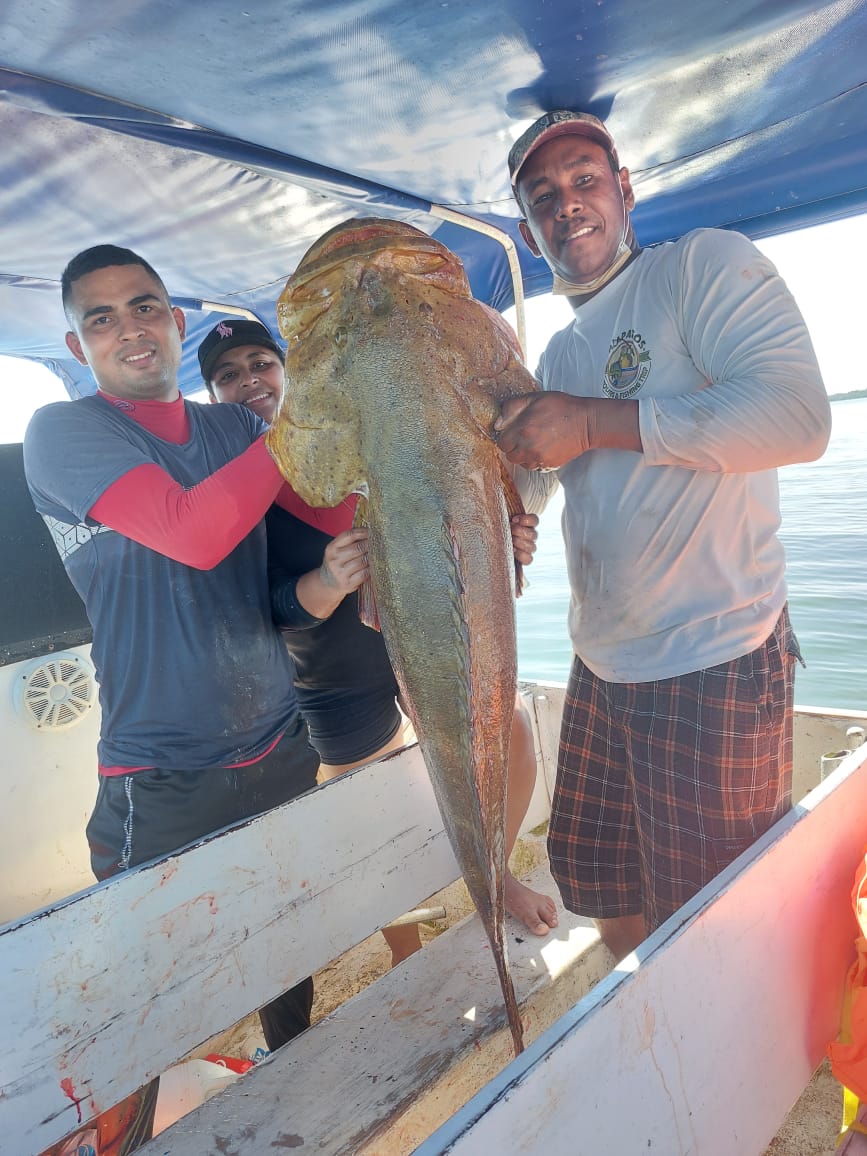
The IGFA all-tackle record for bluefin trevally is over 29 lb. In the Eastern Pacific, fish above 20 lb are caught in all three destination countries, with the Gulf of Chiriquí in Panama, Golfo Dulce in Costa Rica, and La Paz in Mexico’s Sea of Cortez all producing specimens in that range. Most fish caught on guided trips run 5–15 lb, which is more than enough on sport tackle.
Yes — in all three countries. Roosterfish and bluefin trevally share inshore rocky structure, and most guides who target one will encounter the other on the same reefs and points. In Panama and Costa Rica, a half-day inshore session targeting jacks and trevally will frequently produce roosterfish incidentally. Many Los Cabos and East Cape guides specifically run “roosterfish and jacks” trips that include both species.
Panama is the most beginner-friendly. Year-round access, no fishing license requirement, consistent fish populations, and a mature inshore charter infrastructure with guides experienced at putting visiting anglers on fish make it the lowest-friction entry point. Costa Rica’s Golfo Dulce is a close second with similar year-round consistency.
Panama: no license required for recreational fishing. Costa Rica: yes, a license through INCOPESCA is required — most charters arrange it. Mexico: yes, a CONAPESCA license is required — most charters include or facilitate it. Always confirm the license situation when booking.
In clear water (Mexico’s Sea of Cortez, Costa Rica’s dry-season Pacific): sardine patterns, natural silver/chrome, and pearl produce well. In green or darker water (Panama’s inshore zones, Golfo Dulce in the wet season): brighter colors — chartreuse, pink/white, and blue/white — get better attention at distance. When in doubt, carry both and let the fish decide.
Panama, Costa Rica, and Mexico collectively make the Eastern Pacific one of the most compelling bluefin trevally fisheries in the world. The range of conditions — from Panama’s year-round volcanic structure to Costa Rica’s tropical fjord to Mexico’s crystalline Cortez — means there’s a version of this fishery that suits every travel window, budget, and experience level.
Panama is the consistent choice for dedicated trevally trips at any time of year. Costa Rica is the destination for multi-species or multi-activity travel with trevally as a centerpiece. Mexico rewards anglers who time the June–November window and want the Cortez experience alongside their trevally fishing.
Whichever country you choose, book a guide who actively targets trevally — not one who treats them as an afterthought. The right structure, the right tide, and the right lure make the difference between a slow morning and a topwater session you’ll still be talking about years later. Browse Panama fishing charters, Costa Rica fishing charters, or Mexico fishing charters to start planning.
Grouper Fishing: Species, Tactics & Top Spots (2026) Hook a good grouper and you’ll feel it instantly: a...
Read More
->
There’s a moment every roosterfish angler talks about — the one where a 40-pound fish comes rocketing out of the...
Read More
->
Sailfish Fishing: Complete Guide for Anglers (2026) The bite comes out of nowhere. One second the teaser is working the...
Read More
->