Updated on Jun 21, 2026 | 11 minute read | Written by Ian Arango
The name “wahoo” didn’t come from a map, a language, or a scientist. It came from an angler. Specifically, from the sound one makes the moment a wahoo hits the line.
That’s the whole etymology. “Wahoo!” — the involuntary shout that escapes when 500 yards of line disappears from a full reel in what feels like three seconds, when a fish you never saw strike just took everything you had and kept going. Early fishermen couldn’t agree on much, but they agreed on that sound. The name stuck.
Acanthocybium solandri is the scientific name, and it’s the only species in its entire genus — a genuine evolutionary singleton in the mackerel family with no close relatives. In Hawaii, where it appears on restaurant menus as frequently as it does on fishing tournament boards, it goes by ono — a Hawaiian word meaning “delicious.” Two names. Between them, they tell you everything you actually need to know: this fish will make you shout, and then it will make you very glad it’s in your cooler.
Here’s everything else.
Wahoo charters
Book your wahoo trip
High-speed offshore in Panama & Costa Rica · catch and cook
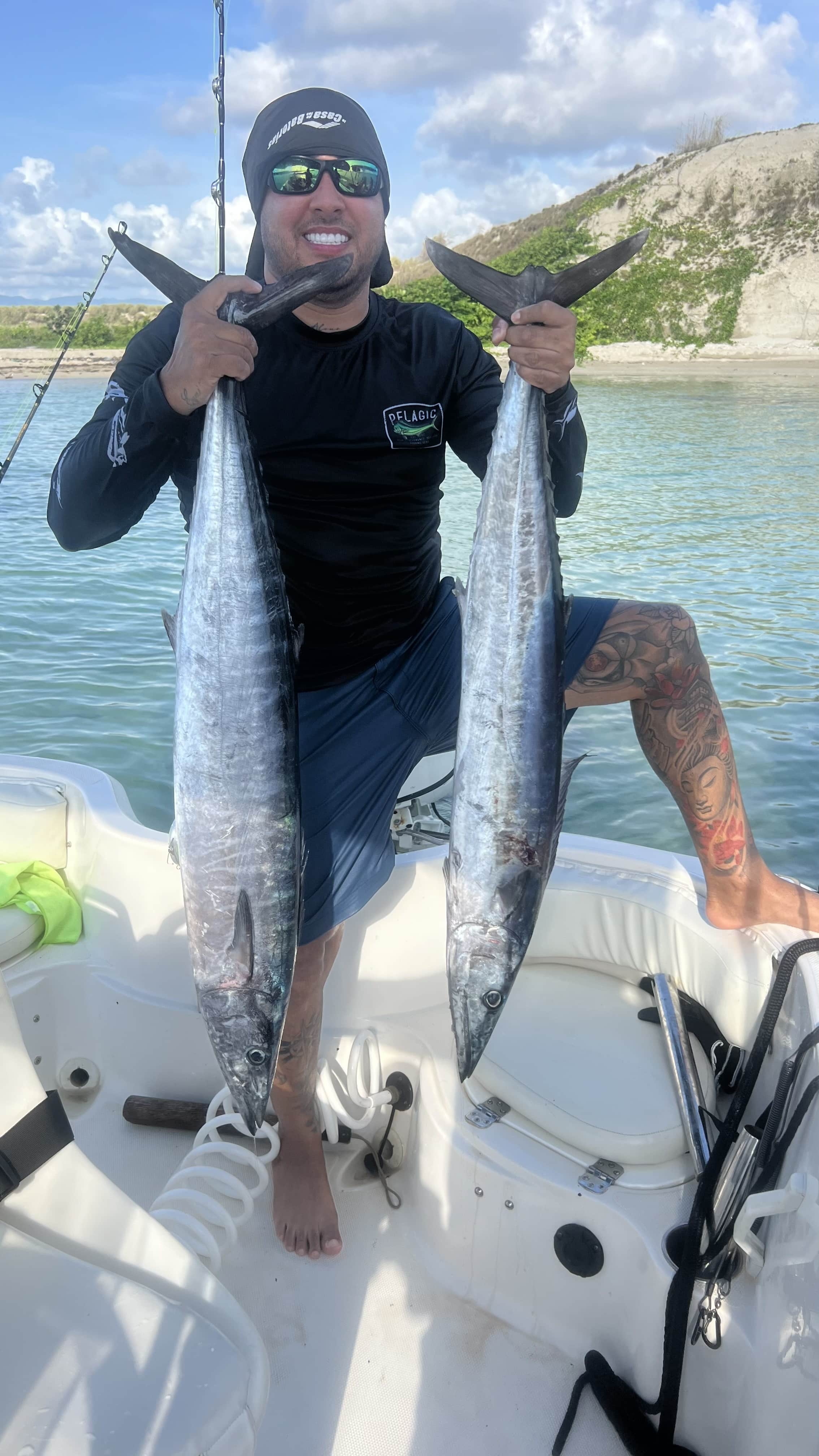
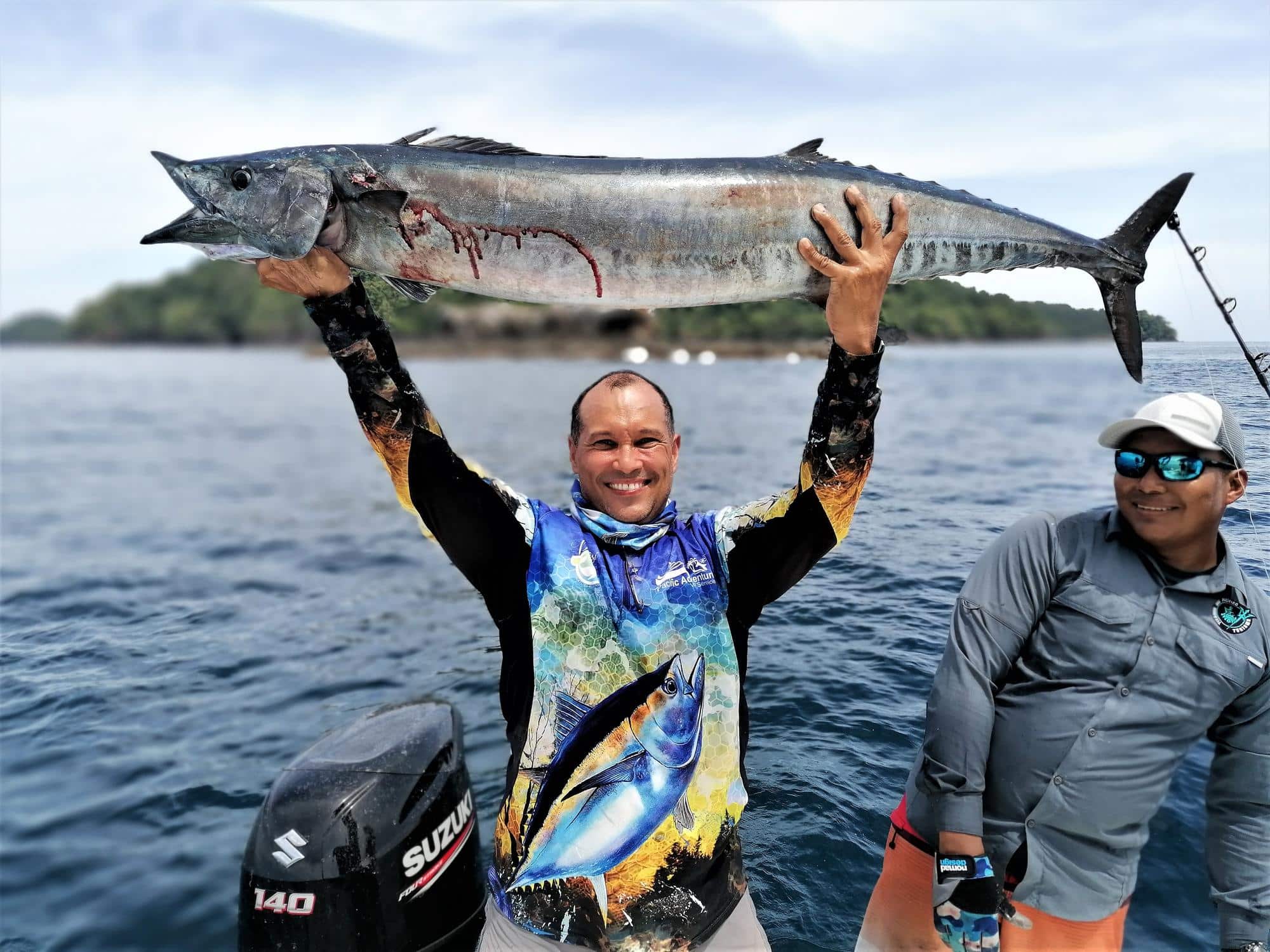
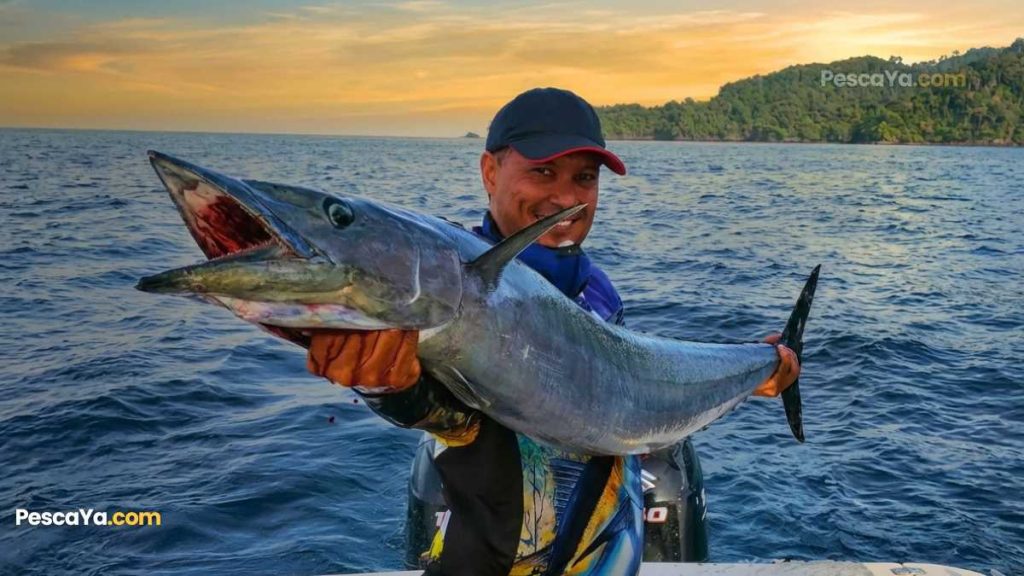
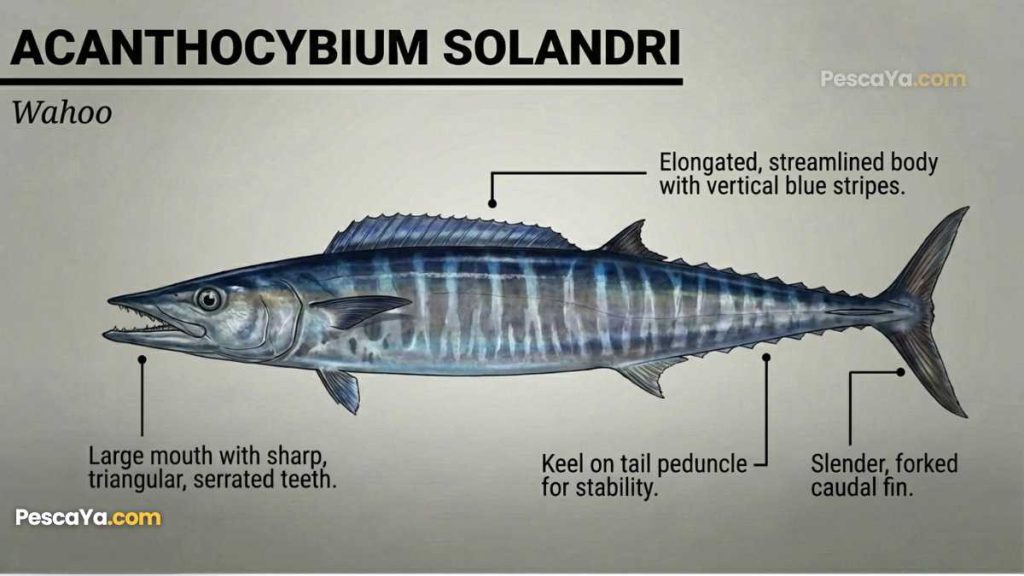
The wahoo’s body is purpose-built for open-water predation in a way that borders on unsettling. The profile is torpedo-shaped and laterally compressed, with a long pointed snout, a deeply forked tail, and a caudal peduncle — the narrow stalk connecting the tail — narrow enough to wrap a hand around on a large fish. There’s almost no excess anywhere.
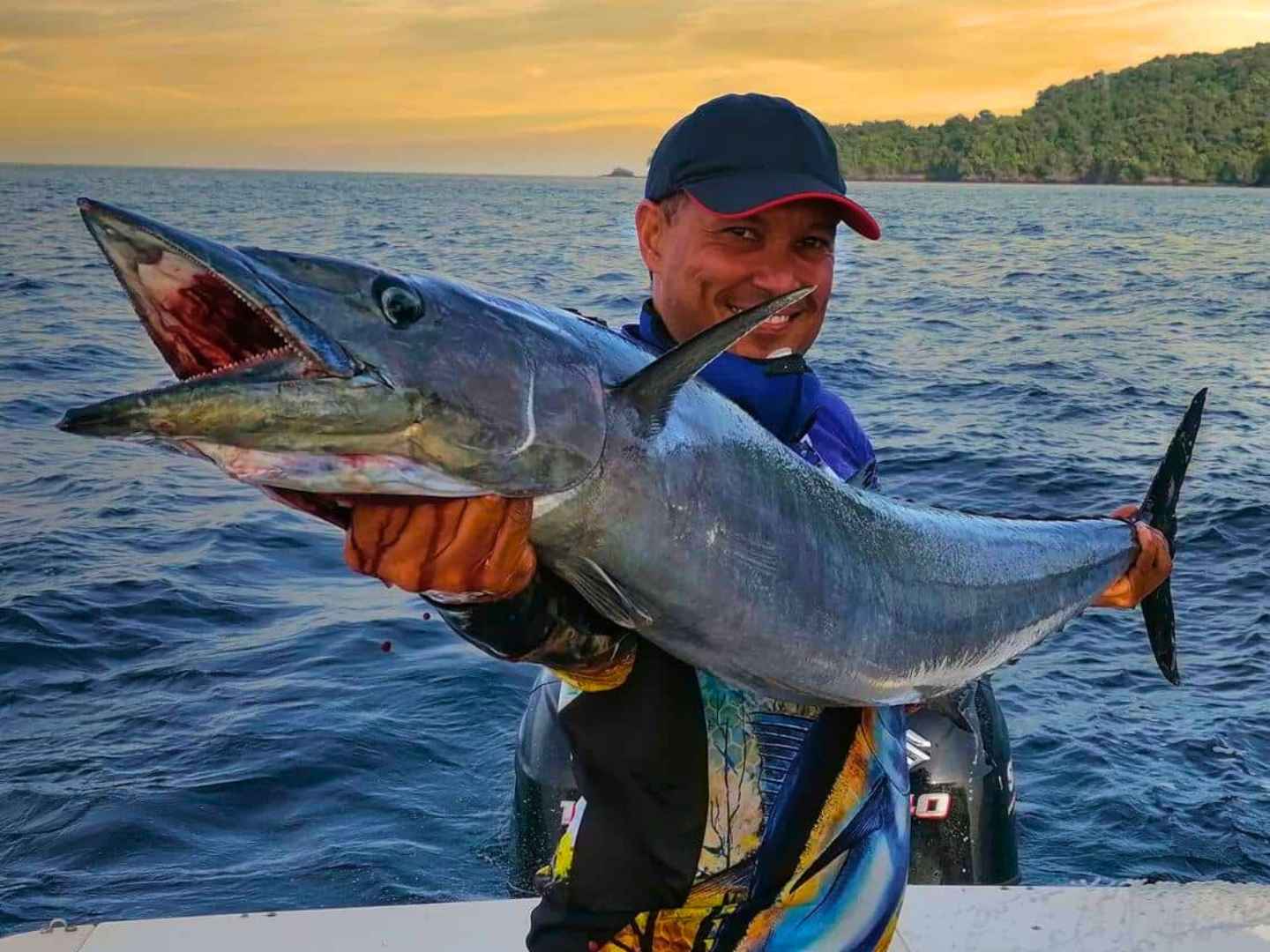
The back is an iridescent blue-green, the belly a silvery white, and running down the sides are 25 to 30 vertical bars of cobalt or purplish blue. What makes these bars remarkable isn’t how they look at rest — it’s that they behave like a mood indicator. The bars intensify and pulse when the fish is excited, feeding, or hooked, and they fade to near-invisible after death. You can watch a wahoo’s emotional state in real time by looking at its flanks.
The mouth is large, lined with a single row of razor-sharp, serrated, triangular teeth — designed not to grip prey but to slice cleanly through it. Wahoo don’t hold on. They cut. That distinction matters when you’re rigging your leader.
One more anatomical fact worth knowing: wahoo have no swim bladder. Most fish use this gas-filled organ to stay neutrally buoyant at a given depth. Without one, wahoo cannot maintain a fixed depth passively — but they also suffer zero barotrauma when surging from 100 feet to the surface or back. For a fish that needs to accelerate instantly in any direction, it’s a trade-off that heavily favors the predator.
How Big Do Wahoo Get?
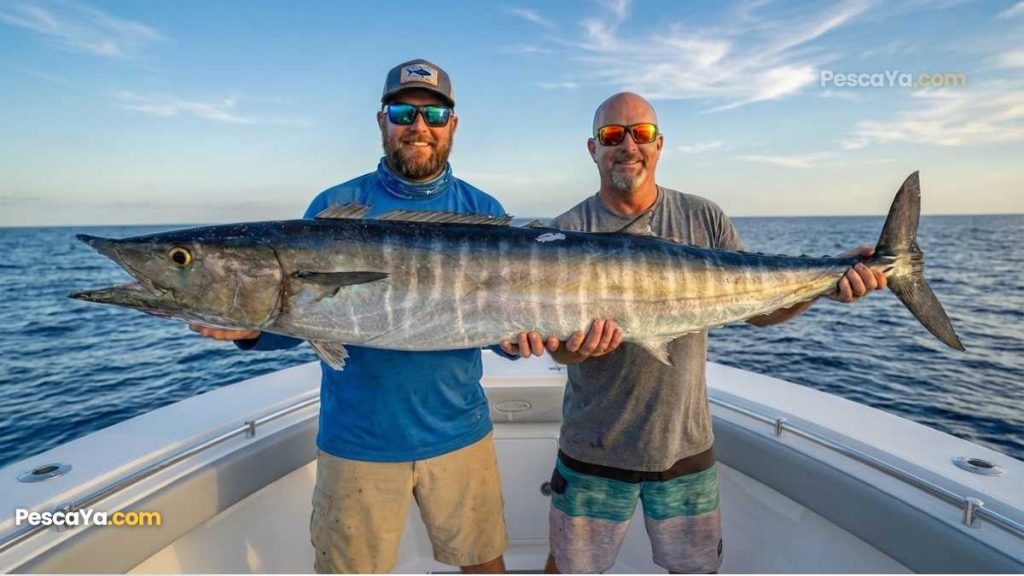
Most catches run between 20 and 60 pounds, with fish in the 3–5 foot range being typical offshore targets. Trophy fish cross 100 pounds. The IGFA all-tackle world record stands at 184 lbs (83.46 kg), caught off Cabo San Lucas, Mexico on July 29, 2005, by Sara Hayward — who was 15 years old at the time, fishing with a Mean Joe Green vinyl-skirted lure. That record has held for over 20 years.
Wahoo grow fast and live relatively short lives — typically five to six years at the outer limit. There’s no such thing as an ancient, battle-scarred wahoo with a story to tell. Just fast, powerful fish in their prime.
The Fastest Fish You Can Actually Target on a Rod
Wahoo are consistently ranked among the five fastest fish in the ocean. Scientific measurements tracked a 113-centimeter wahoo reaching 48 mph (77 km/h) within the first 10 seconds of a run. Widely cited estimates put maximum burst speed closer to 60 mph.
Wahoo don’t stalk prey — one captain described their instinct as a junkyard dog: if you’re walking past, they might not bother. But if you’re running? They have no choice. High-speed trolling doesn’t just imitate fleeing prey. It triggers the wahoo’s chase reflex in a way a slow presentation never will.
Where to Catch Wahoo
Panama — Coiba, Las Perlas, and Hannibal Bank
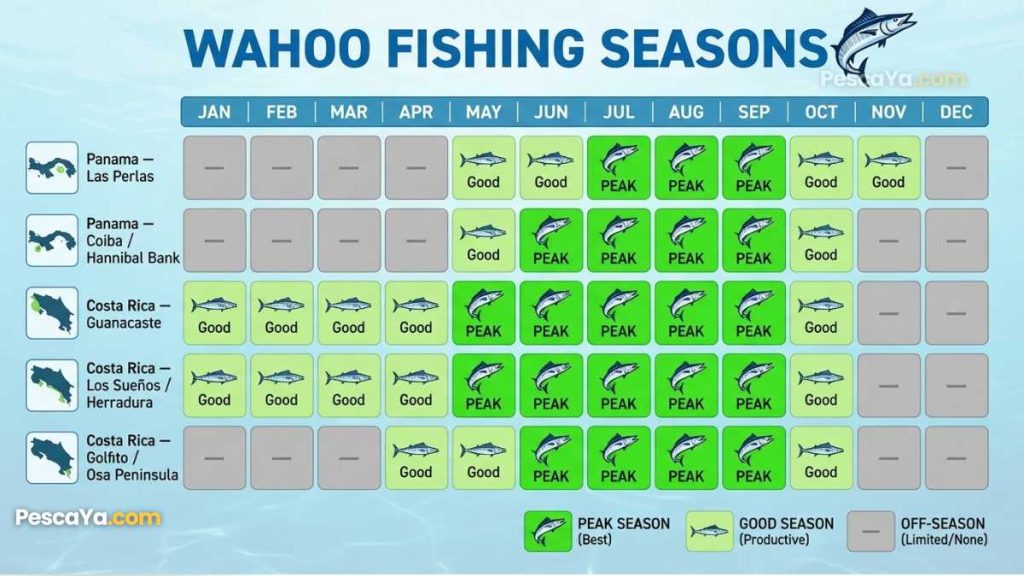
The Pacific coast of Panama is one of the world’s most underrated wahoo fisheries. Deep seamounts, abrupt drop-offs, and nutrient-rich upwellings concentrate wahoo reliably from May through November, with the peak running July through September.
Isla Coiba and its surrounding waters, now a UNESCO World Heritage Site and marine park, hold exceptional wahoo numbers during peak season. The Las Perlas archipelago, less than an hour from Panama City by boat, offers accessible day-trip wahoo action when conditions align. Hannibal Bank, further offshore, is the name experienced captains drop when they’re talking about big fish. For a broader look at Panama’s offshore waters, see our guide to deep-sea fishing in Panama.
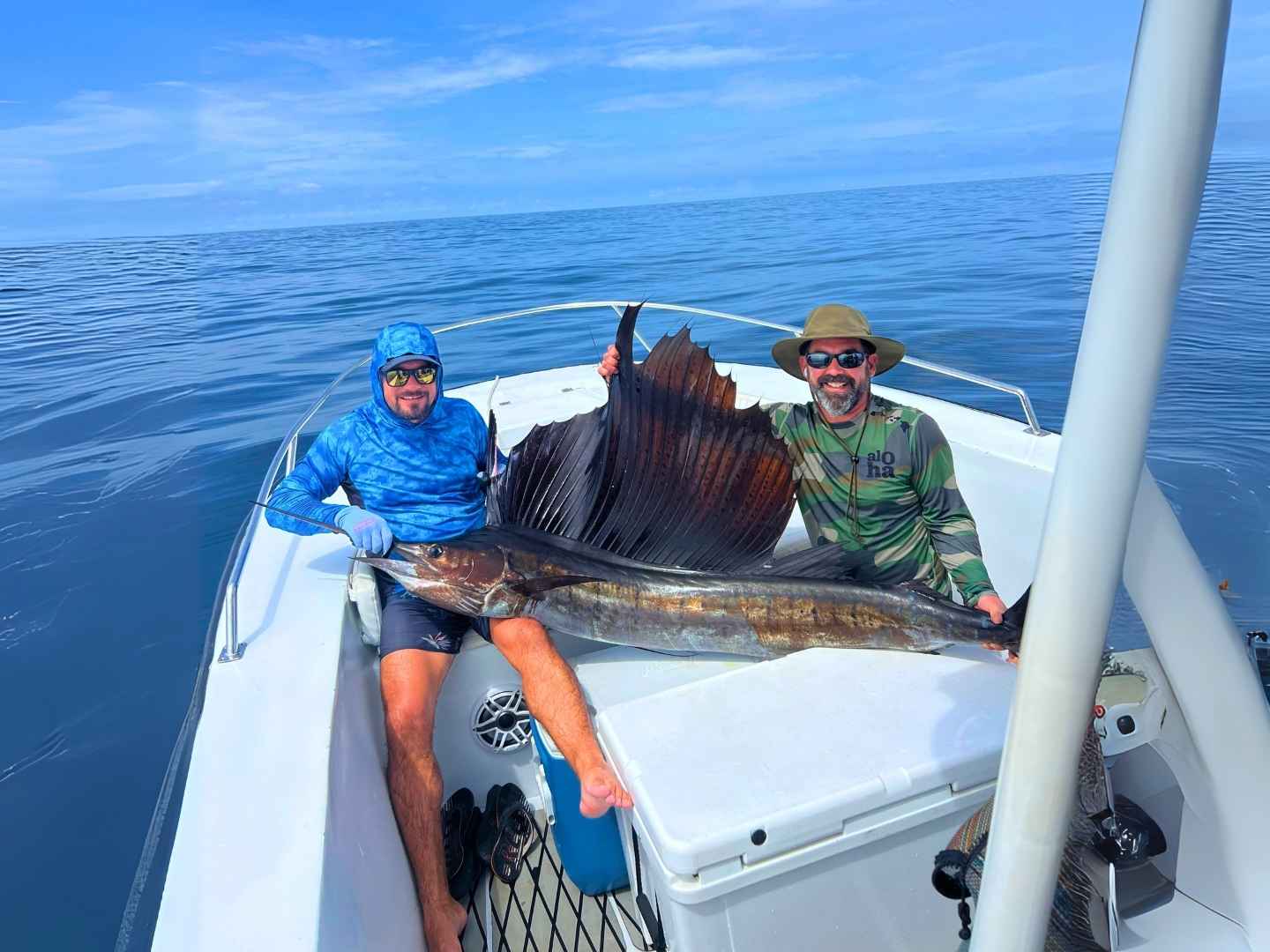
Wahoo here often share the water with dorado and sailfish — a spread targeting one species frequently connects with all three on the same day.
Costa Rica produces wahoo across a longer annual window than Panama, with viable action from January through September and a peak that overlaps with the green season (May–September).
In Guanacaste on the northern Pacific coast, the Catalina Islands and the waters off Marina Flamingo and Playas del Coco reliably produce fish in the 30–60 lb range. Los Suéños and Herradura Bay on the central Pacific coast is the country’s busiest offshore hub and a solid base for wahoo charters. For the biggest fish, Golfito and the waters off the Osa Peninsula in the south are worth the longer run — trophy-class wahoo in the 80–100 lb range have been documented here repeatedly.
The Bahamas see enormous wahoo migrations from November through March. Cabo San Lucas has produced the world record and remains one of the most consistent fisheries on the planet. Cancún sits at the meeting point of the Gulf of Mexico and Caribbean Sea, with peak action March through June. Hawaii (especially Oahu) is where the fish is culturally embedded — ono appears on every serious seafood menu, with charter action March through September. Roatan, Honduras: 1,000-foot depths five miles from shore and wahoo present year-round.
When Is the Best Time to Fish for Wahoo?
Wahoo feed most aggressively at dawn and dusk, with tide changes triggering short windows of intense activity. Some dedicated wahoo captains run overnight full-moon charters specifically to intercept the largest fish — the trophy-class 100+ lb specimens that seem to prefer feeding in low light.
Within any season, the real X-factor is water temperature and color breaks — the lines where warm blue offshore water meets cooler, greener inshore water. Wahoo aggregate exactly at these thermal transitions. Learning to read these breaks on the chartplotter, or trusting a local captain who knows them by memory, is arguably more important than being out on the right calendar date.
Wahoo Fishing Season by Destination
Peak = best numbers and largest average fish. Good = consistent action worth planning around. — = possible but slow; wahoo shouldn’t be the primary target.
Coiba and Hannibal Bank hold larger average fish than Las Perlas but require a full-day or overnight run. Golfito’s peak overlaps with rainy season on land — the fishing more than makes up for the weather. Costa Rica’s longer window is the key advantage over Panama for anglers with flexible dates.
Trolling at high speed is the foundational wahoo technique worldwide: 15 to 22 knots. At these speeds, only purpose-built lures track correctly — jet heads, bullet-shaped plugs, and high-speed skirted artificials.
Color matters. Black and purple consistently outperform other combinations, with red and black and orange as secondary options. The popular Bahama Proteus 50 in purple and black has become something of a cult lure in wahoo fishing circles — captains pull teeth-marked ones out of tackle bags and keep fishing them.
A standard spread covers six lures staggered from roughly 150 to 450 feet behind the boat, at varying depths (downriggers or heavy drail weights of 32–64 oz to keep two lines at 20–30 feet while others run shallower at 5–15 feet). Running “S-curves” instead of straight lines shows fish different lure speeds simultaneously. One captain’s account: a reel holding 600 yards of line nearly spooled before anyone got to the rod.
Slow Trolling and Dead Bait
Ready for the strike? Book a wahoo charter in Panama with high-speed trolling crews — flexible dates, catch and cook.
Nearly every documented 100+ lb wahoo was caught slow trolling with dead bait at 5–8 knots. Skirted ballyhoo is the classic choice. Mackerel, bonito, and lipped diving plugs running deep all work in this mode. This approach is effective when fish are sitting deeper or in a less aggressive feeding mood.
Gear That Survives the Strike
Wire leaders are not optional. Wahoo’s serrated teeth cut through monofilament and fluorocarbon immediately on a full-speed run. Use 300 lb cable wire, typically rigged in 3-foot sections, connected to the lure via a snap.
For the main setup: heavy conventional tackle in the 50–80 lb class, 65–80 lb braided main line topped with 80 lb mono as a shock absorber. Set the drag high. Deep-sea fishing charters targeting wahoo will have all of this rigged and ready, but knowing what you’re working with makes you a better angler on the water.
Wahoo as Table Fare
The Hawaiian name ono translates directly as “delicious,” and that is not marketing copy — it’s accurate. Wahoo has firm, white flesh with a mild, sweet flavor that sits somewhere between mahi-mahi and swordfish in texture and richness. It holds up well raw (sashimi and poke are traditional Hawaiian preparations), takes a grill beautifully, and responds well to blackening or pan-searing over high heat with citrus.
The one thing to know in the kitchen: wahoo is lean, which means it dries out quickly if overcooked. High heat, short time. Pull it off the grill the moment it flakes easily and you’ll understand why Hawaiians gave it that name.
Scientifically measured at 48 mph (77 km/h) in the first 10 seconds after hookup. Maximum burst speed is commonly cited at 60 mph, placing wahoo among the five fastest fish in the ocean.
What is the world record for wahoo?
184 lbs (83.46 kg), caught off Cabo San Lucas, Mexico on July 29, 2005 by Sara Hayward, using a Mean Joe Green vinyl-skirted lure. The record has stood for over 20 years.
Is wahoo the same as ono?
Yes — ono is the Hawaiian name for wahoo. In Hawaiian, ono means “good to eat” or “delicious.” Same fish, two very different angles on what makes it worth pursuing.
Are wahoo related to tuna?
They’re in the same family (Scombridae) but are not closely related. Wahoo are the sole species in their genus Acanthocybium — an evolutionary singularity. They fish similarly to tuna in that trolling is the primary method, but wahoo are faster, more solitary, and significantly sharper in the mouth.
What is the best lure for wahoo?
The Bahama Proteus 50 in black and purple is a favourite among dedicated wahoo captains. More broadly: high-speed jet heads and bullet lures in dark colours (black, purple, red) at 15–22 knots.
Are wahoo good to eat?
Excellent. Firm, white, mild and sweet — versatile raw or cooked, and nutritionally strong (high protein, low fat). The Hawaiian name ono (“delicious”) is the simplest answer.
Last Cast
Wahoo are one of those targets that reward the angler who takes them seriously. They’re not easy to find, they’re not going to sit still when you do find them, and they’ll cut through any leader you brought that wasn’t built for the job. But when you’re on them — when that reel goes from full to empty in seconds and the whole boat erupts — you’ll understand exactly why the fish got named what it did.
If you’re looking to chase wahoo in waters where they’re genuinely prolific, Panama and Costa Rica are two of the most accessible options on the planet. Explore wahoo fishing charters departing from Panama and Costa Rica and see what’s available for your dates.




%20-%20Blue%20Lobster%20Fishing%20PTY.jpg)