Bluefin Trevally Fishing in Costa Rica: Spots & Tips

blue trevally in costa rica

Few fish hit a topwater lure with the same violence as a bluefin trevally. One second you’re watching a popper work across a rocky point — the next, the surface explodes and you’re holding on. Costa Rica’s Pacific coast is one of the best places in the Eastern Pacific to experience exactly that.

From the calm, warm waters of Golfo Dulce in the south to the rocky reefs of the Gulf of Papagayo in the north, bluefin trevally are present along virtually the entire Pacific coastline. They’re not always the headline species on a Costa Rica charter — roosterfish and sailfish tend to get the attention — but anglers who target them specifically come back with some remarkable fishing stories.

This guide covers where to find bluefin trevally in Costa Rica, the best time to go, which techniques work, and how to get on the water. Let’s get into it.

What Is a Bluefin Trevally?

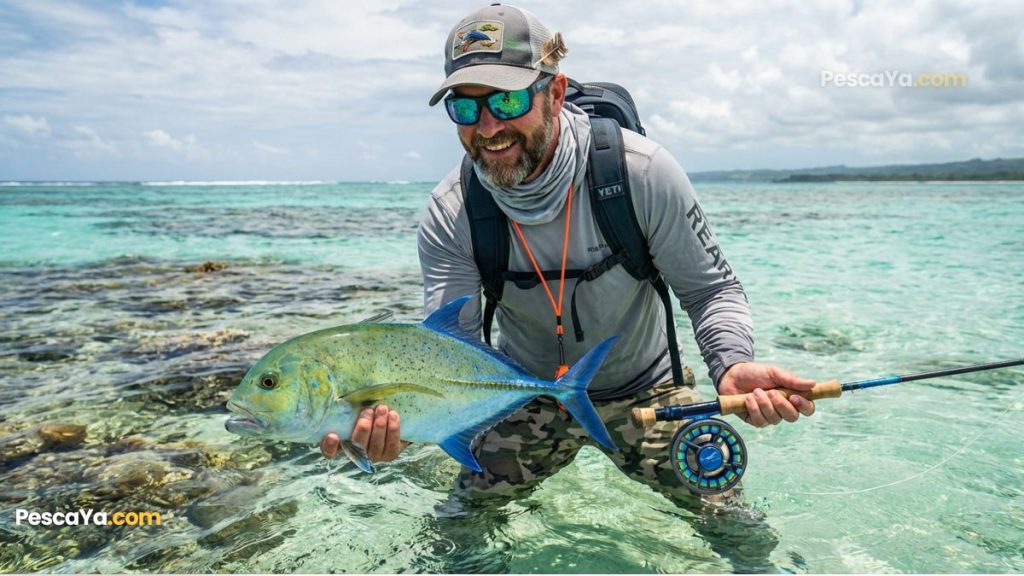
The bluefin trevally (Caranx melampygus) is one of the most recognizable species in the jack family. The electric blue fins are the giveaway — bright, almost iridescent against a silver-and-white body peppered with small dark spots. Mature fish in Costa Rica typically run 5–15 lb, though specimens above 20 lb show up regularly in Golfo Dulce.

They’re built for speed and built for aggression. Bluefin trevally hunt cooperatively, often corralling baitfish against rocky structure before launching a coordinated attack. That behavior is what makes them so spectacular on topwater — they’re not sipping bait, they’re ambushing it.

If you’ve fished Panama, you’ll recognize the same species covered in our bluefin trevally fishing guide for Panama. Costa Rica pushes them into slightly different habitat, and the southern Golfo Dulce region produces some of the Pacific coast’s most consistent action.

Where to Find Bluefin Trevally in Costa Rica

Golfo Dulce and the Osa Peninsula

Golfo Dulce is the most reliable zone for bluefin trevally in Costa Rica — and among the most consistent in all of Central America. The gulf is a rare tropical fjord: deep, warm, and sheltered, with rocky points and reef structure throughout its inner margins. That combination is exactly what trevally thrive in.

Golfito, on the northern shore of the gulf, serves as the main hub for charters in this region. Guides here know the rocky ledges and current edges where trevally stack, and half-day inshore trips specifically targeting jacks and trevally are common. The species can be caught year-round here, which makes Golfo Dulce particularly valuable for anglers visiting in the wet season when other Pacific zones slow down.

On the opposite shore, Puerto Jiménez offers access to both the inner gulf and the outer Osa Peninsula coastline. Guides running out of Puerto Jiménez regularly target trevally on the rocky points and reef structures around the mouth of the gulf. The outer coast of the Osa — exposed, current-swept, and rich with baitfish — holds some of the largest bluefin trevally in the country.

Matapalo, at the southern tip of the Osa Peninsula, deserves special mention. Anglers report consistent trevally action on the exposed rocky points where the open Pacific meets the gulf mouth. The combination of structure, current, and bait concentration makes it a standout location for anyone willing to make the run.

Central Pacific — Quepos and Manuel Antonio

The Central Pacific coast around Quepos is better known for offshore marlin and sailfish, but bluefin trevally are a reliable inshore target here too. Rocky reef structures and headlands outside Manuel Antonio National Park hold trevally, particularly during the dry season when calmer conditions allow inshore fishing to shine.

Quepos-based charters that run inshore trips for roosterfish and snook will often encounter bluefin trevally on the same structures. If trevally are on your target list, mention it specifically when booking — not all guides prioritize inshore work.

Northern Pacific — Gulf of Papagayo

The Gulf of Papagayo, anchored by Playas del Coco and nearby Playa Flamingo and Tamarindo, is Costa Rica’s driest and sunniest region. The dry-season winds that scour this coast from December through April also create the upwelling that feeds bait, and trevally follow the bait to the rocky points and offshore reefs.

Visibility in Papagayo during the dry season is exceptional — flat, clear water over rocky structure. That’s ideal for sight-casting and surface lure fishing. Bluefin trevally aren’t as abundant here as in Golfo Dulce, but they’re a genuine target, and the conditions for catching them on topwater are as good as anywhere in the country.

Tours de Pesca Herradura

Tours de Pesca Herradura

New
Herradura Beach
boat 30 ft
Up To 4 People
Trips from
$825
See Availability

Best Time to Fish for Bluefin Trevally in Costa Rica

Region Peak Season Notes
Golfo Dulce / Golfito Year-round; best Jan–Apr Sheltered gulf fishes well even in wet season
Osa Peninsula / Matapalo Dec–Apr (dry season) Exposed coast; sea conditions matter
Quepos / Central Pacific Dec–Apr Dry season brings calmer inshore conditions
Gulf of Papagayo Dec–Apr Best visibility and surface conditions

The dry season (December through April) is peak time for most Pacific fishing in Costa Rica. Calmer seas, better visibility, and active bait schools all come together during these months. If you’re planning a dedicated bluefin trevally trip, this window gives you the best shot at consistent topwater action.

That said, Golfo Dulce is the exception. The gulf’s sheltered geography buffers it from the heavy swells that hit the outer coast during the wet season. Guides in Golfito and Puerto Jiménez run trevally trips throughout the year, making this the strongest option if you’re traveling between May and November. Water temperature across the Pacific coast stays warm year-round — generally 82–88°F — which keeps trevally active and feeding regardless of season.

Techniques and Tackle for Bluefin Trevally

Topwater Lures

Nothing beats watching a trevally blow up on a surface lure. Poppers and stickbaits worked over and around rocky points are the most exciting — and often the most effective — way to target them. Cast tight to structure, let the lure settle for a second, then work it aggressively. Trevally are not subtle fish; the louder the splash, the better the response.

Stick with lures in the 3–5 inch range for most Costa Rica fishing. Matching the local baitfish size (typically small mullet and sardineta) produces more consistent strikes than going bigger.

Jigging

Vertical jigging over reef structure is highly effective when trevally are holding deeper or when topwater isn’t producing. Butterfly jigs in the 60–120g range worked with an irregular cadence — fast falls, erratic hops — trigger aggressive strikes. Many of the rocky reef structures around the Osa Peninsula and Papagayo respond particularly well to jigging.

Live Bait

If artificial presentations aren’t working, live bait almost always will. Small mullet, sardines, or locally caught baitfish fished near structure on a light leader is a reliable backup for any inshore session. Charter captains in Golfo Dulce are experienced at sourcing live bait before departure.

Gear Recommendations

A medium-heavy spinning setup handles most Costa Rica trevally fishing well. A 7–8 ft rod rated for 20–40 lb braided line, paired with a quality 4000–5000 series reel loaded with 30 lb braid and a 30–40 lb fluorocarbon leader, covers both topwater and jigging applications. The fluorocarbon leader is worth the investment — trevally have excellent eyesight in clear water and can be leader-shy in bright conditions.

Hooks take a beating from trevally. Carry spares and check the points frequently; these fish hit hard and fight hard, and a dull hook at the wrong moment is a missed fish.

How to Book a Bluefin Trevally Charter in Costa Rica

Most Costa Rica inshore charters are designed around roosterfish, snook, or mixed-species trips — but bluefin trevally are a natural add-on, and guides in trevally-rich areas will happily target them specifically with a bit of advance notice.

When booking, be clear about your priorities. If trevally are the goal (not just a bonus), say so. The best guides in Golfito and Puerto Jiménez fish the structure-heavy spots around the gulf differently than they would for a roosterfish trip, and that specificity produces better results. Half-day inshore trips are standard for trevally fishing and typically run 4–5 hours. Full-day options make sense if you want to combine trevally with offshore species or explore the outer Osa coast.

Browse fishing tours in Costa Rica to find charters across all regions — from Golfito and Puerto Jiménez in the south to Quepos, Playas del Coco, and Tamarindo in the north. Most operators offer flexible itineraries that can be customized around your target species list.

Frequently Asked Questions

Yes — particularly in Golfo Dulce and along the Osa Peninsula. They’re less commonly targeted than roosterfish or sailfish, but they’re a legitimate inshore species that experienced guides actively seek out. In Golfo Dulce, you can target them year-round with good consistency.

The dry season — December through April — is peak time along most of the Pacific coast, with calmer seas and better visibility. Golfo Dulce is the exception: it fishes well for trevally year-round thanks to its sheltered geography. If you’re traveling in the rainy season, plan around Golfito or Puerto Jiménez for the most reliable action.

Occasionally, yes — especially around exposed rocky points on the Osa Peninsula and in Papagayo. However, most productive trevally structure sits just offshore, and a boat gives you access to the rocky ledges, reef edges, and current lines where they concentrate. Shore fishing for trevally is hit-or-miss; a charter dramatically improves your odds.

Yes. Recreational fishing in Costa Rica requires a valid license issued by INCOPESCA, the national fisheries authority. Licenses are available for short terms (by the day or week) and are typically arranged directly through your charter operator. Confirm with your guide before departure — most reputable charters include or facilitate licensing as part of the booking process.

Most fish caught in Costa Rica run 5–15 lb, which is a strong fight on appropriately matched tackle. Golfo Dulce produces the largest specimens — fish over 20 lb are caught regularly around the deep structure inside the gulf. The outer Osa coast, when conditions allow, is also known for above-average fish.

Last Cast

Costa Rica’s Pacific coast delivers everything a bluefin trevally angler could want: warm water, abundant rocky structure, and guides who know where the fish hold. Golfo Dulce is the standout region — year-round access, deep structure, and consistently large fish make it one of the best trevally fisheries in Central America. Add the Osa Peninsula’s exposed points and the dry-season clarity of Gulf of Papagayo, and you’ve got a destination with options in every corner.

Whether you’re planning a dedicated trevally trip or just want to add them to a broader Costa Rica itinerary, the species rewards anglers who seek them out specifically. Ready to plan your trip? Browse Costa Rica fishing charters to find the right charter for your target zone.

Blue Marlin Fishing Expeditions
boat 60 ft
Up To 14 People
Trips from
$3,800
See Availability
Golfito Fishing Charters
boat 21 ft
Up To 4 People
Trips from
$700
See Availability
The Gum Adventures - Costa Rica Fishing Charters
boat 25 ft
Up To 4 People
Trips from
$247
See Availability

Want to keep reading?