Fly Fishing in Panama: Best Spots and Species
Most fishing destinations give you one signature experience. Panama hands you two, and they could not be more different. In the morning you can throw a popper at peacock bass in a jungle lake while a container ship the size of a city block slides past. A short flight later you are standing on the bow of a panga off the Pacific coast, waiting for a fired-up roosterfish to charge a teaser.
That range is what makes fly fishing in Panama special, and it is also where most guides set you up to fail. They sell the dream without explaining the reality: which fish actually eat a fly here, how the bait-and-switch game works, and when a trip is worth booking. This guide fixes that. Here is what to target, where, with what gear, and what it honestly costs.
Why Panama is a two-coast fly fishing destination
Panama is narrow enough that you can fish the Caribbean and the Pacific in the same trip, and the two coasts fish nothing alike. The Pacific side runs cool and nutrient-rich, feeding huge schools of tuna, roosterfish, and billfish. The Caribbean side is warmer and calmer, with tarpon prowling river mouths and reef edges.
Sitting between them is Gatún Lake, the freshwater heart of the Panama Canal, where peacock bass, snook, and tarpon share the same water. Add a tropical climate that lets you fish all twelve months, plus direct flights into Panama City, and you have a destination where a fly angler can chase wildly different fish without ever leaving the country. Our fishing in Panama overview maps the whole picture if you want the wider lay of the land.
The Panama Canal Grand Slam: peacock bass, snook and tarpon on the fly
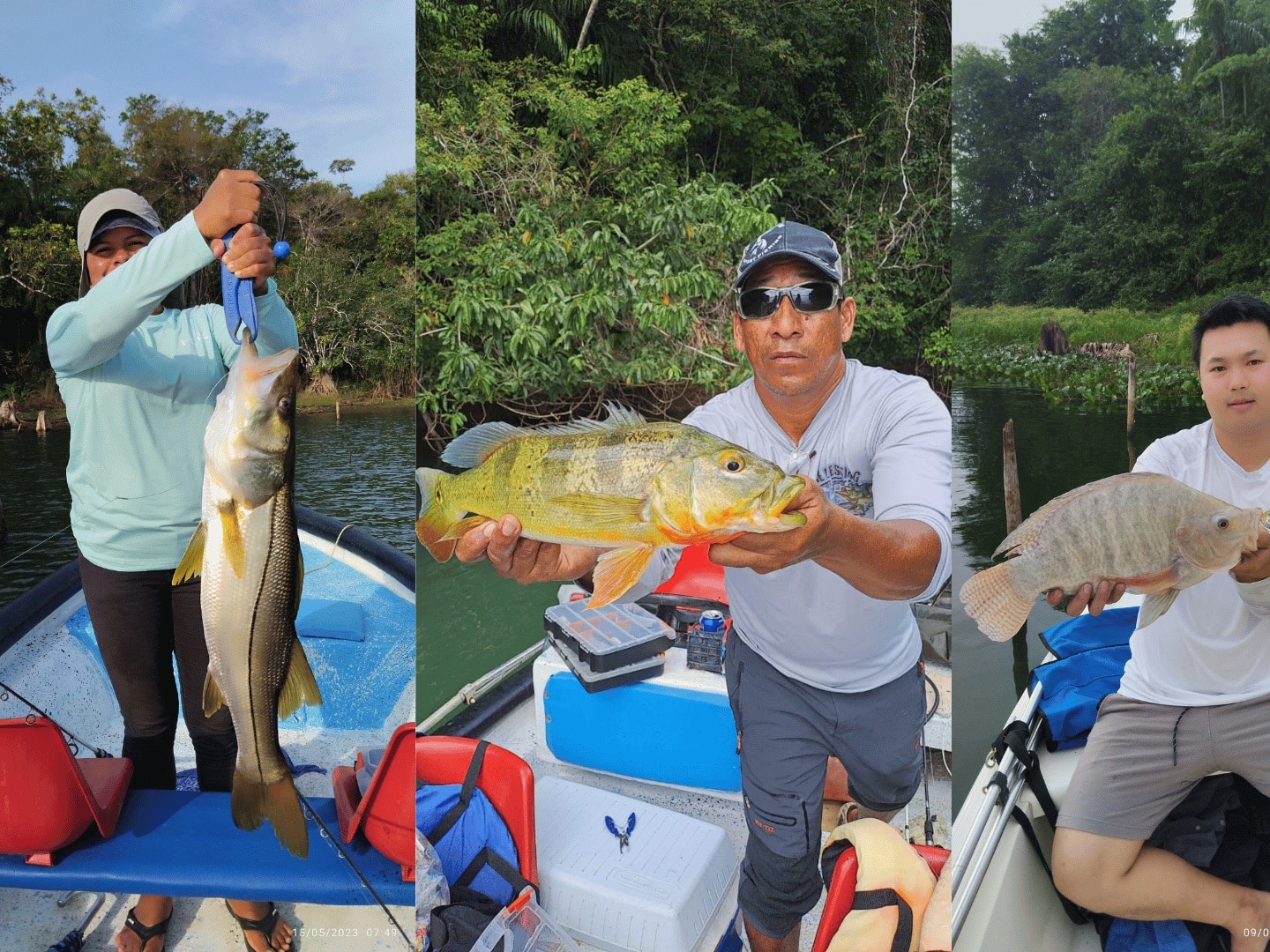
The most accessible fly fishing in the country sits 30 minutes from Panama City. Gatún Lake is a flooded jungle valley built during canal construction, and it holds the freshwater version of a grand slam: peacock bass, snook, and tarpon in one body of water.
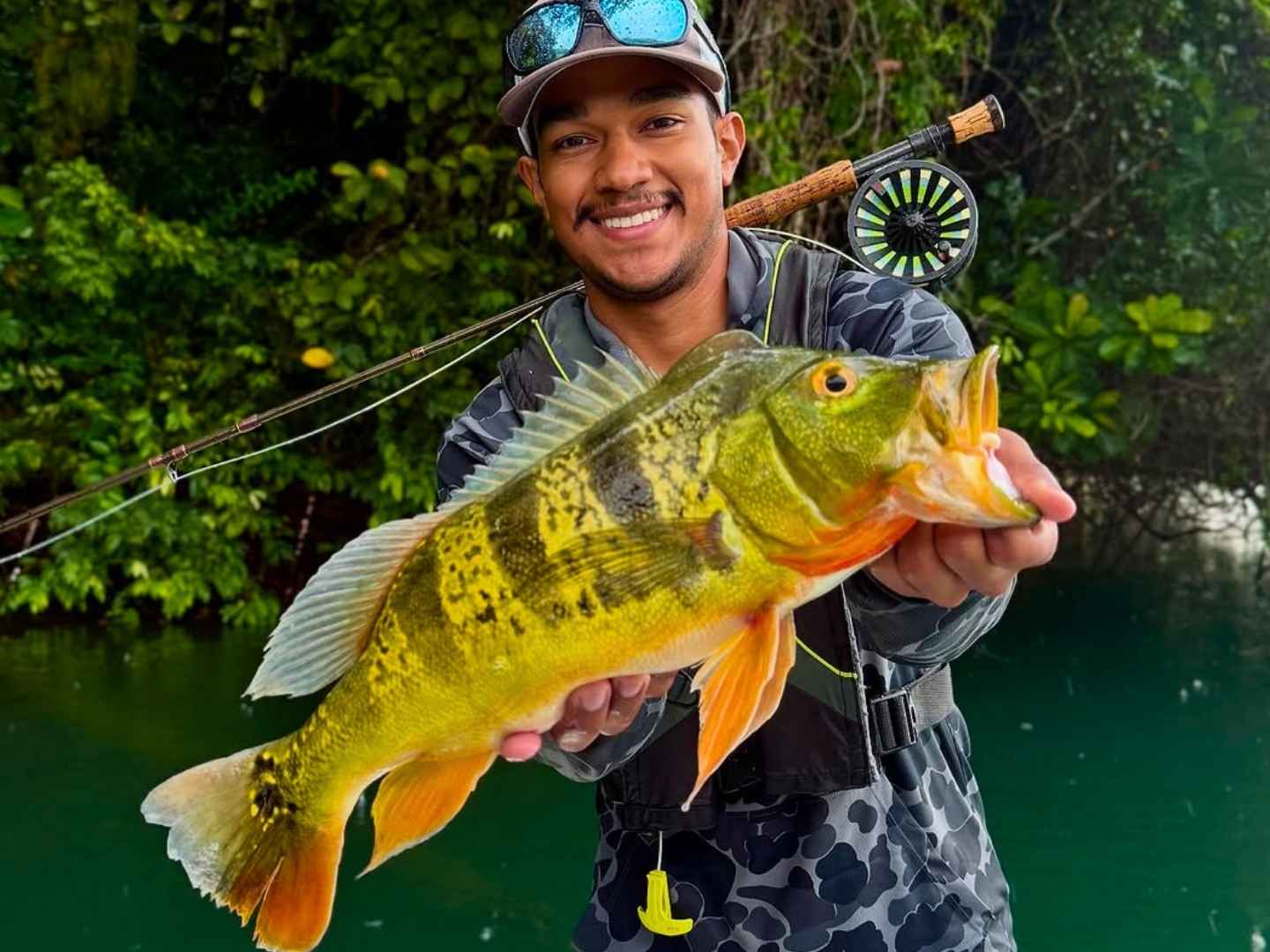
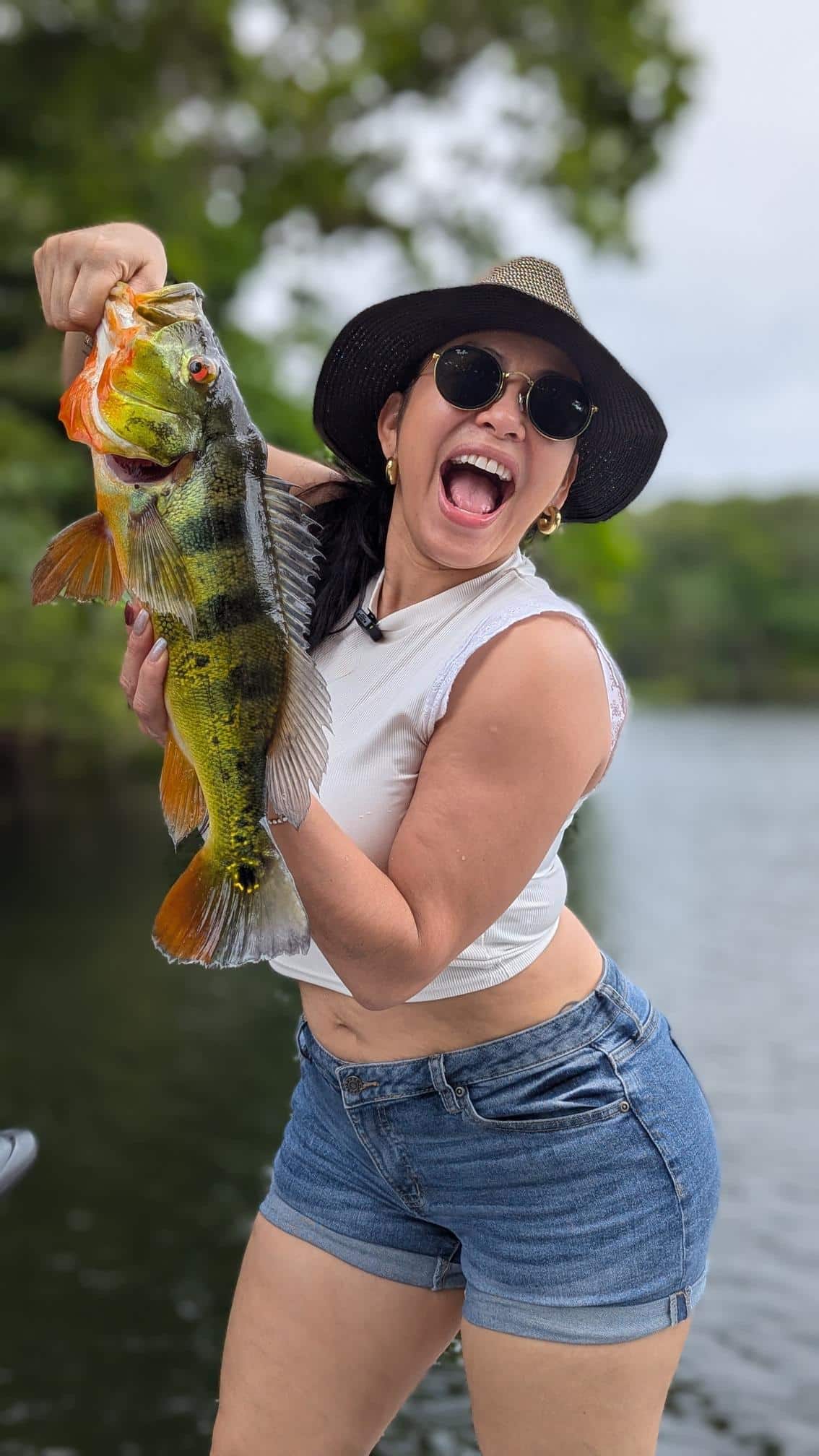
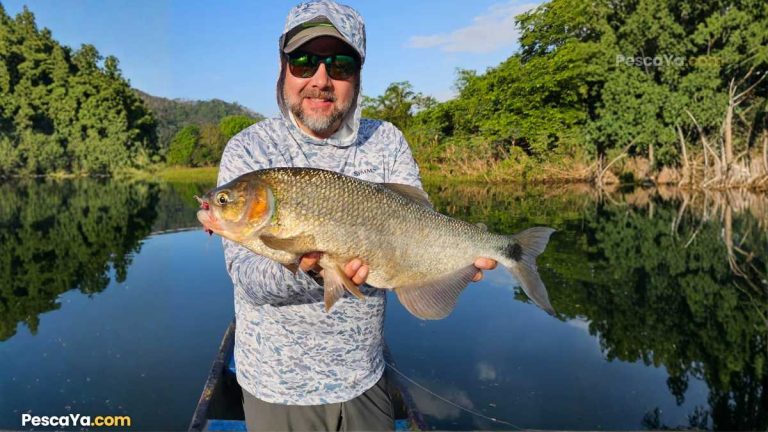
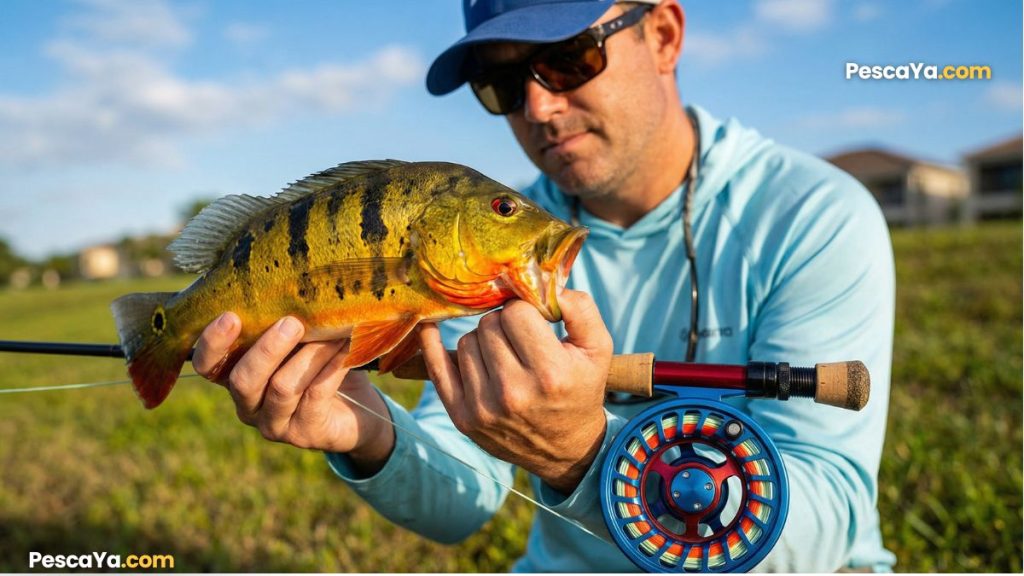
Peacock bass are the headliner and the best entry point for fly anglers. They travel in aggressive packs, most running two to three pounds, with trophy fish in the seven-to-ten-pound range often hunting in pairs. They smash surface flies, which makes them genuinely fun on light gear. A 5 to 7-weight rod with a floating line covers the bass. Bring streamers that imitate baitfish, plus a few poppers and surface bugs for the explosive eats.
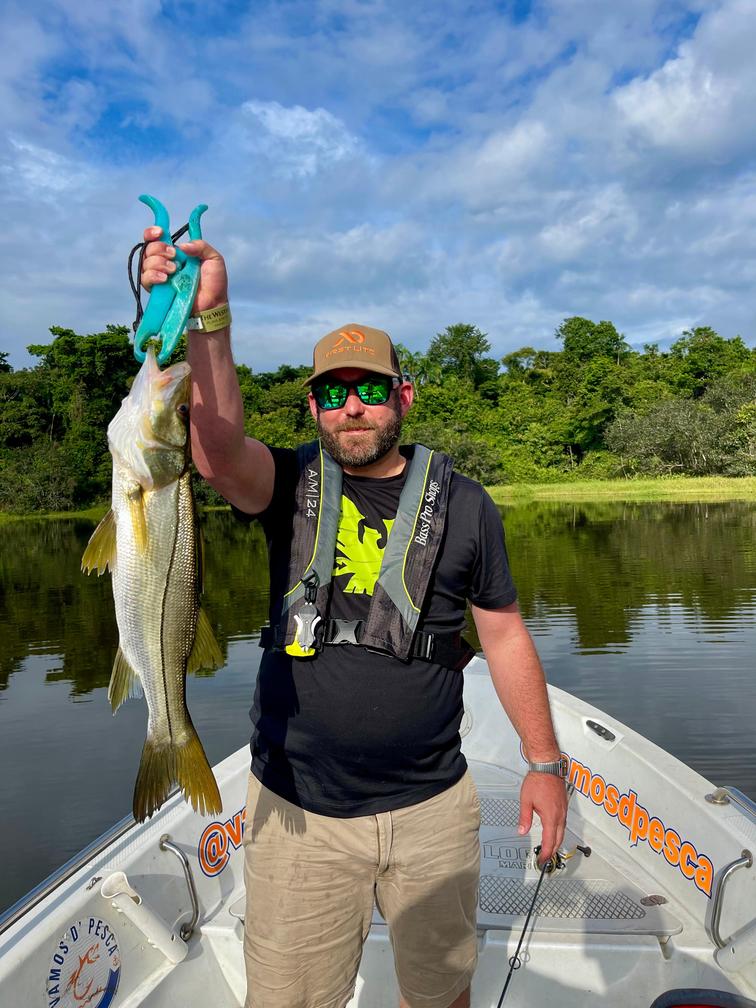
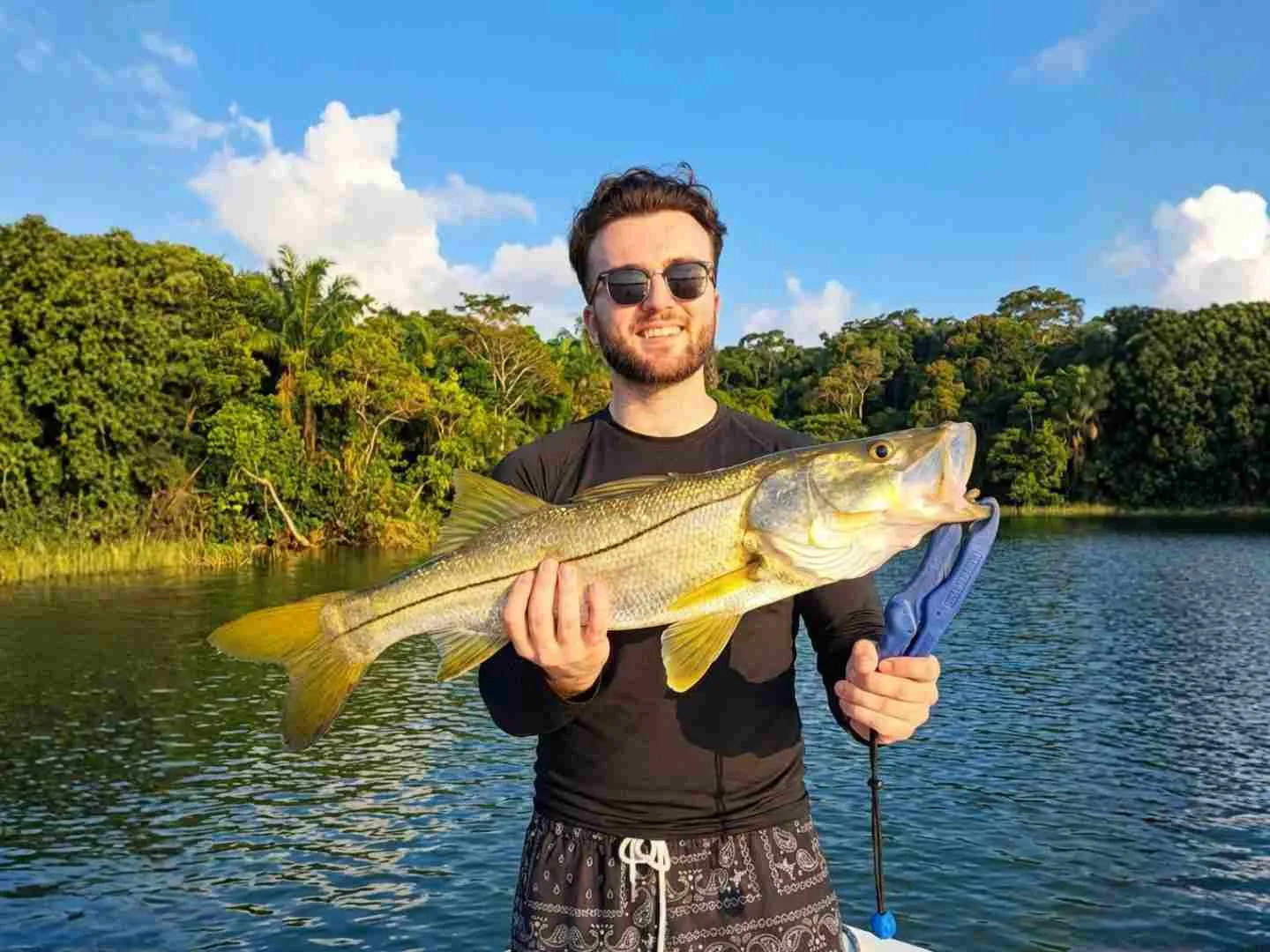
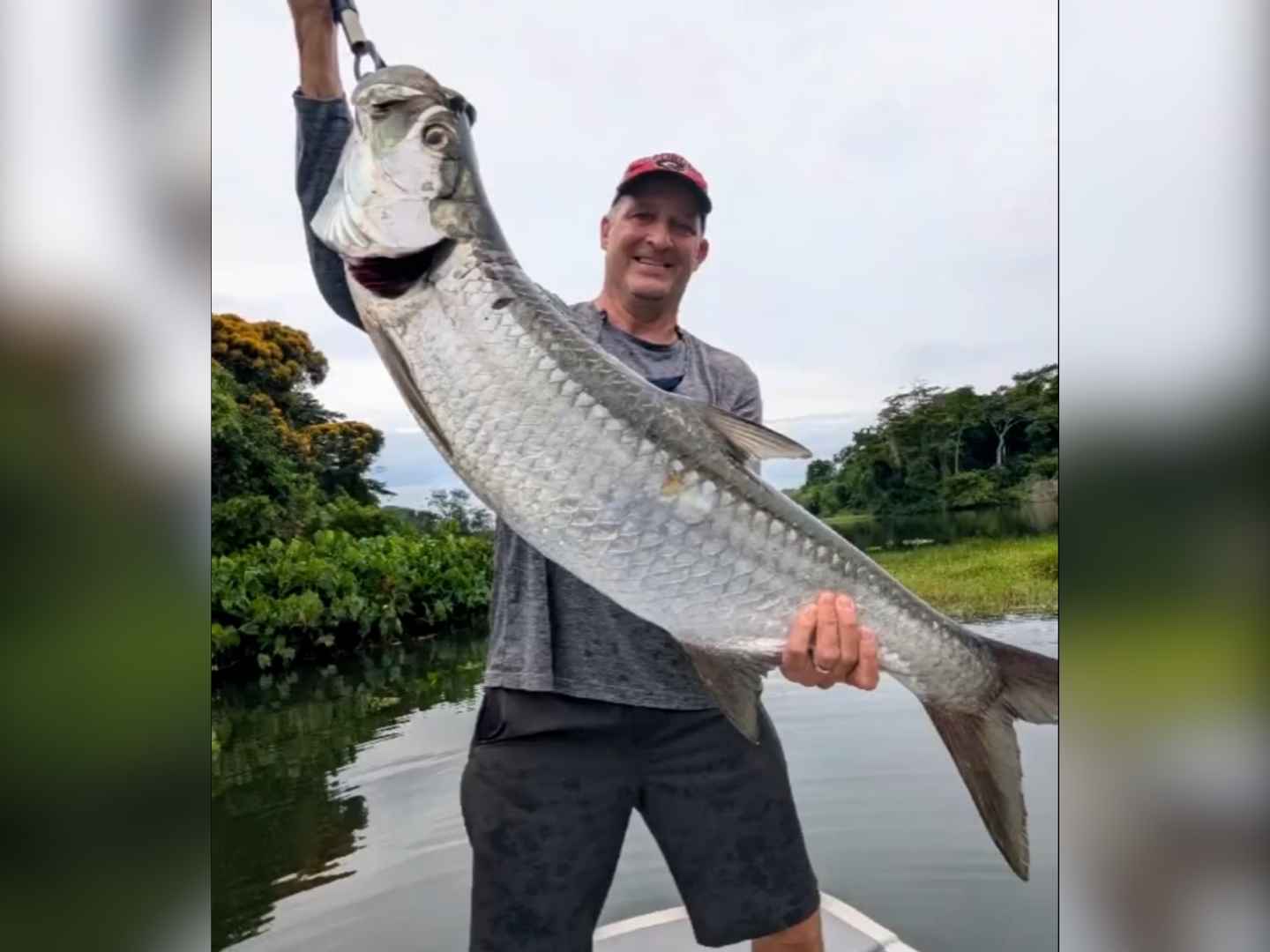
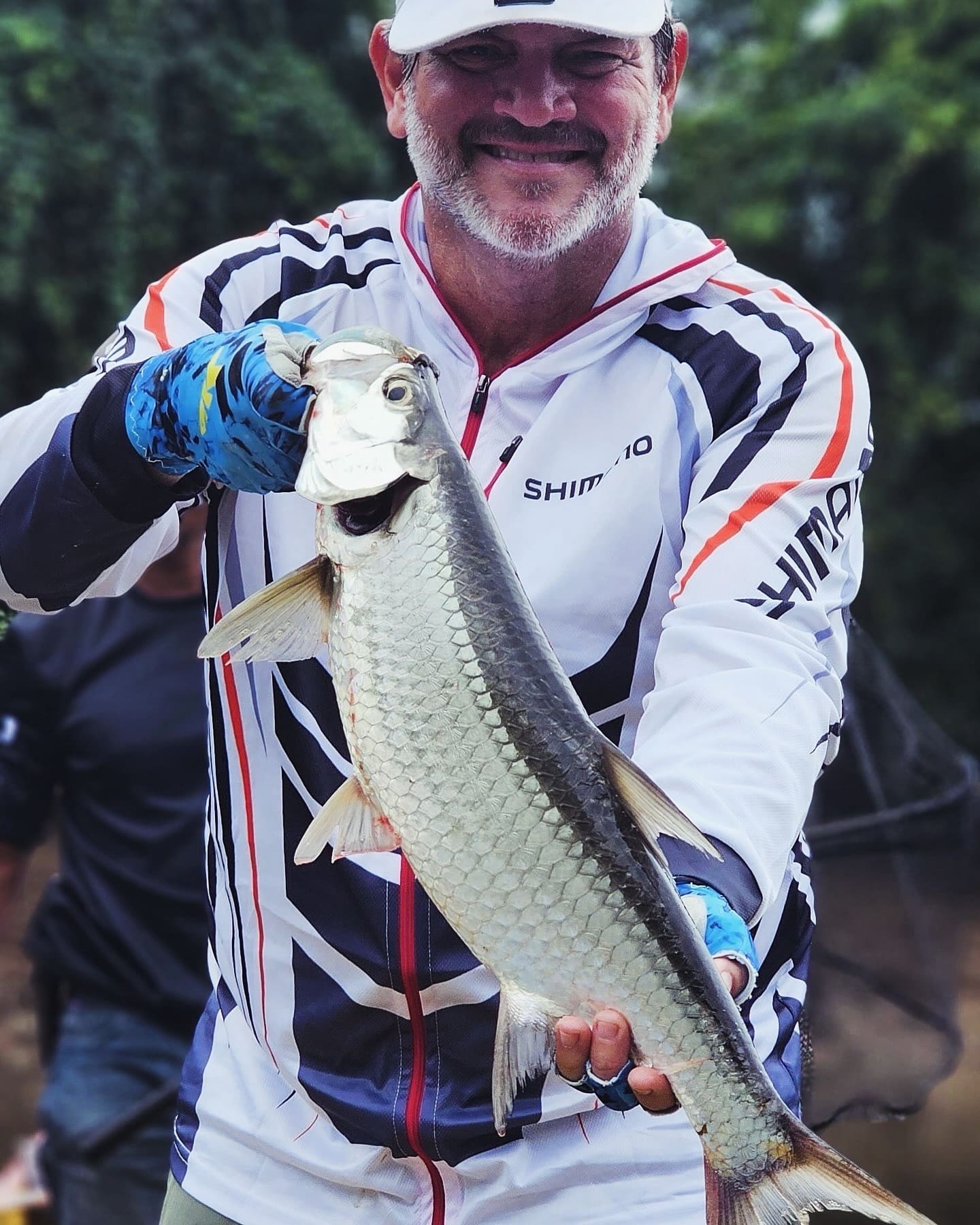
Snook and tarpon raise the stakes. The tarpon here are a quirk of history. They came up through the Atlantic locks roughly a hundred years ago, settled into the lake, and thrived. A few even pushed all the way through to the Pacific, where a feral population now ranges as far south as the Colombia and Ecuador border, as Hatch Magazine documented in a memorable canal trip report. For these fish, step up to an 8 to 12-weight outfit.
Be honest with yourself about the tarpon. They are moody. One angler watched them “porpoise, gulp, and chase” all morning, only to be ignored on nearly every cast, with fish surfacing 100 feet from where the fly just landed. When one finally ate, five feet of silver erupted three feet off the boat and then missed the hook. That is canal tarpon fishing. The reward is the setting as much as the catch: you cast to a backdrop of howler monkeys, toucans, capuchins, and roughly 500 bird species in protected rainforest, while ships from Singapore to Rotterdam glide by.
The Pacific Grand Slam: roosterfish, tuna and billfish on the fly
The Pacific coast is where Panama earns its big-game reputation, and it is also where fly fishing gets technical. The marquee targets, roosterfish, yellowfin tuna, and billfish, rarely come to a blind cast. You catch them with bait-and-switch, also called teasing, and understanding it is the difference between a great day and a frustrating one.
How bait-and-switch teasing actually works
The crew runs hookless teasers, often poppers or live baits, to raise a fish and get it competitive. For billfish and tuna, mates drag hookless lures until a fish lights up behind the boat, then snatch the teaser away so the angler can drop a fly in front of an aggravated predator. For roosterfish, captains often bump-troll live blue runners off the stern while you stand ready on the bow, then cast the fly at the rooster that comes charging in, according to trip reports from BDOutdoors anglers. It is a two-person dance, and a good captain makes or breaks it.
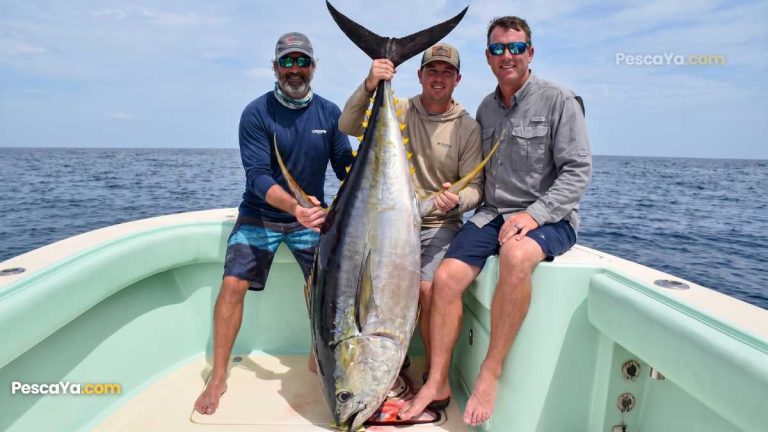
The fishing grounds are world class. The Gulf of Chiriquí, Coiba, and the Pedasí coast on the Azuero Peninsula all sit close to deep, productive water. Yellowfin push 150 pounds and beyond at Hannibal Bank, especially in late summer when upwelling concentrates them. Roosterfish, cubera snapper, amberjack, and bluefin trevally round out the inshore fly menu.
Set your expectations with the wind, though. One angler fishing Pedasí lost several big cubera and a giant roosterfish straight into the rocks when the drag was set too tight, and noted that the best fish came on topwater poppers in sheltered bays only after the Azuero wind dropped, in a candid rokmax trip report. Late in the same trip, yellowfin came up in double and triple hookups to about 25 pounds on topwater, with a 100-pound class amberjack as a “wrong fish” surprise on the jig. Plan around calm mornings, fish hard when the window opens, and keep your drag honest.
Tarpon on the fly: Bocas del Toro and the Bayano River
If silver kings are your obsession, Panama has two very different fly options, and neither is a Bahamas-style flats game.
Bocas del Toro on the Caribbean side is the bigger name, holding tarpon that regularly top 150 pounds. This is deeper-water fishing near river mouths and reef edges, not sight-casting to tailing fish on white sand. September and October bring the most consistent conditions. Multi-day lodge packages run higher here, but the size of the fish justifies the trip for dedicated tarpon hunters.
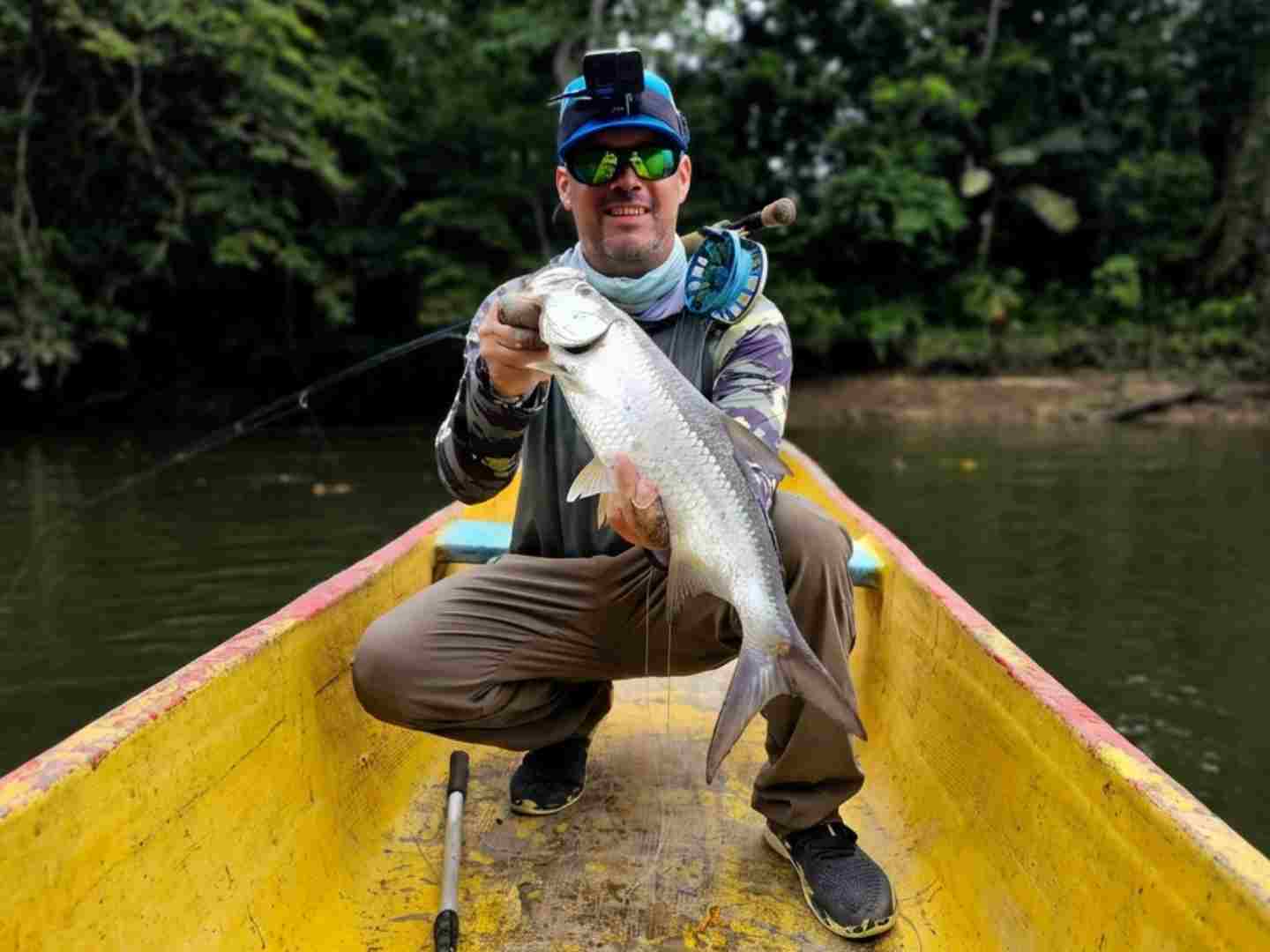
The Bayano River, on the Pacific side and within day-trip range of Panama City, is the under-the-radar pick. It holds tarpon and snook that descend from those same canal transplants, and local guides stress that hitting the right tide is everything. Mid-tide is when the fish move and feed, so a Bayano trip lives or dies on timing the water, not just the calendar.
When is the best time to fly fish in Panama?
There is no closed season, but each target has a sweet spot. The dry season from December to April brings calm seas and clear water, ideal for the Pacific and the flats-adjacent inshore game. The green season from May to November pumps freshwater into rivers and mangroves, which fires up the freshwater and estuary bite.
| Target | Best months | Notes |
|---|---|---|
| Peacock bass (Gatún) | Year-round | Most active in warm, stable weather |
| Canal snook & tarpon | Year-round, best Dec–Apr | Calmer water helps fly presentation |
| Roosterfish (Pacific) | Dec–May, peak May–Jun | Biggest fish late in the window |
| Yellowfin tuna | Apr–Jun and Aug–Sep | Upwelling concentrates fish at Hannibal Bank |
| Billfish (sailfish/marlin) | Dec–Apr | Prime offshore weather |
| Bocas tarpon | Sep–Oct | Most consistent Caribbean conditions |
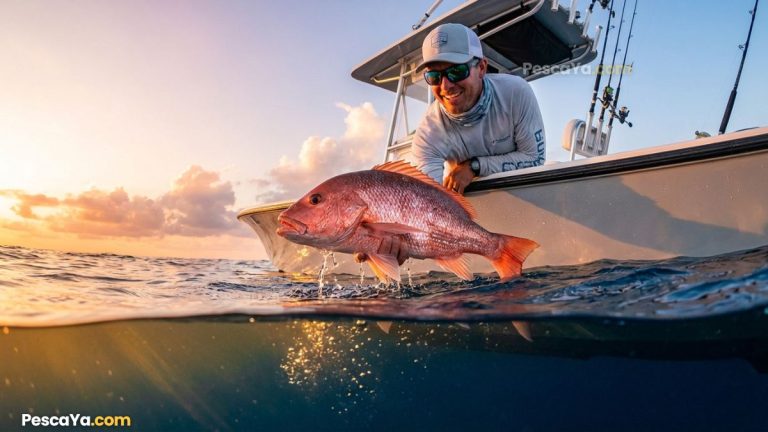
A practical note on roosterfish and snapper: keep your drag reasonable. These fish bolt for structure the instant they feel pressure, and a locked-down drag is how you donate flies to the rocks.
How much does a fly fishing trip in Panama cost?
Prices vary by zone and trip length, but here is the honest range.
Gatún Lake and canal-zone day trips are the affordable entry, with full-day fly charters from around $300 to $350, and the Panama Canal fly trips quoted near $425 for one angler or $550 for two on a six-hour day, plus tax. Pacific offshore days for tuna and billfish run higher, commonly $1,200 and up, given the fuel and distance to grounds like Hannibal Bank. Bocas del Toro tarpon is typically sold as multi-day lodge packages, with a five-day trip running near $2,890 per person including flights from Panama City, lodging, and guided days, per FishingBooker benchmarks.
Do you need a fishing license, and where should you base yourself?
Good news for visitors: Panama does not require a personal fishing license for recreational anglers. The charter boat carries the necessary permit, so booking a licensed operator keeps you fully covered. Panama also holds a stack of IGFA world records, including several on light tackle and fly, a reminder of just how productive these waters are, per Tourism Panama.
Where you base yourself depends on your target. For the Canal slam and your first taste of fly fishing here, stay near Panama City and run to Gamboa and Gatún. It is the high-success, beginner-friendly option: aggressive fish, short runs, and half-day trips. For the Pacific slam, head to Boca Chica or David for the Gulf of Chiriquí, or Pedasí on the Azuero. For Caribbean tarpon, fly to Bocas del Toro. If your time is short, the Gulf of Chiriquí guide and our Panama snook fishing breakdown will help you pick a zone.
Canal Zone, Pacific Coast & Bocas del Toro
Book a Fly Fishing Trip in Panama

.png)
Fly Fishing 8-Hour Trip


Fly Fishing - Tarpon


5-Hour Fishing Adventure in Panama Bay
.png)
.jpeg)

Inshore Fishing
FAQ: Fly fishing in Panama
Yes, if you start on Gatún Lake. Peacock bass are forgiving, aggressive, and eat surface flies on light rods, so success rates are high. Save the Pacific bait-and-switch game, which demands timing and casting under pressure, for once you have your sea legs.
No. Established operators provide quality rods, reels, lines, and flies matched to the target. That said, if you have a rod you trust, bring it. Plenty of anglers regret leaving their favorite outfit at home.
Both work, and many trips mix them. Peacock bass, snook, and inshore roosterfish are excellent on the fly. For deep offshore tuna and big cubera near structure, conventional gear is often more practical, though fly catches happen daily with the right teasing setup.
Your captain and crew. On the Pacific, the entire bait-and-switch game depends on a team that can raise and tease fish into fly range. A great guide turns a tough day into a memorable one.
Last Cast
Panama is rare in that it offers two distinct fly fishing adventures in one country: a freshwater jungle slam minutes from the city, and a Pacific big-game game built around the art of the teaser. Match your target to the season, respect the wind and the tides, and bring the right rod, and you will understand why anglers keep coming back.
The fastest way to get it right is to fish with a crew who knows these waters. Ready to plan your trip? Browse our fishing tours and charters in Panama and line up the slam that fits your style.
Featured Posts
Would you like to keep reading?
Hannibal Bank Fishing: Species, Seasons & How to Book
The run out from the Isla Parida lodges takes about 90 minutes. By the time you reach the bank, the frigate birds are...
Read More
->
Machaca Fishing in Panama: Complete Guide
Have you ever heard of the mini tarpon or Machaca? While most anglers come to Panama dreaming of blue marlin or...
Read More
->
Panama Fishing Tours 2026: Best Spots & Species
Everything you need to plan a Panama fishing tour — top destinations, fish species, seasonal tips, and charter...
Read More
->


.jpg)