Roosterfish Fishing in Costa Rica: Full Guide

roosterfish fishing in costa rica

Roosterfish don’t exist anywhere else on earth outside the Eastern Pacific. You won’t find them in the Atlantic, the Mediterranean, or anywhere in Asia. They’re a single-species family — no close relatives, no cousins, no lookalikes. That alone makes them one of the most unique gamefish you can target on rod and reel.

Costa Rica happens to sit right in the heart of their range, with healthy populations along the entire Pacific coast. From Guanacaste down to the Osa Peninsula, roosterfish patrol rocky points, reef edges, and river mouths year-round. If catching one is on your list, this is the most practical place to make it happen.

This guide covers where to find them, when to go, how to catch them, and what a fishing charter in Costa Rica will cost.

What Makes Roosterfish So Special?

Size, Appearance & Fighting Style

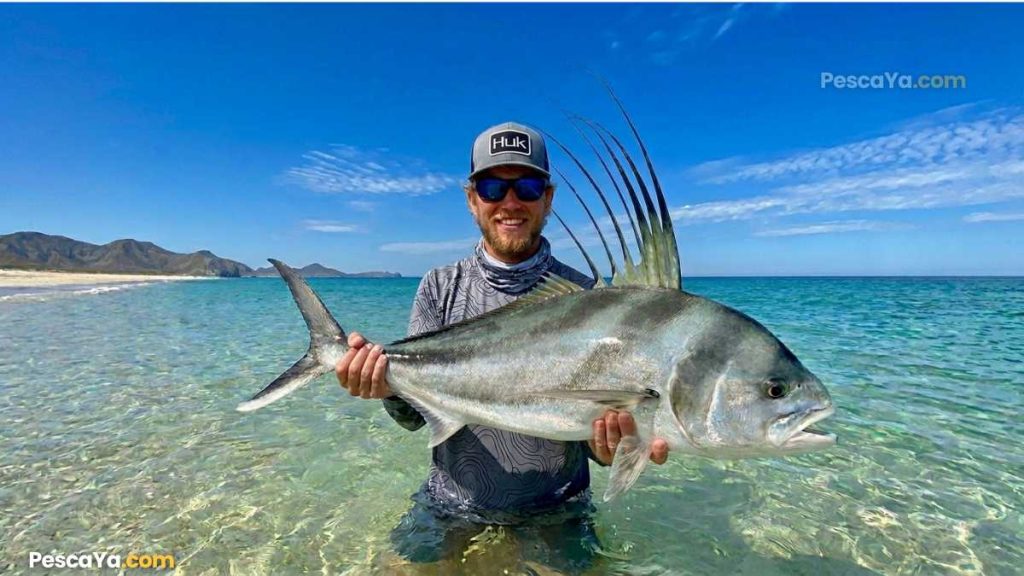
The roosterfish Nematistius pectoralis is instantly recognizable. Its trademark feature is a comb-like dorsal fin with seven elongated spines that flare up when the fish is fired up — chasing bait or fighting on the line. Add the iridescent silver body, bold dark stripes sweeping down its flanks, and a thick jack-family build, and you’ve got one of the most photogenic gamefish in the ocean.

In Costa Rica, the average roosterfish runs 20 to 50 pounds, with fish over 50 pounds considered trophies. A few specimens over 80 pounds are landed each year, and the species can grow much larger — the IGFA all-tackle world record stands at 114 pounds, caught off La Paz, Mexico in 1960.

Don’t let the “inshore” label fool you. These fish fight like heavyweights. Expect explosive first runs down the shoreline, repeated deep surges, and stubborn head-shaking near the boat. A solid 40-pounder can put up a 30- to 45-minute battle on appropriate tackle. They don’t give up easily.

A Protected Catch-and-Release Species

Roosterfish are strictly catch and release in Costa Rica. The country’s fisheries agency, INCOPESCA, enforces this alongside non-profit organizations like FECOP, which runs tagging programs and advocates for reduced bycatch from nearshore gillnets. Costa Rican law also requires the use of circle hooks on all bait — live or dead — to minimize injury.

When you land one, keep it in the water as much as possible. A quick photo (15–20 seconds max out of the water), then a proper revival and release. Your captain will handle this — it’s part of the culture here. Conservation is what keeps this fishery world-class.

Roosterfish Fishing Charters in Costa Rica

Where to Catch Roosterfish in Costa Rica

Roosterfish patrol the Pacific coast’s rocky points, reef edges, river mouths, and surf lines. You won’t find them on the Caribbean side. Here are the three main zones.

Central Pacific — Jacó, Herradura & Quepos

This stretch is the most accessible starting point for most travelers. From Los Sueños Marina or Marina Pez Vela, you can be casting to roosterfish within minutes of leaving the dock. Rocky points north and south of Jacó, the islets and reef structure around Quepos, and current lines along the beaches all produce consistently.

The Central Pacific also gives you the best infrastructure — a wide range of boats, experienced inshore captains, and easy access from San José (about a 90-minute drive). If it’s your first roosterfish trip, start here. Browse fishing charters in Quepos or check Herradura options near Los Sueños.

South Pacific — Osa Peninsula & Golfito

For anglers chasing trophy-sized roosters in a wilder setting, the South Pacific delivers. The Golfo Dulce offers protected water, river-influenced bait, and a maze of islands and points that create current edges — ideal roosterfish habitat. Puerto Jiménez and Drake Bay are the main launch points.

This zone is more remote and less crowded, which is part of the appeal. It’s also where some of the biggest roosterfish in Costa Rica show up, especially around Matapalo Rock and the outer reefs of the gulf. The mix of river-fed baitfish and protected structure inside the Golfo Dulce creates ideal conditions for families and mixed-experience groups — you can often find fishable water even when the outside coast is choppy.

If you’re looking for a wilderness fishing experience paired with eco-tourism (think scarlet macaws, howler monkeys, and pristine rainforest right to the waterline), the Osa is hard to beat. Check fishing tours in Golfito and Puerto Jiménez for options.

North Pacific — Tamarindo, Flamingo & Papagayo

Guanacaste’s rocky headlands, island clusters, and calm bays hold roosterfish year-round, with a seasonal peak from October through March. The Bat Islands (Islas Murciélagos), part of Santa Rosa National Park, are a standout spot — remote, uninhabited, and loaded with marine life.

Tamarindo and Flamingo serve as the main departure points. When the wind relaxes and bait stacks on the points, the surface game here can be excellent. Explore Tamarindo fishing charters or Playas del Coco for the Papagayo area.

When Is the Best Time to Fish for Roosterfish in Costa Rica?

best time to fish roosterfish in costa rica

The short answer: any time. Roosterfish are available year-round. But the patterns shift with the seasons, and knowing when each zone fires can make a big difference.

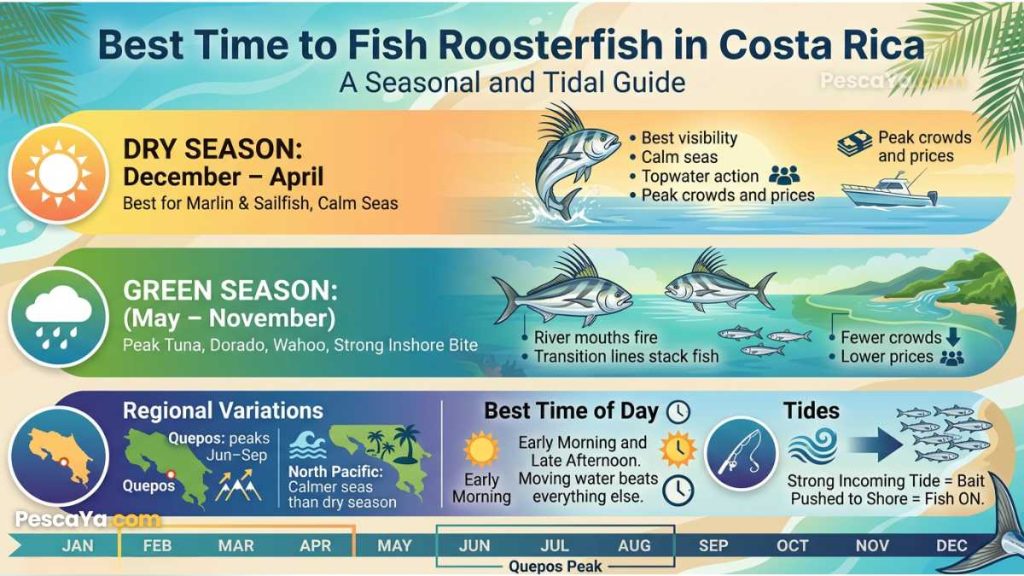
Dry Season (December–April)

This is peak season and the most popular window. Water clarity improves, which opens up sight-fishing and topwater opportunities on calm mornings. River flow drops, so captains tend to focus on points, outer reefs, and island edges. If you want the best overall conditions with the highest chance of calm seas, book during this period.

Green Season (May–November)

Don’t overlook the rainy season. Bait surges along river mouths and inside gulfs when the rains pick up. Overcast skies and cooler water can extend the bite window well past sunrise. Captains work the edges where clean and stained water meet — roosterfish stack up on these transition lines chasing disoriented baitfish pushed out by river runoff.

The Central Pacific coast, particularly around Quepos, sees strong roosterfish action from June through September as river mouths come alive. On the North Pacific side, the green season brings calmer seas (less wind than the dry season), making for more comfortable inshore trips. Fewer crowds and lower charter prices are a welcome bonus.

Tides & Time of Day

Moving water is the key. A strong incoming tide pushes bait — and these fish — closer to shore, making it the most productive window. Early mornings and late afternoons consistently outproduce midday, especially when tidal movement coincides with low-light conditions.

How to Catch Roosterfish — Techniques & Tackle

Live Bait: The #1 Method

If you want the highest hookup rate, live bait is the way to go. Bump trolling a lively baitfish around reefs, rocky points, and island edges is the single most productive technique. Top bait choices include blue runners, sardines, bonito, mullet, and lookdowns. A 7- to 8-inch green jack (*cojinua*) is considered ideal by many Costa Rican captains, though roosters have been known to eat everything from tiny needlefish to full-sized yellowfin jacks.

Your captain will know exactly which bait is available and where to source it. Most charters start the day catching bait before heading to roosterfish structure — this usually takes 15–30 minutes with a sabiki rig or cast net. Once you’re on the spots, the captain will slow-troll or drift the live bait near structure, keeping you in the strike zone.

Topwater & Lures

For a more hands-on experience, casting poppers, jigs, and Rapala-style plugs can be incredibly exciting. When fish are actively chasing bait on the surface — dorsal fins flared, water boiling — a well-placed popper can trigger savage strikes. The hookup rate is slightly lower than live bait, but the visual element is unmatched.

Fly Fishing for Roosterfish

This is the pinnacle of the challenge. Expect to use 10- or 11-weight rods with sinking or sink-tip lines and big, bushy flies. Captains will chum with baitfish to bring them to the surface, then you cast to cruising schools. It’s difficult — sometimes you get one shot before the fish disappears — but landing a roosterfish on fly is a genuine accomplishment.

Recommended Tackle Setup

A solid conventional setup for roosterfish: medium-heavy spinning rod paired with a 5000-class reel, 40 lb braided line, and a 60 lb fluorocarbon leader. Circle hooks are mandatory in Costa Rica on all bait. This rig gives you enough backbone for a serious roosterfish fight while keeping the experience sporting.

What Does a Roosterfish Charter Cost?

Since this is an inshore species, you don’t need a big offshore boat — which keeps prices more accessible than billfish trips.

Expect to pay roughly $400–$700 for a half-day inshore trip and $1,000–$1,500+ for a full day, depending on the port, boat size, and season. Most charters include captain, crew, tackle, bait, and drinks. Pangas (smaller open boats) are the most affordable option and perfectly suited for inshore roosterfish work. Center consoles offer more comfort and range.

Prices vary by region. The Central Pacific (Quepos, Herradura) and North Pacific (Tamarindo) tend to have the widest range of options across different budgets. Compare captains, boats, and prices on PescaYa’s Costa Rica page to find the right fit.

Frequently Asked Questions

No. Roosterfish are a protected catch-and-release species. Beyond the regulation, roosterfish aren't considered good table fare — the meat is generally tough and not highly valued. You'll release every rooster you catch, but you'll likely bring home snapper, grouper, or other edible species caught on the same inshore trip.

Yes. Every angler fishing from a boat in Costa Rica needs a valid license from INCOPESCA. An 8-day license costs about $17 USD and a monthly license around $28. Many charter captains will help you purchase one, or you can buy it online before your trip. Shore fishing also requires a license.

Absolutely. Roosterfish are inshore, close to shore, and your captain handles the boat positioning and bait rigging. All you need to do is hold the rod and fight the fish. It's one of the most accessible trophy fishing experiences you can have — and a great species for anglers of any skill level.

Inshore trips in Costa Rica are multi-species by nature. While targeting roosterfish, you'll likely encounter jack crevalle, cubera snapper, grouper, and possibly snook around river mouths. It's not uncommon to land five or six different species on a single half-day trip.

Lorem ipsum dolor sit amet, consectetur adipiscing elit. Ut elit tellus, luctus nec ullamcorper mattis, pulvinar dapibus leo.

Time to Chase Some Roosters

Roosterfish are Costa Rica’s signature inshore trophy — powerful, beautiful, and available year-round from every major Pacific port. Whether you’re casting topwater plugs along rocky points in Quepos, drifting live bait through the Golfo Dulce, or making your first-ever fishing trip from Tamarindo, the experience delivers every time.

The combination of accessible inshore fishing, experienced local captains, and a coastline packed with structure and bait means your odds of connecting with a roosterfish are excellent. Add in Costa Rica’s strong conservation ethic, and you’re supporting a fishery that keeps getting better.

Ready to plan your roosterfish adventure? Browse fishing charters across Costa Rica on PescaYa to compare captains, boats, and prices — and lock in the trip before the best dates fill up.

Want to keep reading?