


Fishing in Bocas del Toro:
Complete Fishing Guide

Picture this: you’re drifting through a mangrove-lined channel in the Caribbean, the water below you shifting from turquoise to deep green. A tarpon rolls at the surface twenty yards ahead. An hour later, you’re trolling past volcanic islands chasing wahoo. By afternoon, you’re snorkeling a coral reef with your catch on ice.
That’s a normal day of fishing in Bocas del Toro.
This archipelago on Panama’s Caribbean coast doesn’t get the same attention as Costa Rica’s Pacific charters or the Bahamas’ bonefishing flats. But for anglers who know, it’s one of the most versatile fisheries in Central America — offering offshore pelagics, inshore predators, and world-class tarpon all within the same island chain.
Whether you’re planning your first fishing tour or you’ve got a fly rod and a specific target in mind, this guide covers everything you need to know about fishing in Bocas del Toro: what you’ll catch, when to go, and how to book the right trip.
Best Fishing Charters in Bocas del Toro
 27 ft
27 ft Up To 6 People
Trips from
See Availability$530
Why Bocas del Toro Is One of Panama’s Best-Kept Fishing Secrets
A Caribbean Archipelago Built for Anglers
Bocas del Toro is a province made up of nine main islands and hundreds of smaller cays, all clustered along Panama’s northwest Caribbean coast near the Costa Rican border. The geography alone makes it special for fishing. Almirante Bay and the surrounding waters create a protected inshore playground, while the open Caribbean drops to thousands of feet just a few miles offshore.
Between the islands, you’ll find a variety of productive fishing environments:
- Mangrove channels and creek mouths (tarpon, snook, jacks)
- Shallow flats and reef edges (barracuda, snapper, permit)
- Coral reefs and rocky structure (grouper, snapper, spearfishing)
- Nearshore banks and ledges (tuna, mackerel, wahoo)
- Deep offshore waters (yellowfin tuna, mahi-mahi, billfish)
The bay’s creek mouths and back channels attract tarpon and snook, while the nearshore banks just outside the archipelago are loaded with tuna and mackerel.
Untapped Waters, Year-Round Action
Compared to heavily fished Caribbean destinations, Bocas del Toro sees relatively low angling pressure. Most visitors come for the beaches, surfing, and nightlife. That works in your favor. The fish aren’t boat-shy, the reefs are healthy, and there’s genuine opportunity to hook into something big without competing for spots.
And unlike many tropical fisheries that peak for just a few months, Bocas del Toro produces action across the entire calendar year.

What Fish Can You Catch in Bocas del Toro?
The species diversity here is one of Bocas del Toro’s strongest selling points. You can realistically target a dozen different gamefish in a single trip depending on the season and conditions.
Offshore Species
Head a few miles beyond the islands and you’re into serious bluewater territory. The most common offshore targets include:
- Wahoo — Arguably Bocas del Toro’s most prized offshore gamefish. These torpedo-shaped speedsters hit at over 60 mph and are some of the best-tasting fish in the ocean. They patrol the deeper waters around the archipelago’s outer banks and ledges.
- Yellowfin tuna — Sometimes exceeding 60 lbs, yellowfin show up further offshore near weed lines and bait schools when conditions align. Hard-fighting and highly prized for their meat.
- Blackfin tuna — The bread-and-butter offshore catch, typically 5–30 lbs. They school around the nearshore banks in impressive numbers and put up a fight well beyond their size.
- Mahi-mahi (dorado) — Cruise the offshore weed lines and are known for acrobatic fights and stunning colors. One of the most exciting fish to catch on light tackle.
- King mackerel — Grow to impressive sizes in these waters and round out the offshore roster. Excellent table fare and a strong fighter on medium tackle.
Inshore Species
The protected waters inside the archipelago hold a different kind of action:
- Jack crevalle — Aggressive predators that slam topwater lures in the channels. They fight hard and are a blast on light tackle.
- Barracuda — Patrol the reef edges and flats with explosive strikes. They grow big in Bocas del Toro’s warm waters.
- Snook — Hang around mangrove roots and creek mouths, responding well to both live bait and lures. A top inshore target.
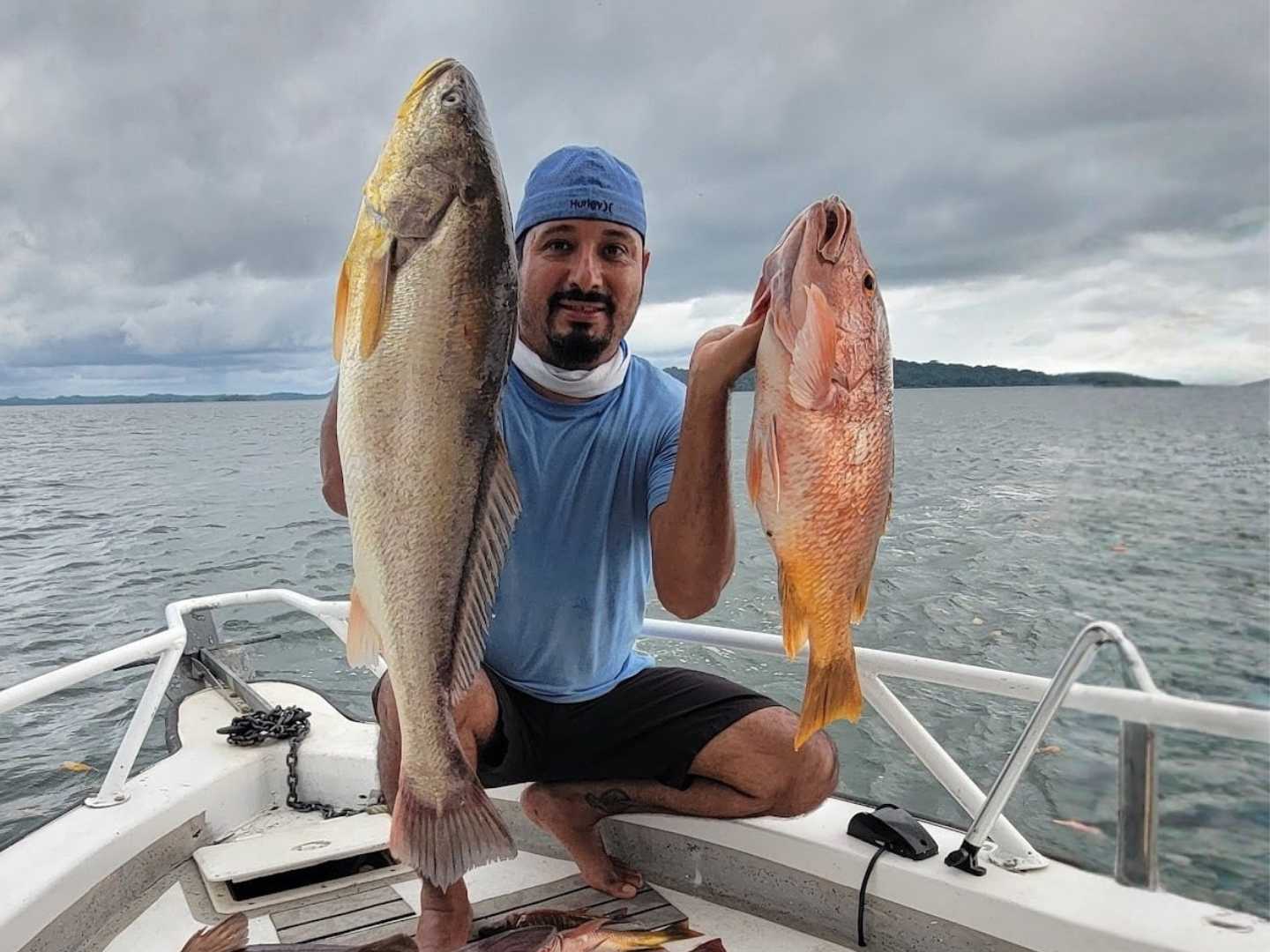
- Snapper and grouper — Multiple species hold around structure throughout the bay. Solid bottom-fishing action and some of the best table fare you’ll find.
- Spanish mackerel — Fast, plentiful, and available year-round in the channels and nearshore waters.

The Silver King — Bocas del Toro’s Star Attraction
If there’s one species that puts Bocas del Toro on the angling map, it’s tarpon. The back bays and creek mouths around the archipelago hold resident tarpon year-round, typically in the sub-50 lb range. But it’s the larger migratory fish — some exceeding 150 lbs — that draw dedicated tarpon fishing anglers to these waters.
Fighting a big tarpon is an experience that’s hard to describe until you’ve done it. These prehistoric giants go airborne repeatedly, peel off drag at alarming speed, and can test an angler for an hour or more before surrendering. In Bocas del Toro’s warm, nutrient-rich waters, they find ideal conditions to feed aggressively.
When Is the Best Time to Go Fishing in Bocas del Toro?
Fish are caught year-round in Bocas del Toro, but two distinct peak seasons stand out.
Peak Season #1: Late January to May
This is the driest period, with February through April seeing the least rainfall. It’s also prime time for offshore pelagics — wahoo fishing is at its best, yellowfin tuna move through in good numbers, and the calmer weather windows allow boats to reach the productive offshore zones more consistently.
If your priority is trolling for big pelagics, this is your window.
Peak Season #2: August to October
September and October are often the calmest months on the water, with minimal ocean swell and lighter winds. This makes them excellent for exploring all types of fishing. It’s also peak tarpon season, with bigger fish rolling through the bay’s feeding zones.
Despite being in the “wet season,” September is actually one of the drier months — rain comes in short bursts rather than all-day downpours, and the fishing between showers can be exceptional.
Months to Watch Out For
July and November tend to be the wettest months, which can limit fishable days. December brings the most storm activity, with heavier swell and wind that makes offshore trips less predictable. Inshore fishing remains viable during these months, but plan your expectations accordingly.
What Types of Fishing Can You Do in Bocas del Toro?
One of the things that makes Bocas del Toro special is the variety of fishing styles available, sometimes all in the same day.
One of the things that makes Bocas del Toro special is the variety of fishing styles available, sometimes all in the same day.
Offshore Trolling
This is the classic sportfishing experience. Boats run out past the archipelago’s outer islands to troll the banks, ledges, and weed lines for wahoo, tuna, and mahi-mahi. Full-day trips allow you to reach the more productive deep-water zones, while half-day trips can still put you on blackfin tuna and king mackerel closer to shore.
Inshore and Estuary Fishing
For a more hands-on experience, inshore fishing around the bay’s mangrove channels, creek mouths, and reef edges delivers constant action. You’ll work live bait or cast lures at tarpon, snook, jacks, and barracuda. This style of fishing is great for anglers of all experience levels — there’s always something willing to bite.
Fly Fishing
Bocas del Toro’s estuarine waters offer legitimate fly fishing opportunities, particularly for tarpon. Casting a fly at rolling tarpon in the bay’s channels and creek mouths is about as exciting as fly fishing gets. Jack crevalle and snook also take flies readily.
Keep in mind that Bocas del Toro isn’t a traditional flats destination — don’t expect Bahamas-style bonefishing. But for tarpon on the fly, it’s becoming one of Panama’s top spots. September and October offer the best conditions for this.
Kayak Fishing
Bocas del Toro is home to Panama’s only Caribbean kayak fishing operation, making it a unique option for anglers who want a more intimate experience on the water. Paddling through the archipelago’s protected waters and hooking into tarpon or jacks from a kayak is a seriously thrilling challenge.
Spearfishing and Bottom Fishing
The archipelago’s coral reefs and rocky structure support excellent spearfishing for snapper, grouper, and other reef species. Bottom fishing with cut bait or deep-dropping rigs is another way to target these tasty species, and it’s a solid option when offshore conditions aren’t cooperating.
How Much Do Fishing Tours in Bocas del Toro Cost?
Charter prices in Bocas del Toro vary widely depending on the boat, captain, and type of trip. Here’s a general breakdown to help you budget:
- Budget-friendly options ($60–$100/hr, often plus fuel) — Smaller boats with an inshore focus. A half-day trip might run $300–$500 total. Great for families, beginners, or anyone who wants a fun day on the water without a massive investment.
- Mid-range charters ($500–$700 half-day, $700–$900 full day, fuel usually included) — Dedicated sportfishing boats with proper trolling gear, electronics, and an experienced captain who knows the offshore spots.
- Premium operations ($800+ full day, plus fuel) — Larger boats with full amenities. These outfits often offer combo trips — fishing in the morning, beach BBQ and snorkeling in the afternoon.
Most charters include:
- All fishing tackle, rods, reels, and terminal gear
- Live bait or trolling lures
- Coolers with ice for your catch
- Captain and crew
- Some also provide snorkeling equipment for mixed adventure days
Tips for the captain and crew are customary and appreciated.
Pro tip: Many charters in Bocas del Toro are flexible about customizing your day. If you want to split time between fishing, snorkeling, and island-hopping, most captains are happy to build a hybrid itinerary.
Frequently Asked Questions
Do I Need a Fishing License in Bocas del Toro?
Most fishing charters handle licensing for their guests as part of the trip. If you plan to fish independently from shore or a private boat, check with local authorities about current regulations before heading out.
Can Beginners Go Fishing in Bocas del Toro?
Absolutely. Inshore trips are especially beginner-friendly — captains provide all the gear and instruction you need, and the fish around the bay are aggressive feeders. You don't need any experience to hook into a barracuda or mackerel.
Can I Eat the Fish I Catch?
Yes, and you should. Wahoo, tuna, mahi-mahi, snapper, and mackerel are all excellent eating. Several restaurants in Bocas Town will cook your fresh catch for you — it's one of the best meals you'll have on your trip. Tarpon are catch-and-release only.
How Do I Get to Bocas del Toro?
The easiest way is a domestic flight from Panama City to Bocas del Toro (Isla Colón), which takes about an hour. You can also drive to Almirante and take a water taxi to the islands. Once you're in Bocas Town, most charters pick you up directly from the dock.
Is Catch and Release Practiced?
Yes, particularly for tarpon and billfish. Most captains encourage responsible fishing practices, and releasing larger breeding fish is common across the archipelago's charter fleet. You'll typically keep what you plan to eat and release the rest.
Ready to Fish Bocas del Toro?
Bocas del Toro packs an incredible amount of fishing diversity into one beautiful Caribbean archipelago. From offshore wahoo and tuna to inshore tarpon and snook, from fly fishing to kayak adventures, there’s something here for every type of angler — and every experience level.
The best part? You’re not just booking a fishing trip. You’re booking a full Caribbean experience: crystal-clear water, jungle-backed islands, fresh-caught fish for dinner, and stories you’ll tell for years.
Ready to plan your trip? Browse our fishing tours in Panama to find the right charter for your Bocas del Toro adventure, or explore our complete guide to fishing in Panama to discover more destinations across the country.
Featured Posts
Panama Fishing Tours – Ultimate Guide 2026
Nov 24, 2025 ·
28 min read
Snook Fishing in Panama: The Ultimate Guide
Nov 22, 2025 ·
13 min read
Tarpon Fishing in Panama – Best Spots, Seasons & Tips
Nov 10, 2025 ·
12 min read
Peacock Bass Fishing in Panama
Nov 10, 2025 ·
7 min read
Sport Fishing in Panama 2026: Top Destinations, Seasons & Travel Tips
Nov 5, 2025 ·
4 min read
Fishing in Palo Seco: Fish Species and Tours
Nov 5, 2025 ·
1 min read
Want to keep reading?

Roosterfish Fishing in Costa Rica: Full Guide
Roosterfish don’t exist anywhere else on earth outside the Eastern Pacific. You won’t find them in the...
Read More
->
Fishing in Guatape: Black Bass, Blue Mojarra & Tour Guide
Fishing in Guatapé: Black Bass, Blue Mojarra & Tour Guide Most visitors come to Guatapé for the famous rock and...
Read More
->
Machaca Fishing in Panama: Complete Guide
Have you ever heard of the mini tarpon or Machaca? While most anglers come to Panama dreaming of blue marlin or...
Read More
->