Deep Sea Fishing Cabo San Lucas: 2026 Angler’s Guide

deep sea fishing in cabo

In 2011, an angler aboard a 31-foot Blackfin called Go Deep hooked a blue marlin off Cabo San Lucas at 8:20 in the morning. By hour nine, the crew had run out of food and water. They started drinking melted ice water from the cooler. The leader had stretched from 300-pound test to what looked like 100. One hook sheared clean off. They landed the fish after 28 hours. It weighed 1,213 pounds.

That is the water you are fishing.

Deep sea fishing in Cabo San Lucas is not a tourist activity dressed up as sport fishing. It is the real thing — one of the most productive offshore fisheries on the planet, driven by a collision of two oceans and an underwater topography that concentrates baitfish and big game within striking distance of a marina you can walk to from your hotel. This guide covers the science behind why Cabo produces like it does, a bank-by-bank breakdown of where the fish actually live, species and season data, tactics that experienced captains use, and a few things you will only find in forum threads from anglers who have fished here dozens of times. By the time you are done reading, you will know exactly what to book and when to go. Check the Cabo fishing charter guide for the full rundown on charter types and pricing.

Why Deep Sea Fishing in Cabo San Lucas Is Different

Where Two Oceans Collide

Cabo San Lucas sits at the very tip of the Baja Peninsula, where the Pacific Ocean meets the Sea of Cortez. On a map it looks like a geographic accident. In practice it is one of the most productive marine environments on earth. The cold, nutrient-dense Pacific upwells against the warmer, shallower Cortez at depths that can reach 1,500 feet. That upwelling works like a conveyor belt: cold water loaded with nitrates and phosphates rises to the surface, feeding phytoplankton, which feeds zooplankton, which feeds sardines and mackerel, which feeds everything above them in the chain.

The result is that the Sea of Cortez alone harbors over 900 species of fish. Jacques Cousteau called it the aquarium of the world. Seamounts — underwater mountains whose peaks rise from thousands of feet of water to within a few hundred feet of the surface — amplify these currents, creating localized zones of exceptional productivity. Six miles from the Cabo marina, the bottom drops from a 600-foot ledge to 3,000 feet in the space of a short run. Those depth transitions are where the fish stack.

What “Deep Sea” Actually Means in Cabo

When you leave the marina at Cabo San Lucas, you pass through a two-mile protected zone along both the Pacific and Cortez coastlines where fishing is not permitted. The moment you clear that buffer, the grounds open up. On a full-day charter, you can realistically reach fishing spots from 5 miles to 50+ miles offshore. Most of the famous banks are between 10 and 25 miles out — a run of 30 to 60 minutes depending on the boat.

The maximum range on a standard full-day trip is about 40 to 50 miles. Finger Bank, the most remote productive ground, sits 50 to 55 miles northwest of the marina and requires a purpose-built long-range vessel and a 13-hour day. Everything else is within practical reach of any 30-plus-foot cruiser.

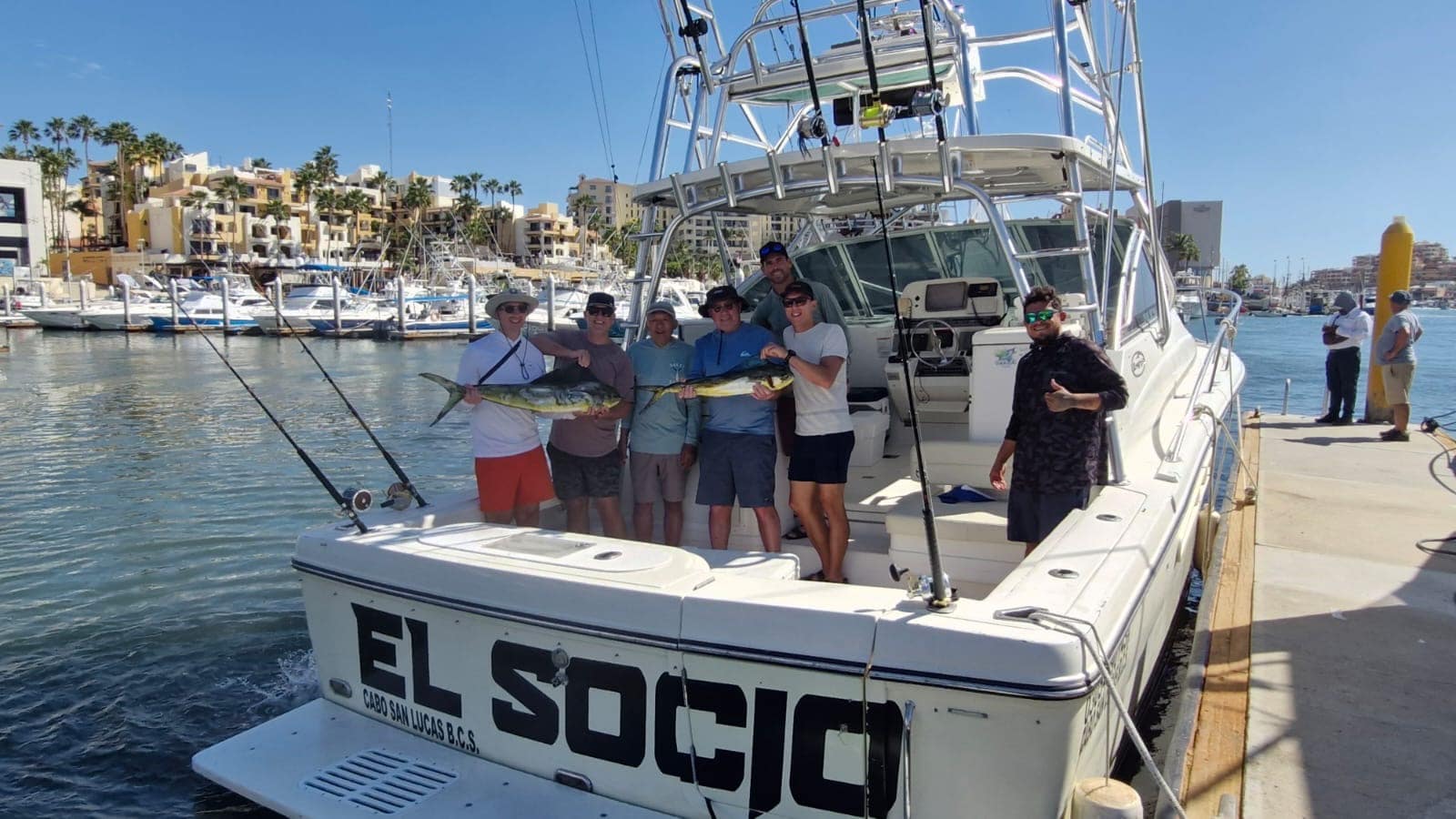
El Socio - Sportfishing

El Socio - Sportfishing

New
Cabo San Lucas
boat 37 ft
Up To 8 People
Trips from
$825
See Availability

Cabo’s Offshore Fishing Banks — A Map of the Grounds

Cabo’s grounds divide naturally by geography. The Sea of Cortez side (east) offers accessible seamounts and year-round inshore action. The Pacific side (west) holds the deeper, wilder, big-game territory.

Bank Distance Depth Prime Species Best Season
Inner Gordo 5–7 mi Shallow Roosterfish, snapper, grouper Year-round
Outer Gordo 10 mi Steeply deep Wahoo, dorado, tuna, marlin Apr–Nov
45 Spot 6 mi (Pacific) 600 ft ledge Marlin, tuna, dorado Year-round
Santa Maria Canyon 9 mi Intermediate Billfish, dorado, tuna Rough-weather fallback
1150 Bank 20–25 mi ~1 150 ft plateau YFT 20–100 lb, marlin, Mako
San Jaime Bank ~18 mi NW 3 500 ft trough Blue marlin, YFT, skipjack
Golden Gate Bank ~15 mi 60–65 fathoms Striped marlin, YFT 100+ lb Dec–Mar / Sep–Dec
Finger Bank 50–55 mi Deep Pacific Striped & blue marlin Nov–Mar

Sea of Cortez Side — Close-Range Seamounts

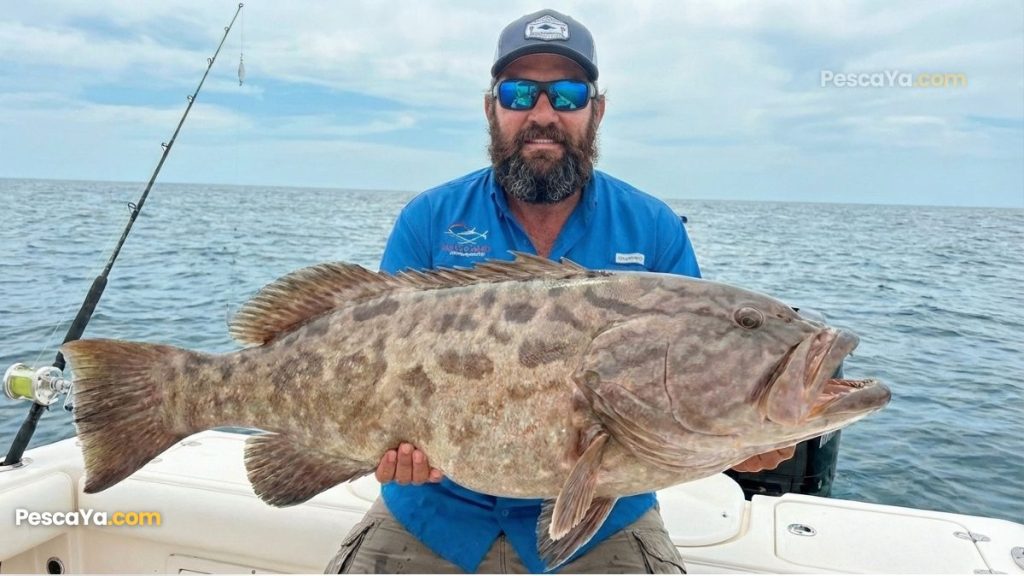
Inner Gordo Banks. Five to seven miles southeast of the marina, the Inner Gordo is panga range. The seamount produces roosterfish, snapper, and grouper year-round. Beginners and families do well here without the long offshore run.

Outer Gordo Banks. Push another three miles out and the Outer Gordo turns into serious offshore territory — wahoo, dorado, yellowtail, amberjack, tuna, marlin, and sailfish all run here from April through November. This is where the bite concentrates during peak summer season.

The 45 Spot. Only six miles west of the Arch, the 45 Spot sits at the end of a 600-foot ledge where Cardonal Canyon drops abruptly to 3,000 feet. The depth transition concentrates marlin and tuna year-round and is one of the least-discussed productive grounds in the area — most guides focus on the famous Pacific banks and overlook this one entirely.

Santa Maria Canyon. Nine miles due south of the marina, Santa Maria is Cabo’s reliable fallback when Pacific swells make the outer banks uncomfortable. Billfish, dorado, and tuna gather here consistently, and the shorter run means less time on the water before the lines are in.

Pacific Side — Big-Game Territory

1150 Bank. Twenty to twenty-five miles offshore, the 1150 Bank combines deep-water structure with baitfish concentrations that attract yellowfin tuna in the 20 to 100-pound range and multiple species of marlin. Cedar plugs and live bait are the standard presentations. Mako sharks are a frequent bonus here — powerful fish that will test your tackle on the same gear you’re using for tuna.

San Jaime Bank. About 18 miles northwest, three seamounts rise from a 3,500-foot-deep trough to within 150 feet of the surface on a 600-foot-deep plateau. The underwater geography creates a baitfish funnel: currents hit the seamount faces, nutrients well up, bait stacks, and predators follow. San Jaime is Grander Marlin territory — blue marlin over 1,000 pounds are caught here. Skipjack, bonito, and yellowfin round out the catch.

Golden Gate Bank. Fifteen miles out, Golden Gate is a flat coral-bottom bank that runs north to south. It is widely considered the best striped marlin bank in all of Mexico from December through March, when tailing fish stack up and sight-fishing conditions are exceptional. From September through December it switches to a yellowfin tuna machine — fish over 100 pounds are common during the fall run.

Finger Bank. Fifty to fifty-five miles northwest of the marina, Finger Bank is the most remote and the most legendary. Local crews have logged over 100 striped marlin releases in a single day here. The trip requires a minimum 13-hour day and a vessel of at least 40 feet. Most charter companies add a fuel surcharge of approximately 50% when running to Finger Bank — on a boat that normally costs $1,500 to $2,000, expect to add $750 to $1,000 or more. Crucially, the surcharge is only applied if you actually make the run; if conditions prevent it, you pay the standard rate.

When swell closes the outer banks: Southeast swells can make the Pacific side rough and potentially unsafe for smaller vessels. On those days, experienced captains redirect to Santa Maria Canyon or the Gordo Banks, both of which are protected enough to fish in moderate conditions. Ask your captain the evening before about the forecast — a good one will already have a contingency plan.

What’s Biting — Deep Sea Species Guide

Cabo offers one of the most diverse offshore species mixes in the world. The table below maps availability by month. For a full destination breakdown, see the Cabo fishing calendar.

Species Jan Feb Mar Apr May Jun Jul Aug Sep Oct Nov Dec
Striped Marlin Hot Hot Hot Hot Good Good Good Slow Slow Slow Hot Hot
Blue/Black Marlin Slow Slow Slow Slow Good Hot Hot Hot Hot Hot Good Slow
Yellowfin Tuna Good Good Slow Good Hot Hot Hot Hot Hot Hot Good Good
Wahoo Slow Slow Slow Slow Good Good Hot Hot Hot Hot Good Slow
Dorado (Mahi) Slow Slow Slow Good Good Hot Hot Hot Hot Good Slow Slow
Sailfish Good Good Good Good Good Hot Hot Hot Hot Hot Hot Good

Three Marlin Species + Sailfish

deep sea fishing in panama

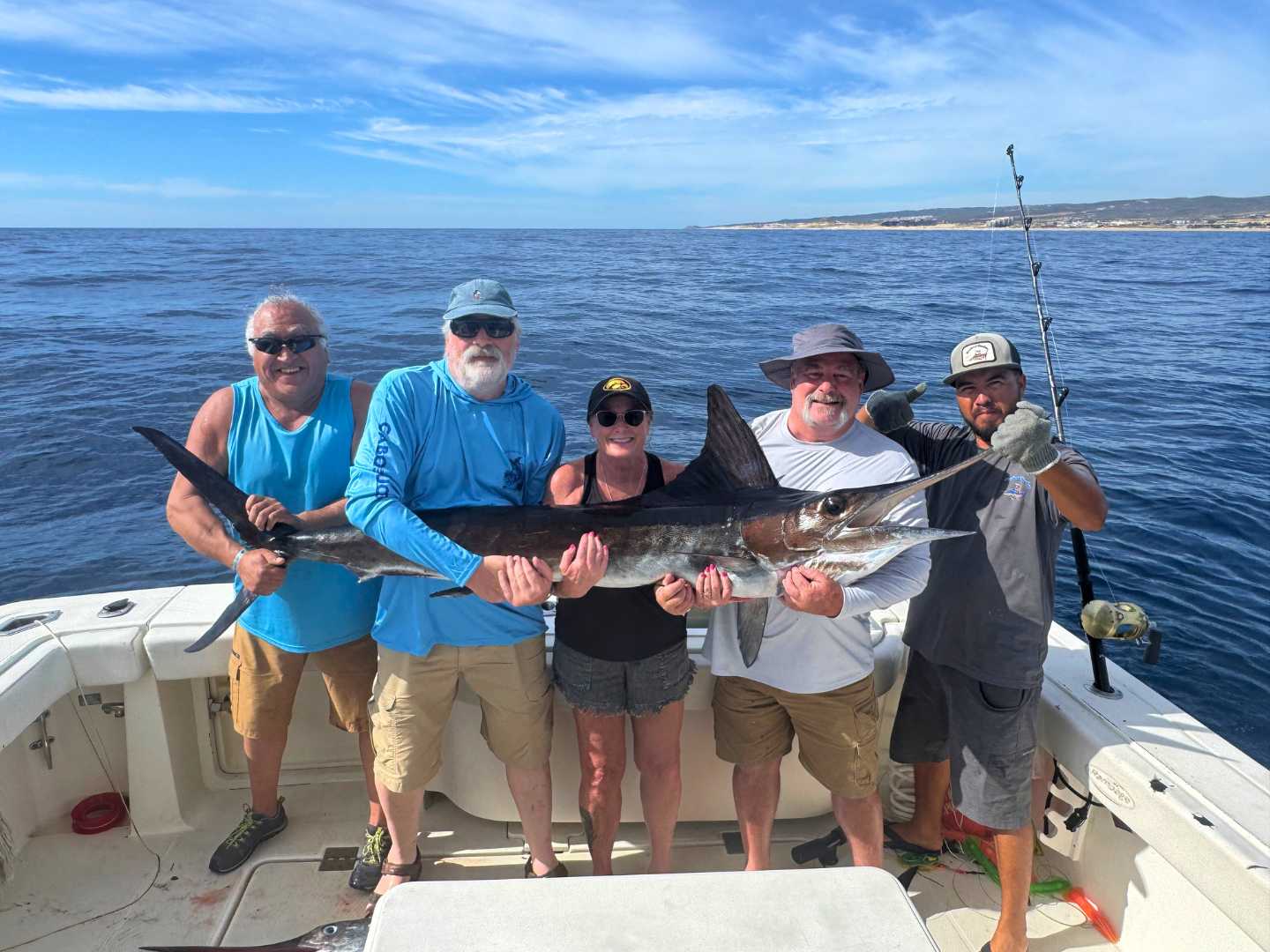
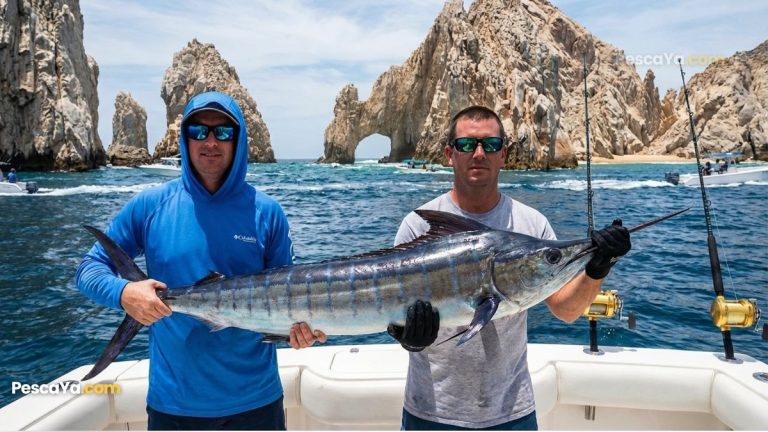
Cabo holds the undisputed title of Striped Marlin Capital of the World for winter and early spring. Striped marlin average 100 to 150 pounds and are primarily a sight-fishing target — tailing fish visible on the surface in calm morning conditions make for some of the most exciting offshore fishing available anywhere. Peak season runs November through March on the Golden Gate and Finger Banks.

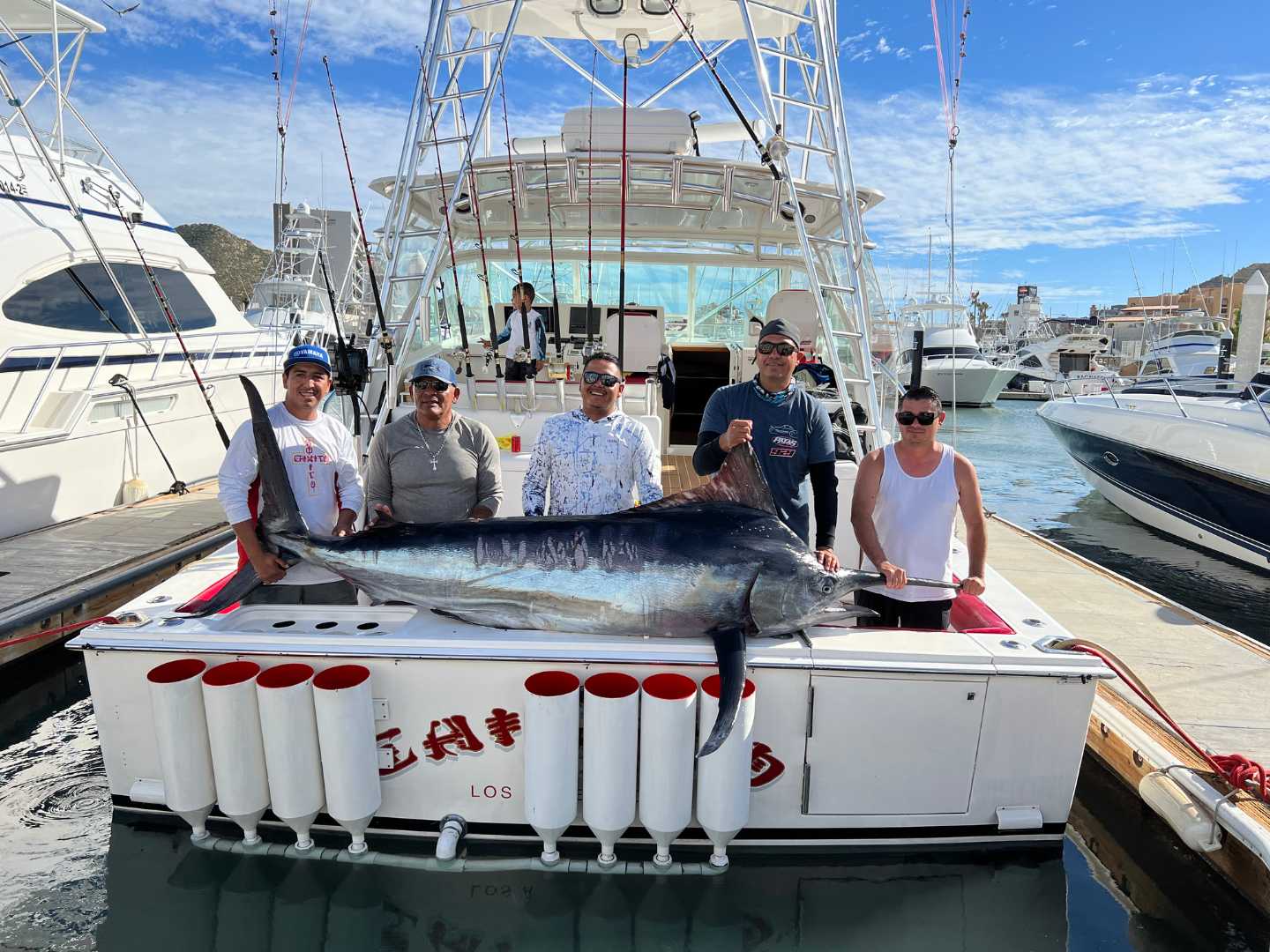
Blue and black marlin arrive in force from June through October. These are the heavyweights — blues routinely exceed 300 pounds and Cabo has produced fish well over 1,000. The 1,213-pound blue mentioned in the introduction remains among the largest ever landed in Mexican waters. San Jaime Bank and the Outer Gordo are the primary summer grounds. Blue marlin fishing at this scale requires a full-day cruiser charter minimum — no pangas.

Sailfish are available year-round with peaks from July through November. They are acrobatic and fun on lighter tackle — a good species for anglers making their first offshore trip who want billfish action without the heavy-tackle commitment of marlin.

All billfish — marlin, sailfish, swordfish — count as half your daily bag limit in Mexican waters. One marlin equals five of your ten permitted fish. Most local captains strongly encourage catch and release for billfish, which is part of what has kept this fishery world-class for over a century.

Yellowfin Tuna, Wahoo & Dorado

cabo fishing charters

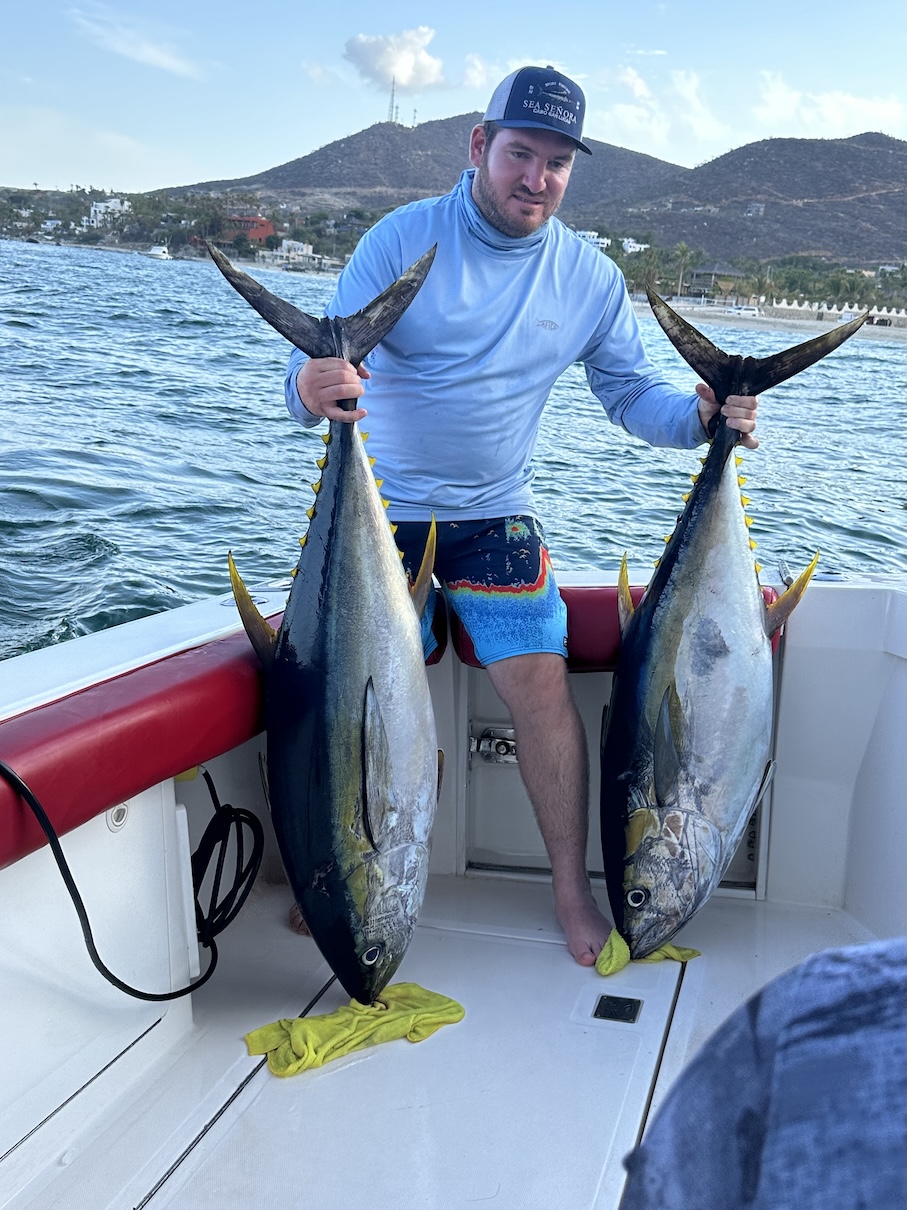
Yellowfin tuna run strong from May through December and are the backbone of the summer and fall offshore bite. Fish range from 20 to over 100 pounds, with the largest typically arriving in September and October. Yellowfin tuna school with spinner dolphins and porpoise pods — finding a pod of dolphins 5 to 8 miles offshore often means finding tuna directly below them.

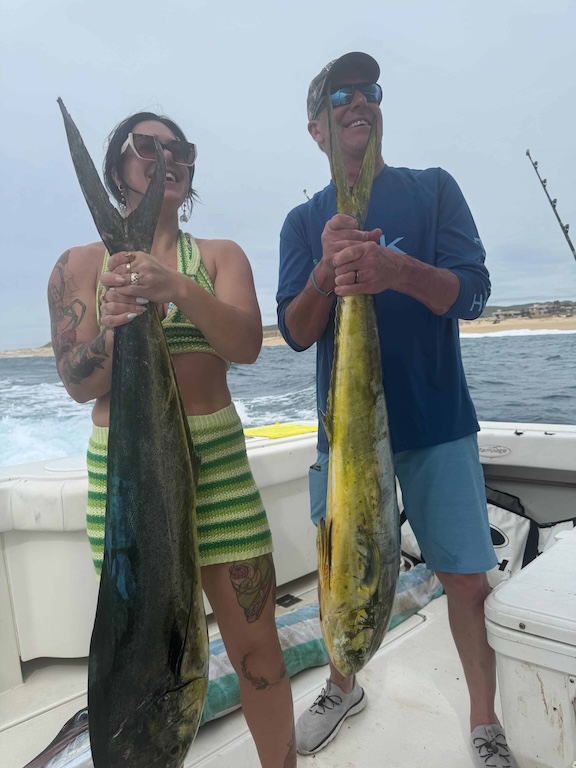
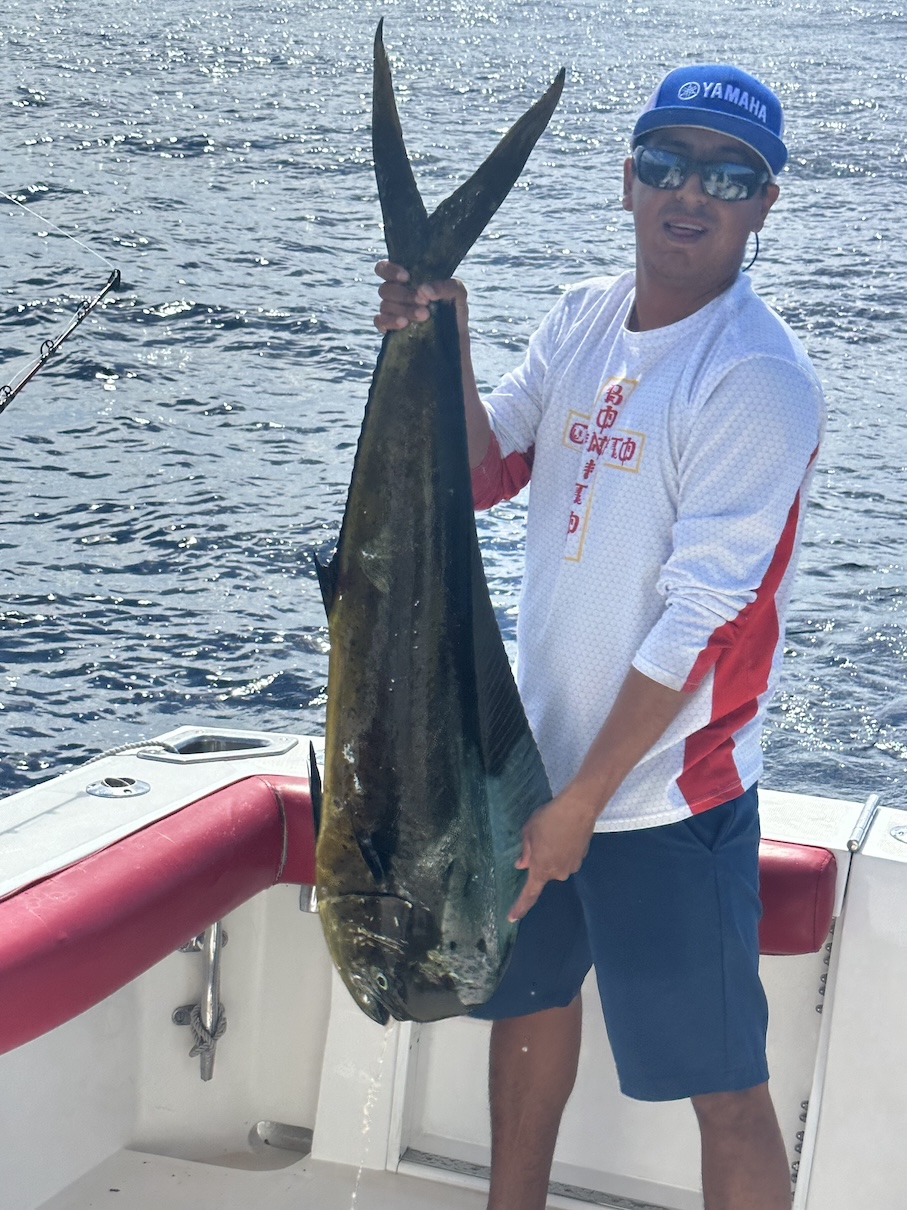
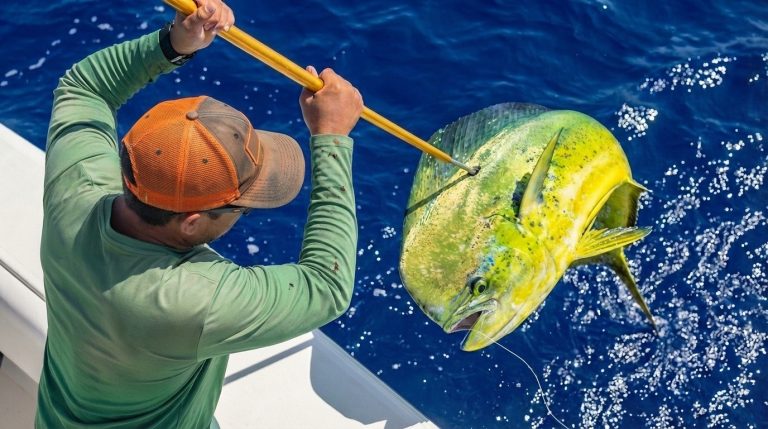
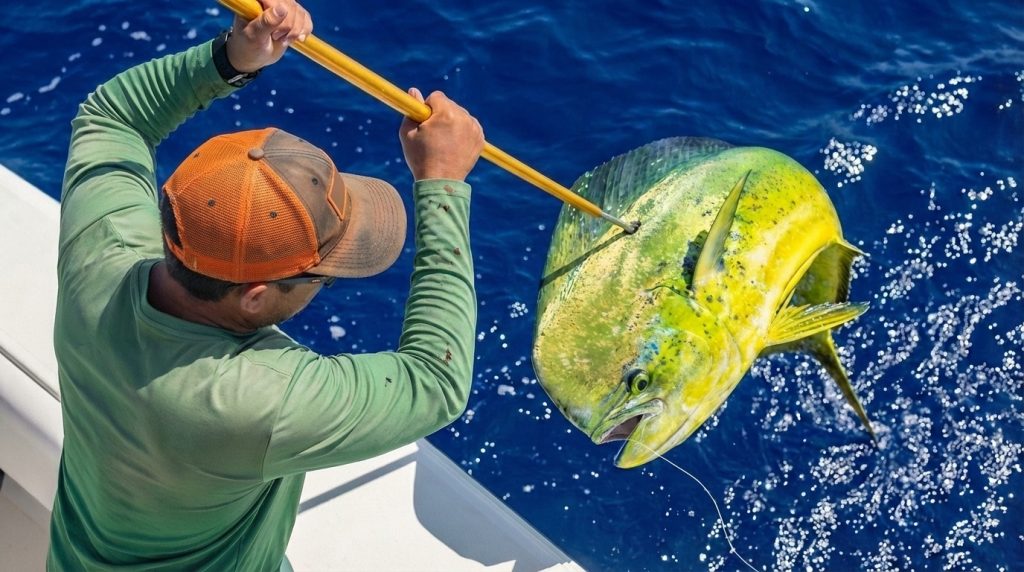
Wahoo are one of the fastest fish in the ocean — top speed around 60 mph in short bursts — and peak from July through October near temp breaks and drop-offs. Wahoo are prized for their firm, white flesh. Dorado (mahi-mahi) peak from June through October, congregating around floating debris and weedlines. Dorado in the 25 to 40-pound range are a common bonus alongside marlin on full-day offshore trips.

Offshore Tactics That Actually Work

The Trolling Spread

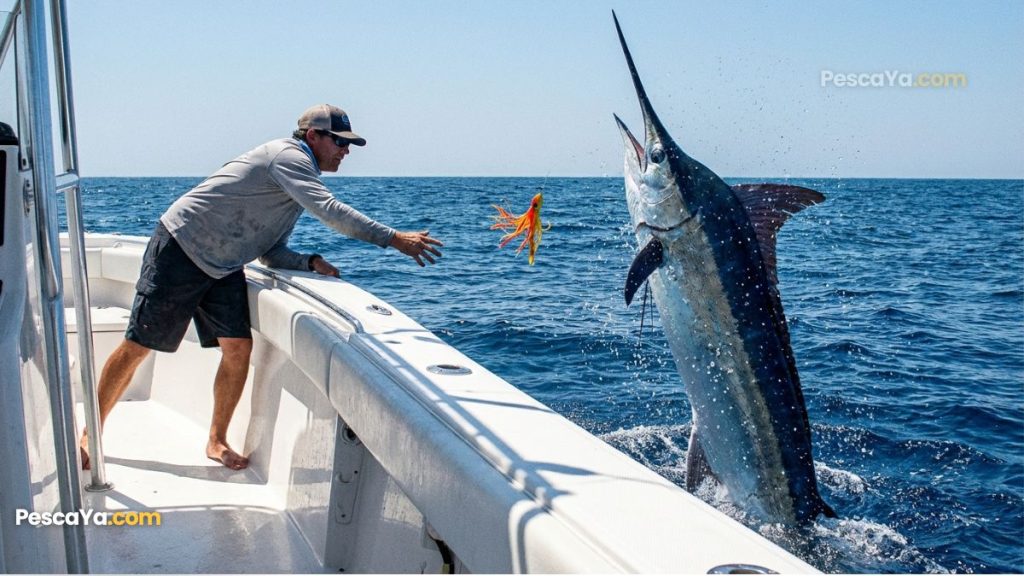
Trolling is the foundation of offshore fishing in Cabo. Most captains run 5 to 6 lines simultaneously: surface lines with ballyhoo or mackerel rigged on fluorocarbon leaders, weighted lines to different depths, and a teaser dredge that mimics a fleeing school of baitfish. The dredge creates the visual commotion that draws marlin and tuna toward the spread. Fluorocarbon leaders are standard for marlin — they are translucent and produce more strikes than wire, which fish can see. See more on trolling techniques in our full guide.

Hard marlin lures, ballyhoo, and mackerel are the most common presentations. Morning hours are consistently the most productive — be on the water by 6:30 to 7:00 AM. Calm mornings create better visibility for spotting tailing striped marlin and allow sight-casting presentations that can be more effective than trolling blind.

Reading the Ocean — How Captains Find Fish

The difference between a good offshore day and a great one often comes down to finding the fish before dropping a line. Experienced Cabo captains use three primary indicators:

  • Porpoise and dolphin pods. Yellowfin tuna school underneath spinner dolphin and common porpoise pods as a consistent feeding association. A dense pod spotted 5 to 8 miles out is one of the most reliable tuna signals available. Some captains deploy drones to locate pods from altitude before committing to a run.
  • Temperature breaks and color changes. Pelagics — tuna, marlin, wahoo, dorado — congregate where warm and cool water masses meet. These breaks are visible as color changes (blue to green) and are tracked using satellite sea surface temperature data. Advanced captains use apps like SatFish to overlay SST, chlorophyll concentration, and altimetry data the morning of the trip, identifying the exact location of productive breaks before leaving the dock.
  • Diving birds. Frigate birds and boobies diving on the surface mean baitfish are being pushed up from below. Tuna, marlin, and dorado are usually the cause. A working bird pile is one of the highest-percentage targets in offshore fishing.

Chunking for Yellowfin Tuna

When a yellowfin school is boiling on the surface — fish crashing bait in a visible feeding frenzy — experienced crews switch from trolling to chunking. The technique: toss 5 to 6 pieces of cut bait overboard rapidly to create a slick. Bury a hook in one piece and freeline it into the chum, letting it drift naturally among the chunks at the same rate. The key is concealing the hook and matching the presentation to the surrounding free pieces. When the school is fired up, this method outproduces trolling by a wide margin.

Cedar plugs work well for prospecting at the 1150 Bank and San Jaime, particularly when tuna are not actively surfacing. Keep them in the spread as an all-purpose search lure.

Wahoo — The Wire Leader Lesson

High-speed trolling at 10 or more knots with bright lures or rigged bait is the standard approach. Wahoo strike fast and run hard on the initial burst — the hook set and the first 30 seconds are critical. Optimal conditions: warm water around 78°F, near temperature breaks and underwater ridges. Most productive from July through October.

Wahoo require a fundamentally different setup from other offshore species. Their teeth can cut through monofilament and fluorocarbon clean — many anglers learn this the hard way. Forum regulars who fish Cabo frequently summarize it bluntly: after losing expensive lures on multiple strikes, you use wire. A wire or heavy-cable leader is non-negotiable for a dedicated wahoo setup.

Half-Day vs. Full Day — What You Can Actually Reach

The choice between half-day and full-day is essentially a choice between which grounds you can fish, not just how many hours you spend on the water.

  • Half-day (5 hours): You can reach the Inner Gordo Banks, the 45 Spot, and Santa Maria Canyon. These are productive inshore and light-offshore grounds — roosterfish, snapper, dorado, and light billfish action. Good for families, beginners, and anyone prioritizing comfort over range.
  • Full day (8 hours): The Outer Gordo, 1150 Bank, San Jaime, and Golden Gate are all reachable. This is where serious offshore fishing happens. Eight hours is the minimum to fish a productive outer bank properly —  45 minutes running each way leaves you roughly 6 hours of actual fishing time.
  • Finger Bank (13 hours): A dedicated long-range trip requiring a 40+ foot vessel. Add approximately 50% to the standard charter rate as a fuel surcharge. If weather prevents the run, the surcharge is not charged. Confirm this policy before departure.

Boat size reality: The Inner Gordo and 45 Spot are reachable in a super panga. Anything beyond 15 miles offshore — the 1150 Bank, San Jaime, Golden Gate — requires a minimum 29 to 35-foot cruiser with a proper cabin, fighting chair, and heavy-tackle gear. Finger Bank demands a 40-foot-plus vessel. Don’t let cost pressure you onto an undersized boat for long-range offshore work.

For the full breakdown of charter types, boat sizes, and 2026 pricing, see the Cabo fishing charter guide.

What No One Tells You Before Your First Deep Sea Trip

Port Captain Closures

The Port Captain of Cabo San Lucas has authority to close the port to all fishing charters when conditions are deemed unsafe. This happens approximately five days per year — not common, but real. Critically, advance warning is rarely given. You can show up at the dock at 6:00 AM and learn the port is closed. Reputable operators will reschedule during your stay or refund 100% if no alternative dates are available. Confirm this policy before booking — it is a meaningful differentiator between legitimate operators and less professional ones.

Book Two Days, Not One

The most consistent piece of advice from experienced anglers who fish Cabo regularly: book two days minimum. The ocean is variable. One day can be flat and slow; the next can produce the trip of your life. Anglers who fish Cabo every six weeks and know specific captains personally still follow this rule. A single day is a bet. Two days is a plan.

The Finger Bank Surcharge Conversation

If your captain plans to run to Finger Bank, confirm the surcharge structure before you leave the dock, not after you return. The surcharge — typically 50% of the base charter rate — is fuel-based and only applies if the run actually happens. If conditions prevent it and you fish closer banks instead, you pay the standard rate. This is standard practice among reputable operators, but the conversation needs to happen upfront.

Seasickness on Offshore Trips

Offshore conditions in Cabo are generally not rough by global standards, but the Pacific side can have significant swell, and 20+ miles offshore is not the place to discover you are prone to motion sickness. Dehydration is the leading trigger — avoid alcohol the night before, drink plenty of water the day of the trip, and eat a light meal. Take motion sickness medication (Bonine, Dramamine, or prescription scopolamine for severe cases) one to two hours before boarding. Sit amidships where movement is least amplified, and keep your eyes on the horizon if you feel unwell. One documented trip report from a 6-hour offshore charter noted that 6 of 10 anglers were ill despite medication. Wind and swell can swing quickly — take precautions regardless of your past experience.

For the full current picture of what species are running right now, check the Cabo fishing report.

Frequently Asked Questions

September and October offer the broadest multi-species opportunity — blue and black marlin, yellowfin tuna, wahoo, and dorado are all peaking simultaneously. For striped marlin specifically, November through March is peak season, with the Golden Gate and Finger Banks producing exceptional numbers. The only genuinely slow period for offshore fishing is March through April, when striped marlin are tapering off and summer species have not yet arrived. Inshore fishing remains productive year-round.

On a standard full-day charter, most boats fish 15 to 25 miles offshore, reaching the 1150 Bank, San Jaime, or Golden Gate. A half-day stays within 5 to 10 miles — the Gordo Banks and Santa Maria Canyon range. Finger Bank, at 50 to 55 miles, requires a special long-range trip with surcharge. The protected fishing zone extends two miles from shore in both the Pacific and Sea of Cortez, so lines go in approximately 10 to 15 minutes after leaving the marina.

For marlin and large yellowfin tuna, yes. Most reputable charters supply all rods, reels, and terminal tackle suited to the target species. If you have your own gear, bring it — captains generally appreciate anglers who arrive equipped. For wahoo specifically, wire leaders are essential and not optional. For general offshore trolling and live bait, 50-pound-class tackle with fluorocarbon leaders is standard. Mention your target species when booking so the crew can rig appropriately.

The Sea of Cortez side (east, toward the Gordo Banks) is calmer, more accessible, and productive year-round for a wide range of species. The Inner Gordo is panga-accessible. The Pacific side (west, toward the 1150 Bank, San Jaime, Golden Gate, and Finger Bank) is exposed open ocean with deeper water, larger fish, and bigger swell. This is where the legendary blue marlin and striped marlin fishing happens, and where a 30-plus-foot cruiser becomes necessary. Many captains fish both sides on a single full-day trip depending on where the bite is.

Last Cast

The 1,213-pound blue marlin was not caught by a professional tournament team on a million-dollar boat. It was caught by an angler on a 31-foot Blackfin after a 28-hour fight, on a small Zuker lure, on 60-pound line. That is the thing about Cabo — the water does not discriminate. The fish are there. The seamounts, the upwellings, the temperature breaks, the bait — all of it is functioning as it has for a century.

What separates a great offshore trip from a wasted day is knowing which bank to fish for which species in which month, and getting on a boat that can actually get you there. The research is done. Now it’s time to book. Explore deep sea charters in Cabo San Lucas and find the right boat for your trip.

El Socio - Sportfishing

El Socio - Sportfishing

New
Cabo San Lucas
boat 37 ft
Up To 8 People
Trips from
$825
See Availability

Want to keep reading?